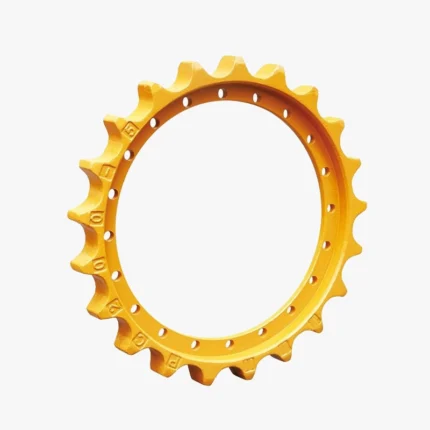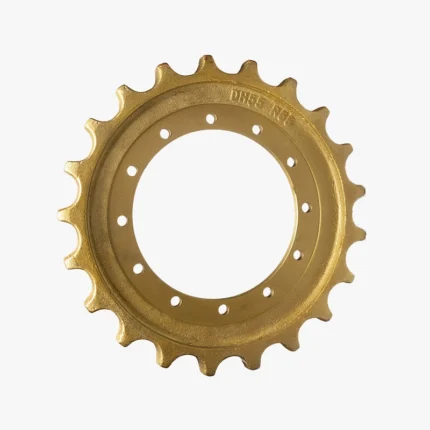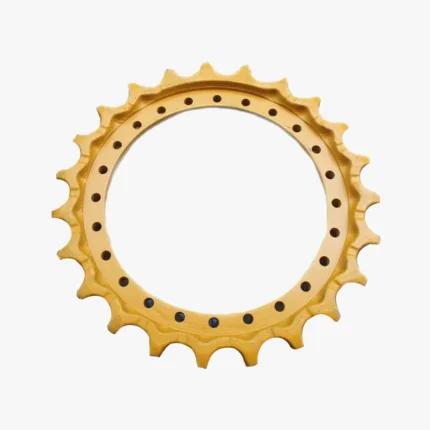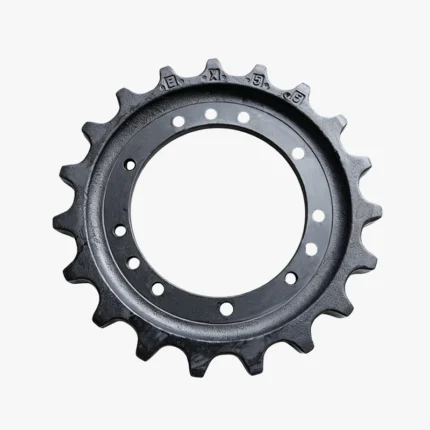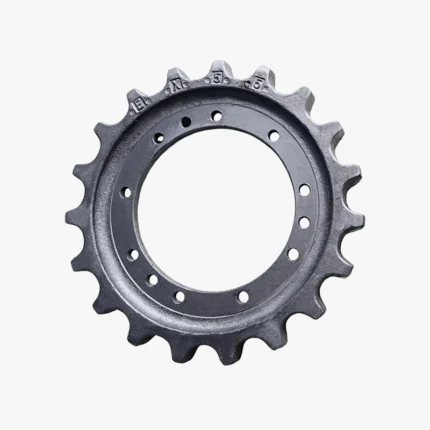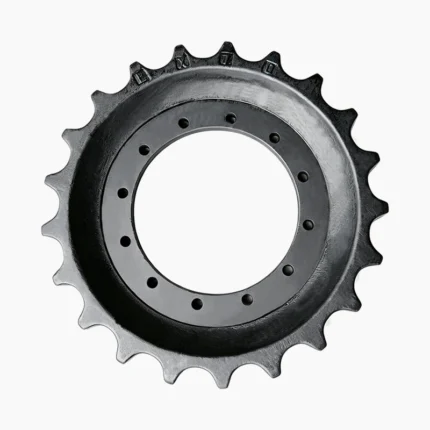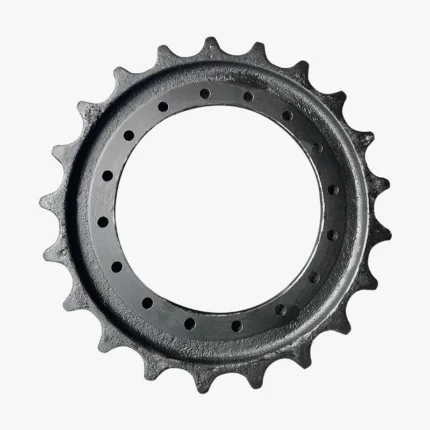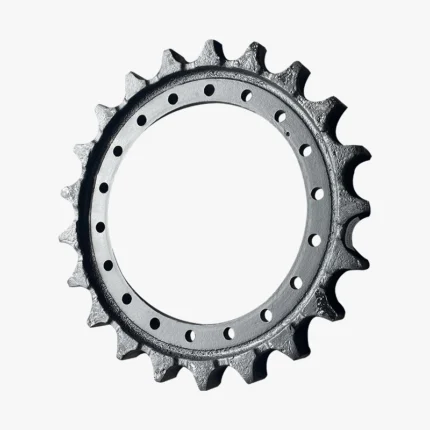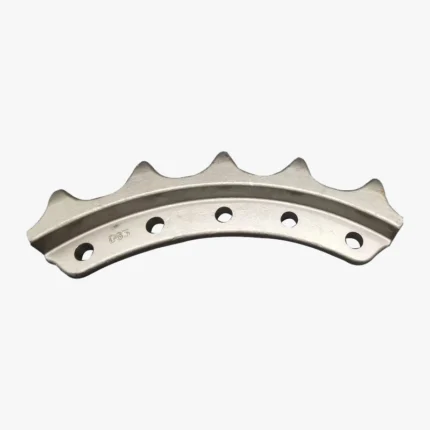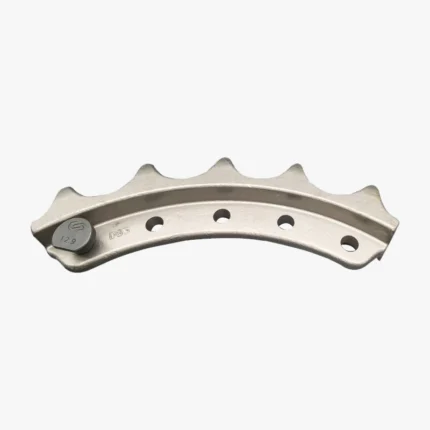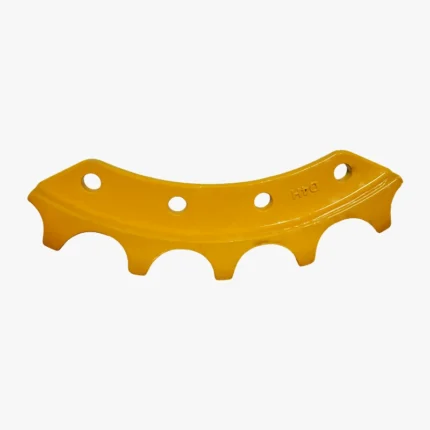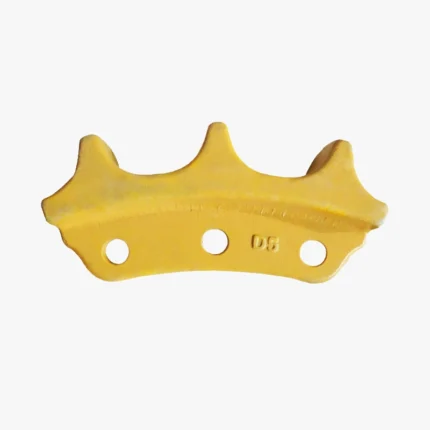





The sprocket is a critical power transmission component for construction machinery such as excavators and bulldozers. On excavators, it is typically a one-piece cast and machined unit, hence commonly referred to as a “sprocket.” In contrast, bulldozer sprockets are usually manufactured as multiple cast or forged segments and are known as “sprocket segments.” The sprocket is directly connected to the travel motor and transmits power to the track, driving the entire undercarriage system forward.
Excavator sprockets are mainly produced using high-quality casting methods, while high-horsepower bulldozers often use forged sprockets to ensure durability under heavier loads. Regardless of the manufacturing process, sprockets must go through rough casting or forging, precision machining, tooth surface quenching, and quality inspection before being delivered to customers.
The material commonly used for excavator sprockets is ZG40Mn, known for its strength and wear resistance. The quenching hardness of the sprocket teeth typically reaches HRC46–56, similar to that of bulldozer sprockets. Since excavator sprockets are machined as a single unit, the production process is relatively straightforward, ensuring high dimensional accuracy and consistent performance in demanding working conditions.