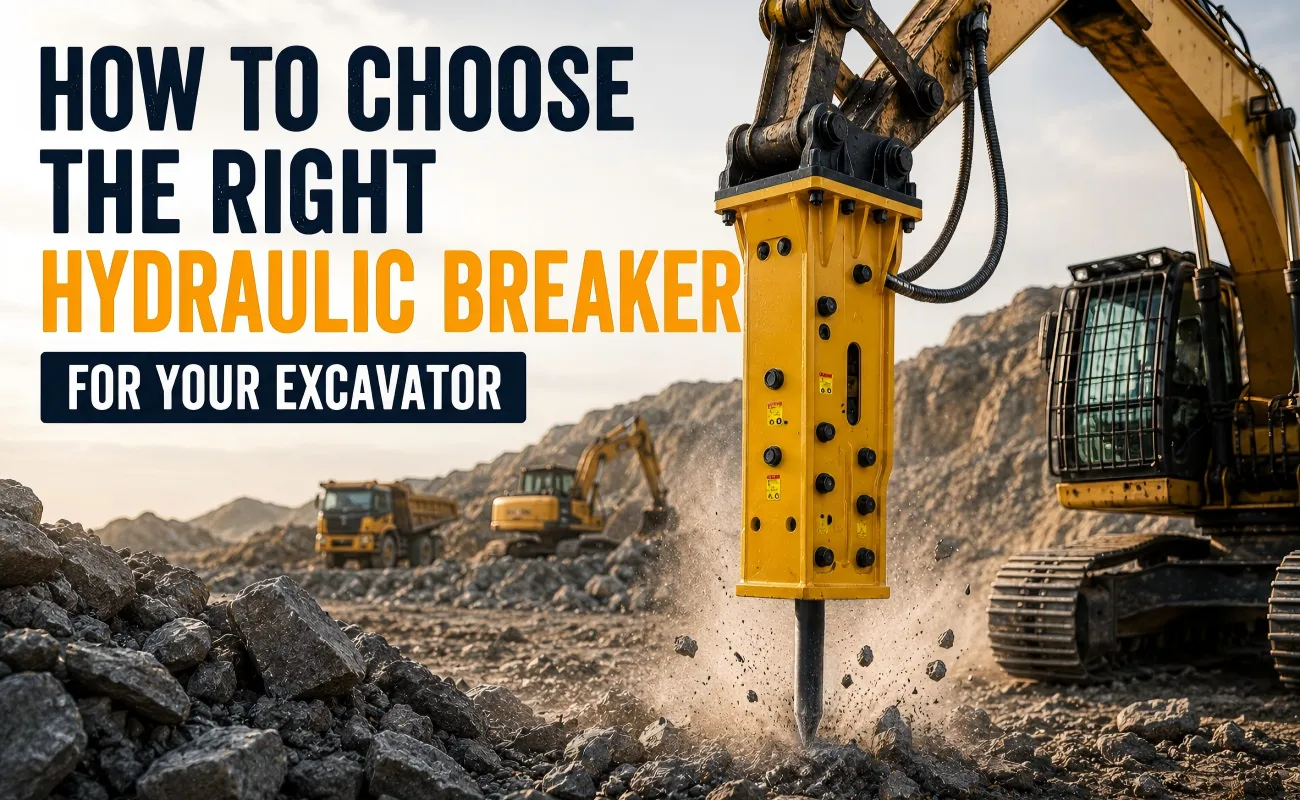
How to Choose the Right Hydraulic Breaker for Your Excavator
Excavator hydraulic breakers have become essential attachments in modern construction machinery, widely used in mining, demolition, road construction, tunnel engineering, and concrete breaking. However, many users, when choosing a hydraulic hammer, often focus only on the size of the hammer or the price, neglecting crucial factors such as excavator tonnage, hydraulic system compatibility, operating environment, and the breaker's structure. Choosing an unsuitable hydraulic breaker can not only affect breaking efficiency but also increase the burden on the hydraulic system, shortening the lifespan of the equipment.
Therefore, selecting a hydraulic breaker truly suitable for your working conditions requires comprehensive consideration of multiple aspects.
Choosing the Right Hydraulic Breaker
The excavator's weight is the most basic reference standard when selecting a hydraulic breaker.
Each breaker has a corresponding suitable tonnage range. If the breaker is too small, insufficient striking force and low work efficiency may occur when handling hard rock or high-intensity demolition operations.
Conversely, installing a large hydraulic breaker exceeding the excavator's load-bearing capacity can increase the load on the front end of the equipment, placing additional stress on the boom, stick, and hydraulic system.
For example, small excavators are typically equipped with light-duty hydraulic breakers, while medium to large excavators (20 tons and above) are more often used in heavy-duty applications such as mining and quarrying, requiring hydraulic breakers with higher impact energy.
Therefore, when selecting a hydraulic breaker, you should first confirm the excavator model, overall weight, and the manufacturer's recommended range of accessories.
When choosing a hydraulic breaker, we mainly confirm the following data:
- Excavator tonnage
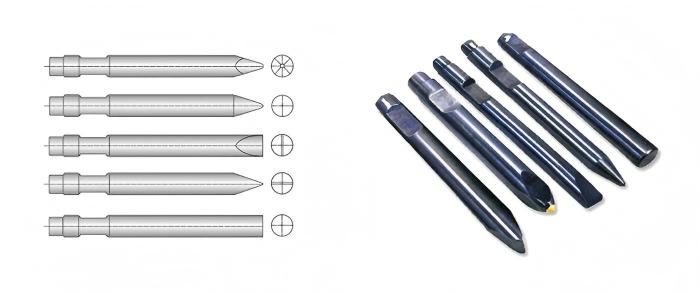
- Hydraulic breaker type and its chisel type
- Corresponding main dimensions
Proper hydraulic matching allows the hydraulic breaker to achieve stable impact performance while reducing the risk of equipment failure.
Construction Environment on Hydraulic Breaker Type
Different construction scenarios have different requirements for the hydraulic breaker structure.
For example, in urban demolition or construction environments with high noise requirements, the Silent Type Hydraulic Breaker, with its fully enclosed shell structure, can effectively reduce operating noise and protect the internal structure.
In high-intensity working conditions such as mines and quarries, users are more concerned with the impact capability, structural strength, and long-term durability of hydraulic breakers.
Common types of hydraulic breakers include:
- Side Type Hydraulic Breaker: Simple structure, easy maintenance, suitable for general breaking operations.
- Top Type Hydraulic Breaker: Suitable for various construction scenarios, offers good visibility, and has wide applications.
- Silent Type Hydraulic Breaker: Equipped with a protective casing, lower noise, suitable for urban construction environments.
Choosing the correct structural type can better meet different engineering needs.
The Impact of Chisel Quality
The chisel of a hydraulic breaker is the working part that directly contacts rock or concrete, and its material and heat treatment quality have a significant impact on its service life.
In long-term mining operations, the chisel needs to withstand continuous impact, vibration, and high-intensity wear. If the material strength is insufficient or the heat treatment process is unstable, accelerated wear, breakage, or deformation can easily occur.
Therefore, in addition to focusing on the breaker itself, the chisel material, hardness control, and manufacturing process are also key factors to consider when selecting a product.
Ease of Maintenance
Many users only compare initial prices when purchasing hydraulic breakers, but maintenance costs are equally important for long-term use.
A reliable hydraulic breaker should have a stable sealing system, wear-resistant bushings, and easily replaceable wear parts.
Furthermore, the supplier's ability to provide spare parts such as chisels and seals directly impacts subsequent maintenance efficiency and equipment downtime.
Especially for mining and large-scale engineering projects, a stable supply of spare parts is often more important than the initial purchase price.
How to Choose a Reliable Hydraulic Breaker Supplier?
Besides product specifications, manufacturing capabilities and quality control are also key factors to consider during the procurement process.
Reliable manufacturers typically focus on raw material selection, precision machining, heat treatment processes, and overall machine testing procedures to ensure the breaker maintains stable performance under high-intensity operating conditions.
For the export market, product compatibility, spare parts supply, and technical support are also crucial foundations for long-term cooperation.
Conclusion
Choosing the right hydraulic breaker is not simply about matching the excavator's tonnage; it requires comprehensive consideration of hydraulic parameters, the construction environment, the breaker's structure, the quality of the chisel, and future maintenance needs. Correct selection not only improves breaking efficiency but also reduces equipment wear and long-term operating costs.
At KINTON PARTS, we offer a variety of Hydraulic Breakers for Excavators (prices are based on machine model), including Silent Type, Side Type, and Top Type hydraulic breakers, and provide matching chisels and seals. With rigorous manufacturing processes, stable product quality, and extensive experience in construction machinery parts, we are committed to providing reliable and efficient hydraulic breaking solutions to global customers, meeting the diverse needs of mining, demolition, and infrastructure construction.