


Maximizing Hydraulic Breaker Impact Energy Through Correct Pressure and Component Matching


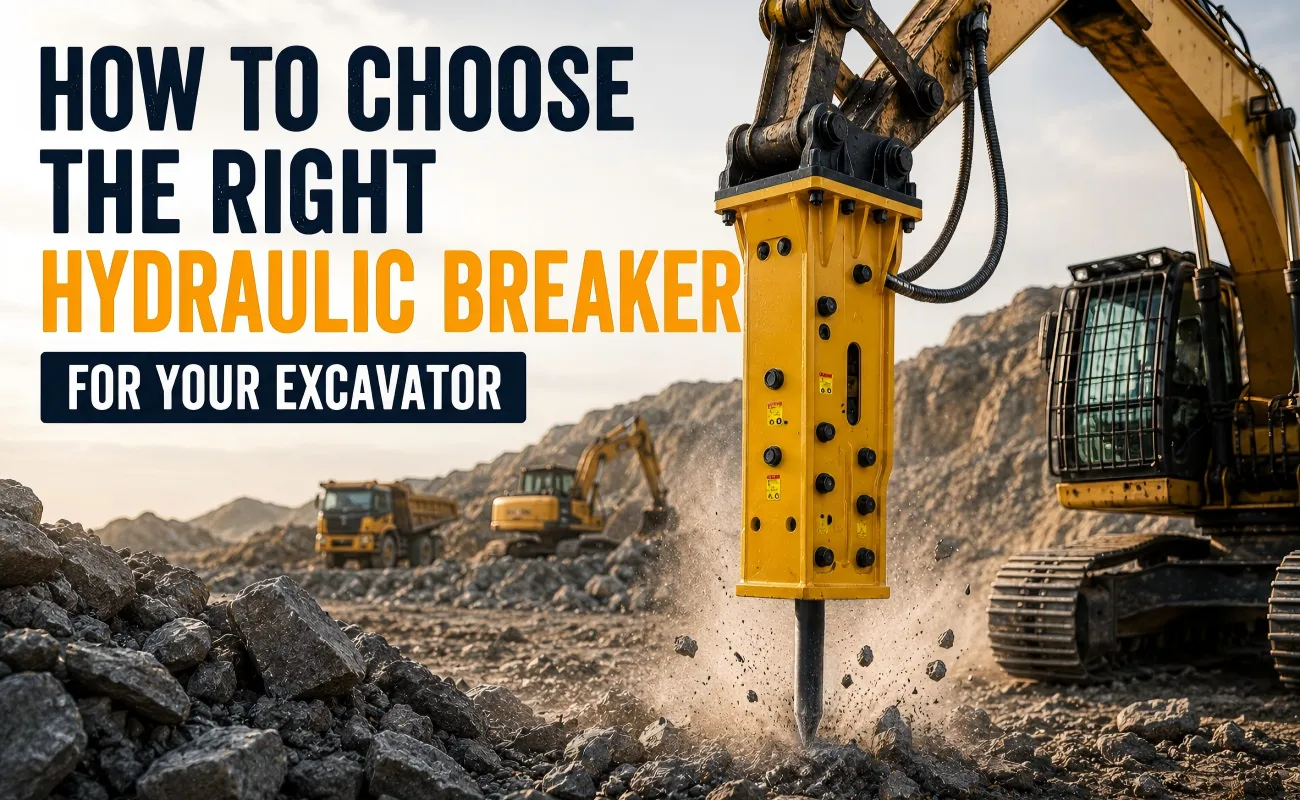
In demolition, mining, quarrying, and heavy foundation work, the efficiency of a hydraulic breaker directly determines overall operating cost.
When a breaker shows symptoms such as weak impact, poor penetration, or slow striking speed, operators often suspect insufficient hydraulic pressure—yet the real core lies in the energy transfer chain: nitrogen pressure, piston condition, and chisel wear pattern.
How well these three components work together directly determines whether the breaker can output its designed impact energy.
For professional users, this is not theoretical knowledge, but a set of practical indicators that directly affect productivity, repair costs, and downtime.
Below is a technical explanation of the key principles behind breaker impact energy transfer and how to maintain peak performance across different working conditions.
Nitrogen Pressure: The Primary Variable Determining Impact Energy Peak
The nitrogen chamber inside a breaker functions as one of its major energy sources.
Compressed nitrogen expands and rebounds at high speed, generating the powerful return force that drives each impact.
Incorrect nitrogen pressure drastically alters breaker performance.
1. Low Nitrogen Pressure: Weak, Soft Impact
Typical symptoms:
- Dull striking sound
- Reduced breaking speed
- Decreased piston reciprocation speed
- Chisel bouncing on hard rock instead of penetrating
This occurs because insufficient nitrogen elasticity reduces the rebound energy of every stroke.
2. High Nitrogen Pressure: Overload and Excessive Shock
Possible consequences:
- Accelerated wear of piston and cylinder
- Excessive load on front bushings
- Deep and abnormal “impact marks” on the chisel’s striking end
- Strong vibration transmitted to the carrier, affecting operator comfort
Although high pressure may feel “stronger,” it shortens breaker lifespan—especially for older or rebuilt equipment.
3. Adjustment Principles for Different Working Conditions
Hard rock (granite, basalt): Slightly higher—but still within manufacturer limits—to increase peak impact energy.
Concrete demolition: Standard pressure is sufficient to avoid structural fatigue and unnecessary stress.
Medium-hard materials (frozen soil, sandstone): Slightly lower pressure yields faster striking frequency and better efficiency.
Key principle: Higher pressure is not always better—pressure must match the piston’s rhythm and load pattern.
Piston Condition: The True “Heart” of Impact Energy Output
The piston performs high-speed reciprocating motion.
Its surface hardness, lubrication, and clearance directly affect how effectively energy is delivered.
1. Piston Surface Wear Causes Energy Loss
If surface finish becomes rough:
- Friction increases, slowing reciprocation
- Nitrogen energy cannot be fully released
- Oil film breaks down, accelerating wear
- Leads to unstable impact power: “sometimes strong, sometimes weak
2. Excessive Clearance Causes Pressure Leakage
When piston-to-bushing clearance becomes too large, high-pressure oil leaks through the gap, preventing full energy transmission to the chisel.
Common symptoms:
- Nitrogen pressure is normal but impact remains weak
- Striking sound becomes sharp or irregular
- Breaker temperature rises noticeably during work
3. Fatigue and Micro-Cracks in the Piston
Long-term heavy loading or overpressure can create fatigue cracks at the piston tail.
Professional recommendations:
- Perform MT (Magnetic Particle Testing) or PT (Penetrant Testing) during overhaul
- Avoid overpressure operation, especially on older or refurbished breakers
Chisel Wear Patterns: Determines Whether Energy Can Enter the Rock
The chisel is the final point of energy delivery.
Its wear condition dramatically affects efficiency.
1. Mushrooming at the Chisel Rear End
Rear-end mushrooming causes uneven force distribution between piston and chisel, preventing clean energy transfer and risking piston damage.
2. Blunt Chisel Tip Reduces Penetration
Typical symptoms:
- Loud striking sound but rock does not break
- Chisel jumps or skips on the surface
- Difficulty establishing proper contact area
3. Heat Discoloration Indicates Hardness Decline
Overheating or poor lubrication causes tempering and hardness loss, greatly reducing resistance to impact.
4. Perfect Matching: The Core Logic of Maximum Impact Efficiency
Breaker energy delivery is a system-level balance:
- Nitrogen pressure determines the peak energy
- Piston efficiency determines energy loss
- Chisel condition determines how effectively energy enters the material
Only when all three factors are in optimal condition can the breaker achieve its designed striking frequency and impact force.
A deviation in any one area leads to noticeable efficiency decline.
5. Professional Maintenance Guidelines for Different Working Conditions
1. Demolition (Concrete / Reinforced Concrete)
- Maintain sufficient piston lubrication
- Use sharper chisel profiles
- Avoid overpressure to prevent front-head cracking
2. Hard Rock Mining (Granite / Basalt)
- Slightly increased nitrogen pressure—but never exceed manufacturer limits
- Chisels wear quickly; keep multiple spares
- Ensure bushing clearance remains within specification to avoid piston damage
3. Refurbished or Older Breakers
- Not suitable for high nitrogen pressure
- Piston should be checked for cracks frequently
- Chisel rear end must remain within standard shape; deformation affects rebound behavior
Hydraulic Breaker Impact Efficiency Is the Result of System Matching
Hydraulic breaker impact output is the balance of nitrogen pressure, piston performance, and chisel condition.
Even small deviations in any link can cause reduced efficiency, higher fuel consumption, and rapid component wear.
For demolition, quarrying, and mining professionals, mastering pressure adjustment, wear identification, and chisel selection is the key to maximizing production and minimizing operating costs.