Hydraulic Breaker Piston Wear in 20-Ton Excavators: How Precision Fit Controls Impact Power
In mining, quarrying, and concrete demolition, 20-ton class excavators are the most common carriers for hydraulic breakers. Operators often notice that the same breaker model can perform very differently on different machines—some deliver powerful, consistent blows, while others suffer from weak impact and falling strike frequency.
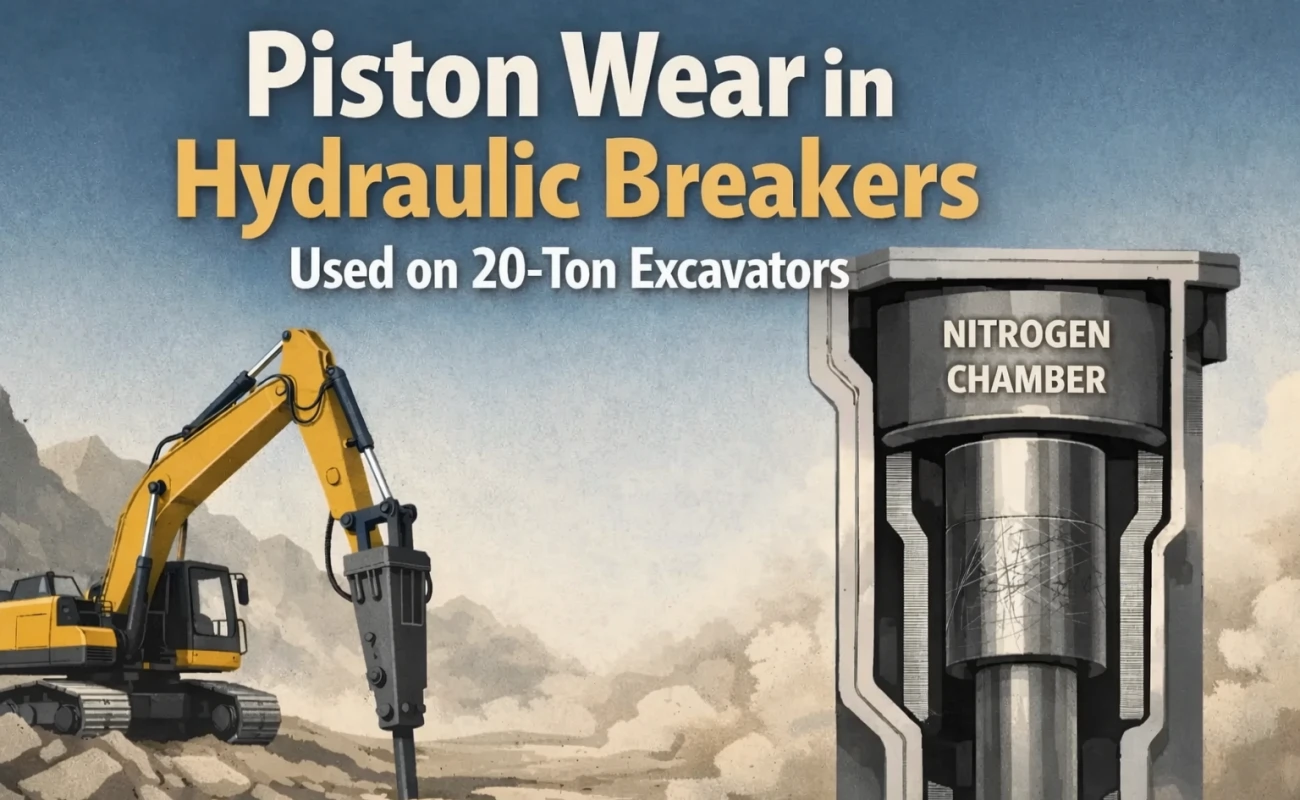
This difference is not always caused by hydraulic flow. In many cases, it comes from a breakdown in the dynamic balance between the piston and the nitrogen chamber inside the breaker.
How a Hydraulic Breaker Actually Generates Impact
A hydraulic breaker converts hydraulic energy into impact energy through a two-stage process. First, hydraulic oil drives the piston, compressing nitrogen gas. Then the compressed nitrogen releases this stored energy in a powerful, instantaneous удар.
If any part of this energy transfer chain is disturbed, overall impact efficiency drops sharply. One of the most overlooked but critical factors is the clearance between the piston and the center cylinder.
Why Piston Clearance Directly Controls Impact Power
Under ideal conditions, the piston should move back and forth inside the cylinder with a very small, controlled clearance. This creates a stable oil film for lubrication while preventing high-pressure oil from bypassing the piston.
As wear increases this clearance, hydraulic oil begins to leak around the piston instead of pushing it forward. The result is a loss of effective driving pressure, which causes:
- Slower piston acceleration
- Shorter stroke length
- Lower strike frequency
- Reduced impact energy per blow
On high-flow, high-load 20-ton excavators, this internal leakage leads to rapid and very noticeable performance decline.
The Real Relationship Between Nitrogen Pressure and Impact Energy
Nitrogen does not simply “store energy.” It defines how that energy is released. Correct nitrogen pressure allows the piston to reach maximum acceleration at the end of its stroke, converting hydraulic input into powerful impact.
However, when piston clearance is already too large, increasing nitrogen pressure cannot recover the lost energy. Instead, it increases reverse shock loads at the end of each blow, accelerating wear in:
Guide surfaces
Sealing zones
Cylinder walls
True high-efficiency impact can only exist when mechanical fit is correct.
Why Machining Accuracy Determines How “Hard” a Breaker Can Work
In mining and demolition, breakers operate under continuous heavy loads. They are not occasional attachments—they are production tools.
The machining accuracy of the piston, center cylinder, and guide system determines whether impact energy can remain stable over thousands of cycles. Poor fit leads to faster wear, rising leakage, and falling impact force.
KINTON PARTS controls piston diameter tolerances and cylinder bore accuracy, combined with surface hardening and heat treatment, to maintain geometric stability even under high-frequency impact. This slows wear and preserves impact efficiency far longer.
Different Breaker Structures, Different Stress Patterns
Not all hydraulic breakers load their pistons in the same way:
- Box-type (square) breakers deliver very high impact forces and require strong, stable guidance.
- Side-type (triangle) breakers are more compact and are more sensitive to internal alignment.
- Silent breakers emphasize continuous impact and thermal control inside the enclosed housing.
KINTON PARTS designs its breaker components differently for each structure so that piston and cylinder fit remain optimized under their specific working conditions.
Designed for High-Intensity 20-Ton Applications
On mine and demolition sites, the real question is not “Can it break?” but “Can it keep breaking at full power?”
By optimizing piston-to-cylinder clearance and matching it with correct nitrogen pressure, a hydraulic breaker can maintain efficient energy conversion even under continuous heavy load.
For professional users who value output, reliability, and lower cost per ton of material broken, selecting a breaker system engineered around precision-matched core components is the key to controlling downtime and maximizing productivity.