




How Worn Sprockets Affect Hydrostatic Transmission in John Deere 700J / 750J

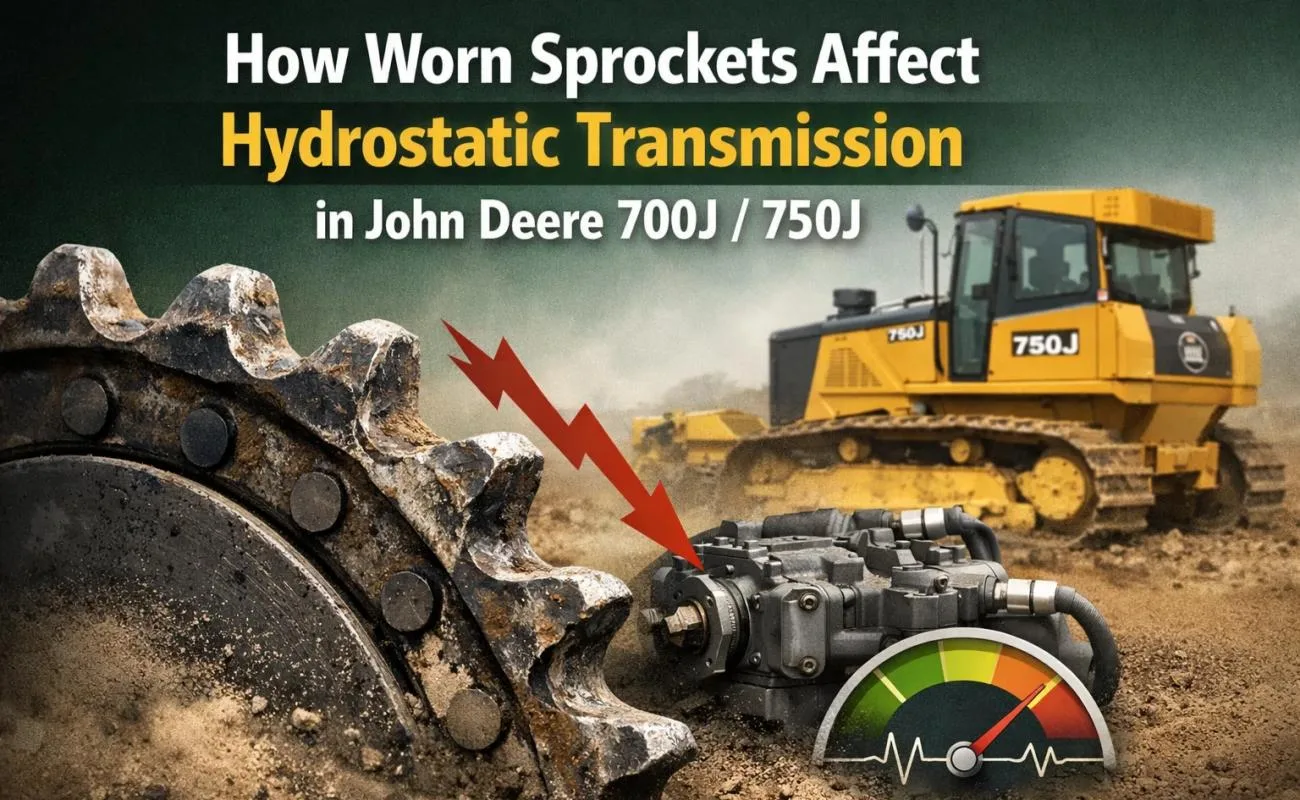
The John Deere 700J and 750J crawler dozers are widely used in earthmoving, mining, and heavy-duty applications. Equipped with a hydrostatic transmission (HST) system, these machines deliver precise control, smooth torque response, and high operational efficiency.
However, during refurbishment of used units, one critical component is frequently underestimated — the drive sprocket.
While engines, hydraulic pumps, and travel motors are routinely inspected, worn sprockets can significantly increase hydrostatic system stress and accelerate internal wear.
Understanding this mechanical relationship is essential for extending transmission life.
1. The Role of the Sprocket in a Hydrostatic Drive System
In a hydrostatic transmission system:
- The hydraulic pump generates high-pressure oil flow
- The travel motor converts hydraulic energy into torque
- Torque passes through the final drive
- The sprocket engages the track chain to move the machine
The sprocket is the first mechanical interface between hydraulic torque output and ground contact.
If its geometry changes due to wear, the entire torque transfer pattern becomes unstable.
2. How Worn Sprockets Increase Hydrostatic Motor Load
2.1 Tooth Profile Wear and Pitch Mismatch
As sprocket teeth wear:
- Tooth roots become thinner
- Tooth faces develop uneven wear patterns
- Track pitch alignment deteriorates
This causes improper meshing between the sprocket and track links.
Instead of smooth rolling engagement, the system experiences:
- Intermittent impact loading
- Cyclical torque spikes
- Pressure fluctuation inside the hydrostatic circuit
These fluctuations increase stress on:
- Motor piston assemblies
- Valve plates
- Bearing surfaces
- Internal sealing components
Over time, this leads to:
- Reduced volumetric efficiency
- Increased internal leakage
- Higher operating temperature
2.2 Track Jumping and Micro-Slippage
Severely worn sprockets may cause:
- Track jumping under heavy load
- Abnormal vibration
- Micro-slippage during traction
Operators often compensate by increasing throttle or applying more travel input.
This results in:
- Higher system pressure
- Increased motor housing temperature
- Accelerated wear of hydrostatic components
In many used machines, travel weakness or one-side stalling is mistakenly diagnosed as a motor issue, while the root cause lies in the undercarriage.
3. Why Sprocket Replacement Is Critical During Rebuild
During refurbishment of John Deere 700J / 750J dozers, replacing worn sprockets should be considered a preventive transmission protection measure.
High-quality replacement sprockets should include:
- High-carbon alloy steel or forged steel construction
- Induction-hardened tooth surfaces
- Controlled machining tolerances for accurate pitch matching
- Optimized hardness-to-toughness balance
Replacing worn sprockets restores:
- Proper track engagement geometry
- Stable torque transfer
- Reduced hydraulic pressure spikes
- Lower long-term motor stress
This directly contributes to extended hydrostatic transmission lifespan.
4. Cost Analysis: Sprocket Replacement vs Hydrostatic Motor Repair
Hydrostatic motor overhaul typically involves:
- Internal rotating group replacement
- Valve plate resurfacing
- Seal kit rebuilding
- High labor and calibration costs
If structural damage occurs, expenses rise dramatically.
In comparison, sprockets are predictable wear parts with controlled cost.
Preventive sprocket replacement:
- Minimizes risk of major transmission repair
- Reduces downtime
- Extends machine profitability in its second lifecycle
For heavy-duty applications such as mining and large-scale earthmoving, this preventive strategy is especially important.
Conclusion
In hydrostatic crawler dozers like the John Deere 700J and 750J, the sprocket is more than a wear component — it is a critical torque transfer element.
Worn sprockets:
- Amplify hydrostatic motor load
- Increase pressure fluctuations
- Accelerate internal component wear
Replacing high-load sprockets during rebuild is a technically sound and economically efficient strategy to protect the hydrostatic transmission system.
For tooth count confirmation, undercarriage matching, or rebuild consultation, provide your machine model and specifications for technical support.


