


Kinton Parts Front Idler Manufacturing Process: From Casting to Precision Assembly

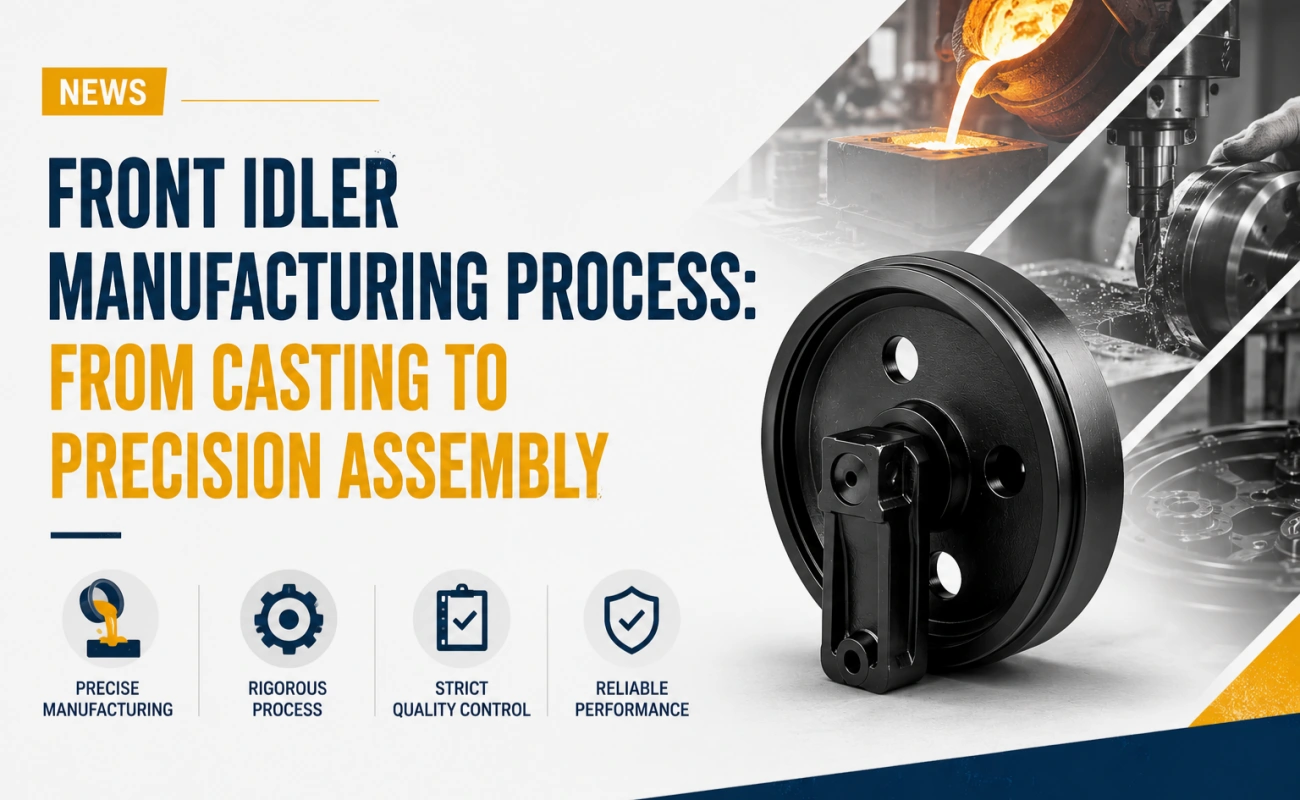
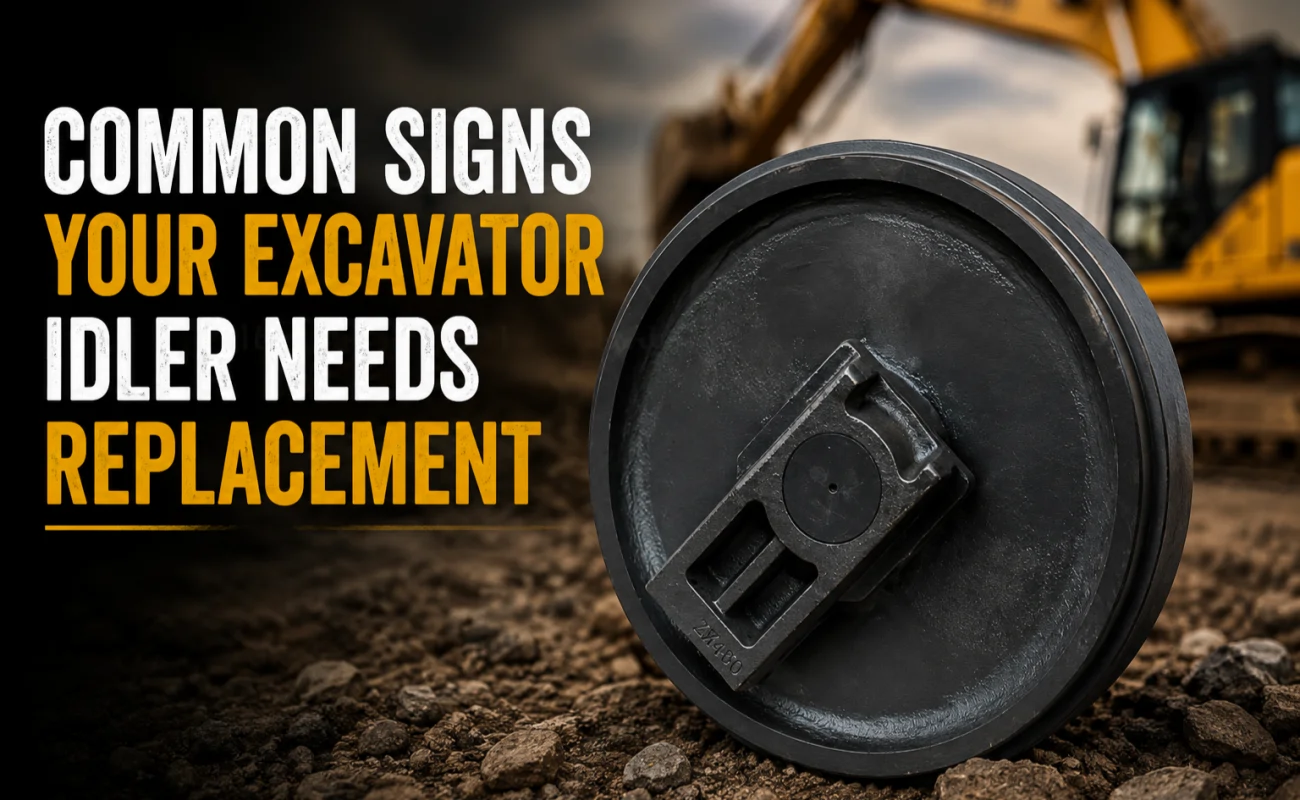
In the chassis system of tracked construction machinery, the front idler wheel, although not directly involved in drive, plays a crucial role in track tension and operational stability. It must not only withstand the continuous tension from the track system but also maintain structural stability and good guiding performance under complex working conditions. In mining, earthmoving construction, and high-impact environments, the idlers of excavators and bulldozers are constantly subjected to impact loads, mud erosion, and intermittent stress changes. Therefore, their performance depends not only on the design structure but also on a complete and stable manufacturing process. As a front idler manufacturer, Kington Components maintains strict quality control over idler gears at every stage, from raw materials to final assembly. The following is a systematic analysis of the idler gear manufacturing process based on actual production procedures.
I. Idler Shell Manufacturing
The core component of the idler wheel is the shell, whose manufacturing typically begins with casting. A reasonable casting process can achieve a uniform microstructure, providing a stable foundation for subsequent processing.
After casting, the wheel body undergoes a tempering process to release internal stress and improve overall toughness. Subsequently, shot blasting removes the surface oxide layer and impurities, making it suitable for machining.
During the machining stage, key dimensions of the wheel body are precisely controlled, including the mounting surface, guide surface, and the area in contact with the track. Afterward, a rail surface hardening process is used to increase the hardness of the contact surfaces, giving it greater wear resistance during long-term friction with the track.
II. Bracket: Ensuring Structural Stability
As a crucial component connecting the wheel body to the overall machine structure, the bracket's manufacturing also requires a balance between strength and machining precision.
Production typically begins with casting, using spheroidizing treatment to optimize the material's internal structure and improve impact resistance. Shot blasting and machining follow to ensure the dimensional accuracy of key mating surfaces.
After machining, the bracket also requires cleaning and rust prevention treatment to withstand long-term use in complex operating environments. Good surface treatment not only improves corrosion resistance but also contributes to the stability of subsequent assembly.
III. Idler Shaft Processing
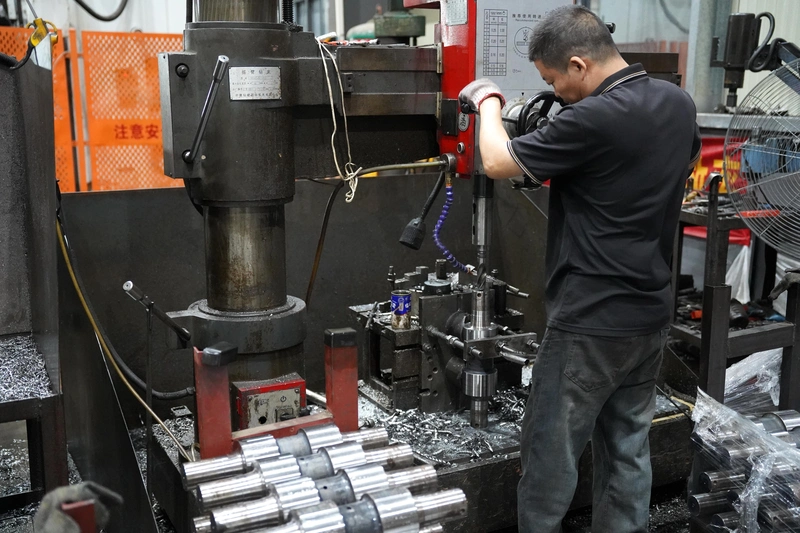
The idler shaft is a crucial component connecting the wheel body and the support, and its performance directly affects the operational stability of the idler wheel.
Manufacturing begins with blanking, followed by heat treatment to achieve a balance between strength and toughness. After rough machining, the shaft undergoes surface hardening to enhance wear resistance while maintaining the toughness of the internal structure.
Then, overall tempering further stabilizes the microstructure, and finally, precision grinding ensures dimensional accuracy and surface finish. This process is crucial for reducing running resistance, minimizing vibration, and extending service life.
IV. Semi-finished Product Control and Assembly
After the wheel body, support, and idler shaft are machined, they enter the semi-finished product stage and undergo basic testing, including checks on dimensional accuracy, hardness, and surface quality.
During assembly, each component is assembled according to strict fitting standards, and the lubrication system is filled and the sealing structure is installed. Good assembly precision ensures stable rotation of the idler wheel during actual operation and prevents uneven wear or abnormal stress.
The final product still needs to undergo basic operational testing to verify its structural stability and assembly quality.


V. How Manufacturing Processes Affect Idler Wheel Life
In practical applications, idler wheel failure is often not due to a single cause, but rather the result of multiple manufacturing factors combined. For example:
- Inhomogeneous material structure may lead to localized stress concentration.
- Instantaneous heat treatment can affect the performance of the wear-resistant layer.
- Machining accuracy deviations may cause uneven stress distribution.
- Assembly errors can lead to operational imbalance.
These factors may not be obvious in the short term, but they gradually amplify during long-term operation, ultimately affecting the reliability of the entire chassis.
Therefore, a stable manufacturing system essentially reduces deviations at every stage, thereby improving product consistency and durability.
Kinton Parts Idler Wheels
Although the structure of an idler wheel is relatively simple, its manufacturing process involves multiple key stages, including materials, heat treatment, machining, and assembly. The level of control at each step directly affects the performance of the final product under complex operating conditions.
At KINTON PARTS, we ensure that every idler wheel has stable performance and a reliable service life through standardized processes and strict quality control. Whether in mining or high-intensity construction environments, our products provide continuous and stable support for excavators and bulldozers.
If you are looking for high-quality idler wheel solutions, please contact us. We will provide more suitable undercarriage component support based on different machine models and working conditions.