Company News

Kinton Parts Track Roller & Carrier Roller Manufacturing Process Explained

Kinton Parts Track Roller Carrier Roller Manufacturing Process

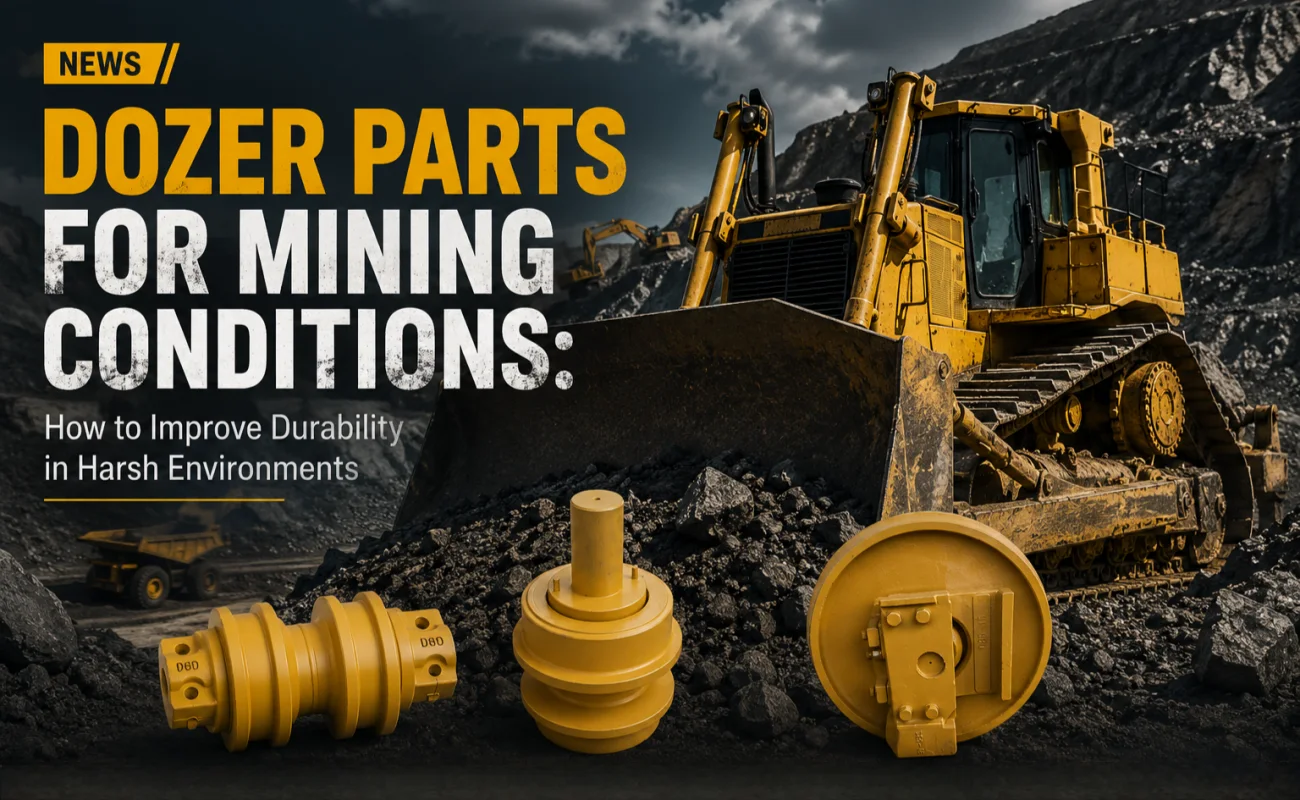
In the undercarriage system of crawler construction machinery, track rollers and carrier rollers are essential components for excavators. They play a key role in supporting the machine’s weight and ensuring stable track operation. Whether in mining, earthmoving, or other high-load and complex working environments, these undercarriage parts are continuously exposed to extreme conditions, including impact loads, abrasive mud and sand, and constant rotation. As a result, their service life is not determined by a single process, but by a complete set of manufacturing processes for excavator undercarriage track rollers, including material selection, heat treatment, precision machining, and assembly control.

At KINTON PARTS, we ensure that every track roller and carrier roller delivers consistent strength, wear resistance, and long-term operational reliability through a standardized undercarriage production system.

1. Roller Shell of Track Roller

The roller shell is the core load-bearing structure of both track rollers and carrier rollers. Its performance determines how the component behaves under long-term stress.

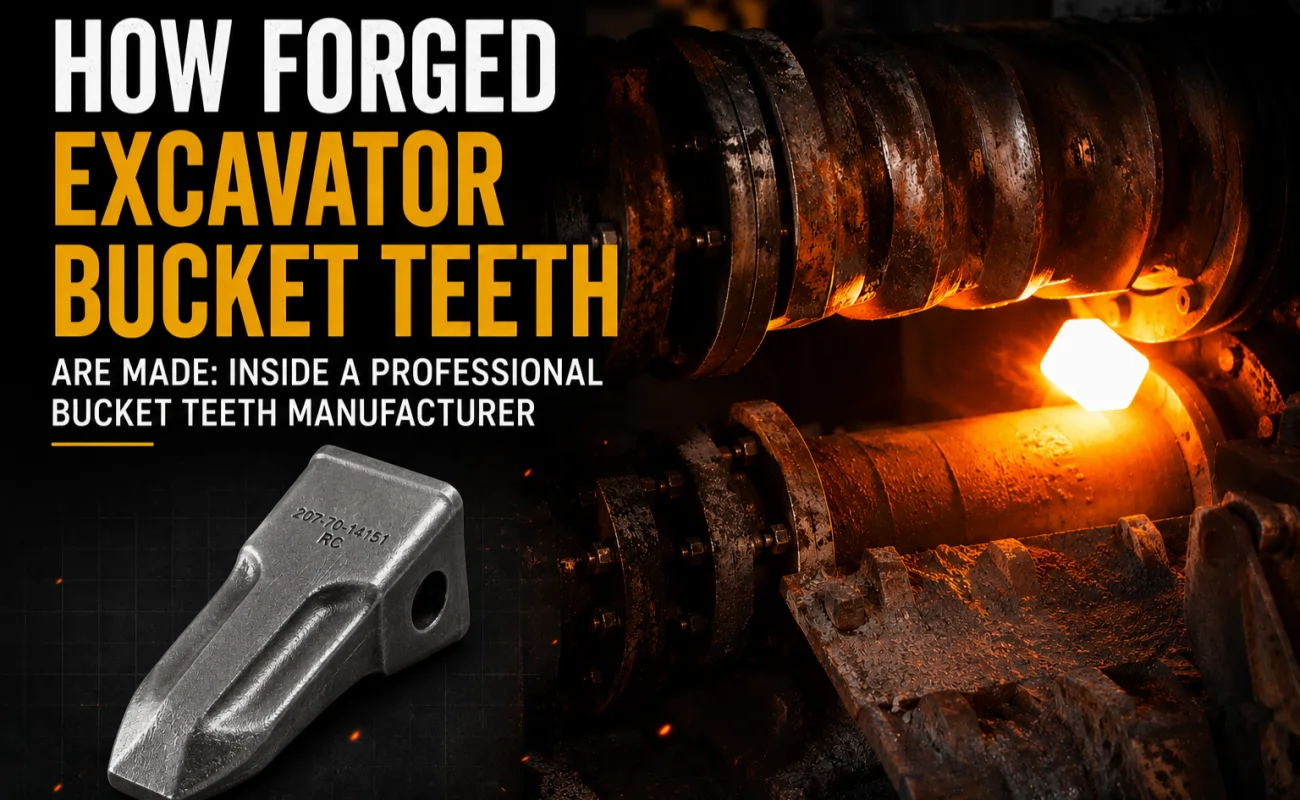
Production begins with a forging process, which optimizes the internal grain structure of the steel and significantly improves overall mechanical strength. After forging, the shell undergoes quenching and tempering heat treatment to achieve a balanced combination of hardness and toughness.

Once the material properties are stabilized, the component enters the rough machining stage to form the basic geometry, providing a foundation for subsequent precision machining. To enhance wear resistance, the track contact surface is subjected to induction hardening, increasing surface hardness in critical load-bearing areas.

Finally, precision machining ensures that all dimensions meet strict tolerance requirements, providing a stable foundation for sealing performance and rotational accuracy.

2. End Cover: Ensuring Sealing Stability

Although relatively small in size, the end cover plays a crucial role in preventing mud, water, and dust from entering the internal structure.

Its manufacturing process typically starts with controlled casting, followed by nodularization treatment to improve material toughness and impact resistance. After shot blasting and surface treatment, it proceeds to precision machining to ensure proper fit with the roller shell.

To further enhance durability in harsh environments, the end cover undergoes anti-corrosion treatment, allowing it to maintain stable performance in high-humidity or muddy conditions. Protective storage measures are also applied before it enters the semi-finished stage.

3. Shaft: The Core Component for Rotation and Load Transmission

The shaft is the most critical rotating component in track rollers and carrier rollers, directly affecting operational smoothness and load-bearing capacity.

Manufacturing begins with raw material cutting, followed by quenching and tempering to relieve internal stress and improve overall strength. After rough machining, the shaft undergoes surface strengthening treatment to enhance wear resistance while maintaining toughness.

Finally, precision grinding ensures extremely high dimensional accuracy and surface finish. This is essential for reducing friction, minimizing vibration, and ensuring stable rotation under heavy loads.

4. Assembly and Quality Control

After all components are processed, they enter the assembly stage. Before final assembly, each part must pass strict inspections, including hardness testing, dimensional measurement, and surface quality checks.

During assembly, lubricating oil is injected, and sealing components are installed under controlled conditions to ensure long-term sealing stability. Each finished product must also undergo rotation testing to verify smooth operation, structural reliability, and the absence of abnormal noise or leakage.

This stage is critical, as even minor machining deviations or unstable heat treatment can directly affect the final service life.

5. Why Manufacturing Processes Determine Service Life

Failure of track rollers and carrier rollers is rarely caused by a single factor. It is usually the result of accumulated issues in material treatment or machining accuracy.
Common causes of failure include:

  • Uneven heat treatment leading to surface cracking
  • Insufficient shaft hardness causing premature wear
  • Poor sealing tolerances resulting in oil leakage
  • Unstable welding or machining affecting overall structural strength

Therefore, a stable and controlled manufacturing system is essential. Each well-managed process reduces uncertainty and contributes to a longer overall service life.

Kinton Parts Reliable Undercarriage Performance

Although track rollers and carrier rollers may appear structurally simple, their manufacturing process is in fact a comprehensive system combining material science, heat treatment, precision machining, and quality control.

At KINTON PARTS, we consistently adhere to process stability and strict quality standards to ensure that every undercarriage component can withstand long-term operation in demanding conditions such as mining, construction, and earthmoving.

If you are looking for reliable track roller or carrier roller solutions for excavators and bulldozers, KINTON PARTS can provide OEM-grade undercarriage components compatible with multiple machine brands, ensuring longer service life and more stable performance.