How Bulldozer Sprocket Segments Are Manufactured: Inside a Undercarriage Parts Factory
In mines, quarries, and large-scale earthmoving projects, bulldozer undercarriage systems endure high-load impacts and continuous wear during long-term operation. While the sprocket segment is only one component of the undercarriage, it directly affects the track chain engagement stability and the overall undercarriage lifespan. Especially for heavy-duty mining equipment, the sprocket segment's stable wear resistance and impact resistance directly impact the chain wear rate and subsequent maintenance costs.
As a manufacturer specializing in construction machinery undercarriage components, we continuously provide global customers with various Bulldozer Sprocket Segment solutions. Below, we'll guide you through the manufacturing process of a bulldozer drive block, based on our actual production workflow.
The Importance of Sprocket Segment Materials
For bulldozer undercarriage systems, the sprocket segment engages with the track chain at high intensity for extended periods, continuously enduring impact loads and frictional wear during heavy-duty operation.
Therefore, material selection directly affects the sprocket segment's wear life and crack resistance. In our production, the sprocket body is typically made of 35MnBH forged material, while the sprocket segment is made of 40Mn2 cast material.
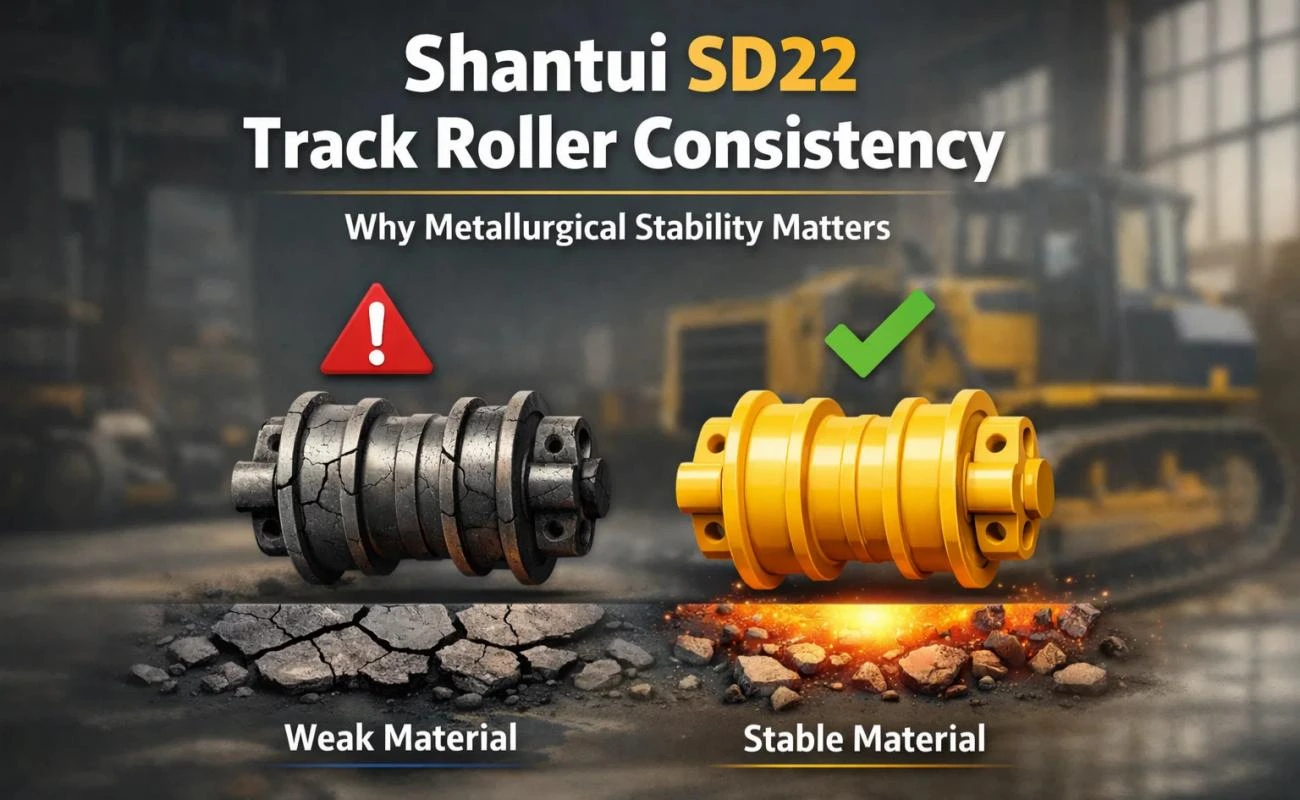
35MnBH possesses good strength and hardenability, providing stable support for the overall structure; while 40Mn2 material balances wear resistance and toughness, making it more suitable for the long-term impact conditions of the sprocket segment. For mining equipment, truly stable undercarriage components rely not only on high hardness, but more importantly on achieving a balance between wear resistance and fracture resistance.
Raw Material Preparation and Heating
Sprocket segment manufacturing usually begins with raw material preparation. Depending on the model and size requirements, the steel is first cut and sorted.
Before formal forming, the material needs to undergo a heating stage. This process, seemingly basic, directly affects the stability of the subsequent microstructure.
If the heating temperature is uneven, abnormal internal microstructure, uneven stress, or even cracks may occur during subsequent forging or casting. Therefore, heating control is a crucial part of manufacturing large bulldozer undercarriage parts.
Forging and Casting
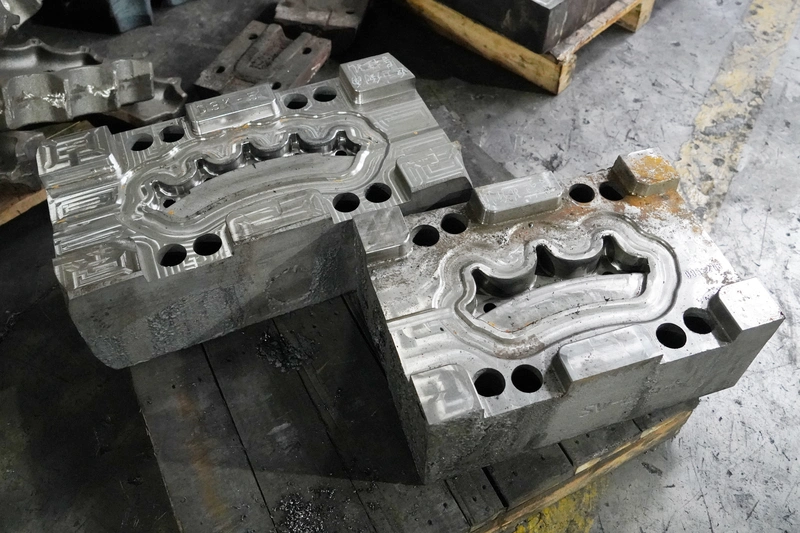
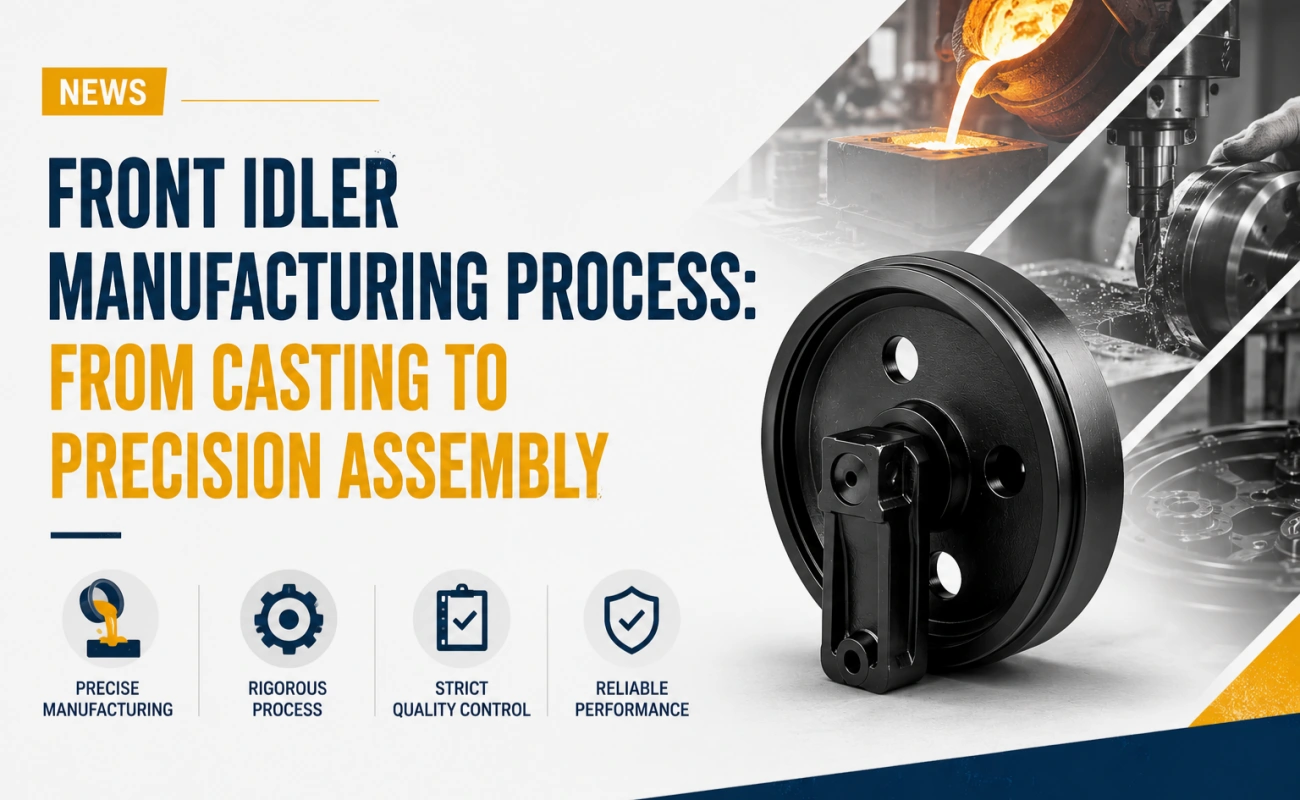
For the main body of the sprocket segment, we typically use the 35MnBH forging process. Compared to conventional machining, forging improves the internal flow lines of the metal, making the material structure denser and thus enhancing overall impact resistance. This is especially beneficial for bulldozers operating under heavy loads for extended periods, as forged structures are better suited to complex working conditions. The sprocket segment, on the other hand, uses the 40Mn2 casting process. Stable casting control ensures consistency between the tooth profile and overall dimensions, providing a stable foundation for subsequent machining. For the sprocket segment, the precision of the tooth structure is crucial.
CNC Machining
After the blank is completed, the sprocket segment enters the CNC machining stage.
This step primarily ensures:
- Installation hole accuracy
- Total tooth dimension consistency
- Center positioning accuracy
- Meshing angle stability
Especially for large mining equipment, the sprocket segment operates under high loads for extended periods. Insufficient tooth machining accuracy can easily lead to abnormal chain meshing, uneven wear, or even tooth skipping.
Therefore, the manufacturing of increasingly high-quality undercarriage components relies more heavily on CNC machining to improve overall consistency.
Heat Treatment: Affecting Sprocket Segment Lifespan
Many users focus on hardness when purchasing sprocket segments, but in reality, lifespan is determined by more than just hardness. If the hardness is too low, the teeth will wear quickly; however, if the hardness is too high and the toughness is insufficient, cracks and tooth breakage are likely to occur under the impact conditions of mining.
Therefore, in sprocket segment manufacturing, the core of heat treatment is achieving a balance between hardness and toughness.
A mature heat treatment process not only improves the wear resistance of the tooth surface but also ensures sufficient impact resistance of the internal structure. This is particularly important for mining equipment.
Shot Blasting, Painting, and Packaging
After machining and heat treatment, sprocket segments typically undergo shot blasting and surface treatment.
Shot blasting effectively removes the surface oxide layer and improves surface condition, resulting in a more uniform overall appearance. Subsequently, the product is painted, rust-proofed, and packaged according to customer requirements.
Especially for export products, which are exposed to humid environments during long-term sea transport, rust prevention and packaging stability are equally critical.
Manufacturing Process of Sprocket Segments
In the past, many users focused primarily on price when purchasing chassis components.
However, as the intensity of mining equipment operations continues to increase, more and more customers are realizing that what truly affects the lifespan of a undercarriage is not just dimensional accuracy, but also the stability of the manufacturing process.
Especially for bulldozer sprocket segment, problems with materials, heat treatment, or tooth machining can lead to abnormal chain wear, unstable meshing, and ultimately premature drive block failure.
Therefore, more and more mining customers are now paying closer attention to the manufacturing process itself, rather than just the final product's appearance.
Conclusion
For bulldozer undercarriage systems, sprocket segments are not just ordinary wear-resistant parts, but crucial components determining the stability of track drives. From material selection to forging, casting, CNC machining, and heat treatment, every process affects the final service life.
At KINTON PARTS, we continuously provide global customers with a wide range of bulldozer and excavator undercarriage component solutions, including Sprocket Segments, chains, track rollers, and idlers. Through stable material control and mature manufacturing processes, we are committed to helping customers improve the durability of their equipment undercarriage and reduce long-term maintenance costs in mining and heavy-duty environments.