Maintenance Tips

Why Dozer Track Rollers Fail: Common Causes and How to Extend Undercarriage Life

Dozer Track Rollers Fail

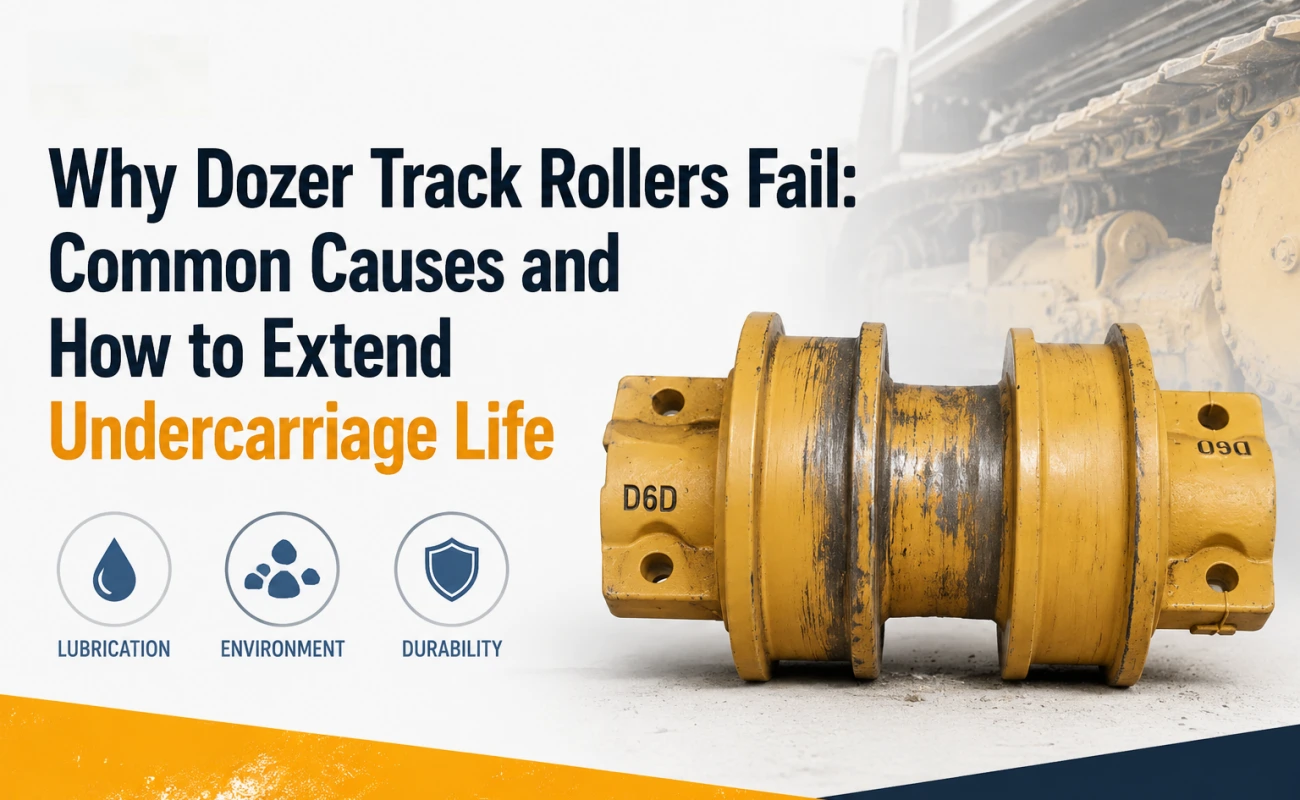
In bulldozer undercarriage maintenance, track roller problems are among the most common issues affecting machine reliability and operating costs. Many operators eventually encounter problems such as abnormal roller wear, oil leakage, overheating, or even roller seizure during long-term operation. In most cases, these failures are not caused by a single defect, but by the gradual accumulation of multiple factors related to lubrication, working conditions, material performance, and structural durability. For bulldozers working in mining, earthmoving, and other high-impact environments, track rollers are constantly exposed to heavy loads, abrasive materials, and continuous track friction. Because they directly support the machine’s weight while maintaining track stability, their condition has a major influence on overall undercarriage life and maintenance efficiency. Understanding why track rollers fail is therefore essential for reducing downtime, extending service life, and improving undercarriage performance. Furthermore, at Kinton Parts, we can provide reliable replacement solutions for bulldozer track rollers.

I. Lubrication System Failure

The track roller typically relies on a sealed structure to maintain the circulation of lubricating oil within a closed cavity, thereby forming a stable oil film between the shaft and the sleeve. Once the sealing performance deteriorates or lubricating oil leaks, the original fluid lubrication state will gradually transform into boundary lubrication only, eventually leading to dry friction. Once this accelerated wear stage begins, the service life of the track roller will be significantly shortened. Therefore, the reliability of the sealing structure and the stability of the lubrication system are the primary factors determining the lifespan of the track roller.

II. Continuous Impact of Harsh External Environments

In mining, gravel, and muddy conditions, fine particles continuously enter the contact area between the track and the track roller. Under high loads, these particles exert a continuous cutting force on the track surface.

This wear does not occur uniformly but is often accompanied by localized stress concentration, causing irregular wear or even spalling of the track surface. When the sealing protection is insufficient, abrasive particles may also enter the internal structure, causing secondary damage to the shaft and bushing, thus accelerating the failure process of the track roller.

III. Track Roller Materials and Heat Treatment

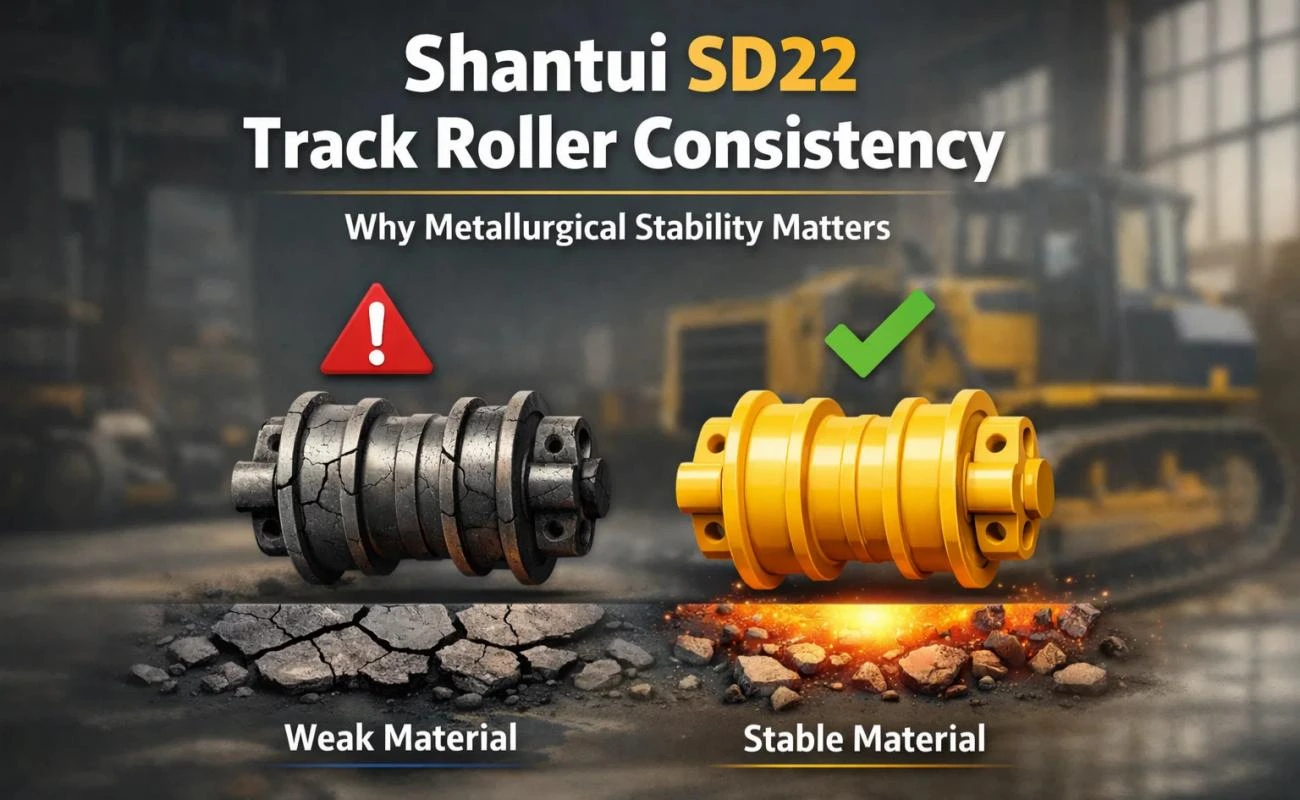
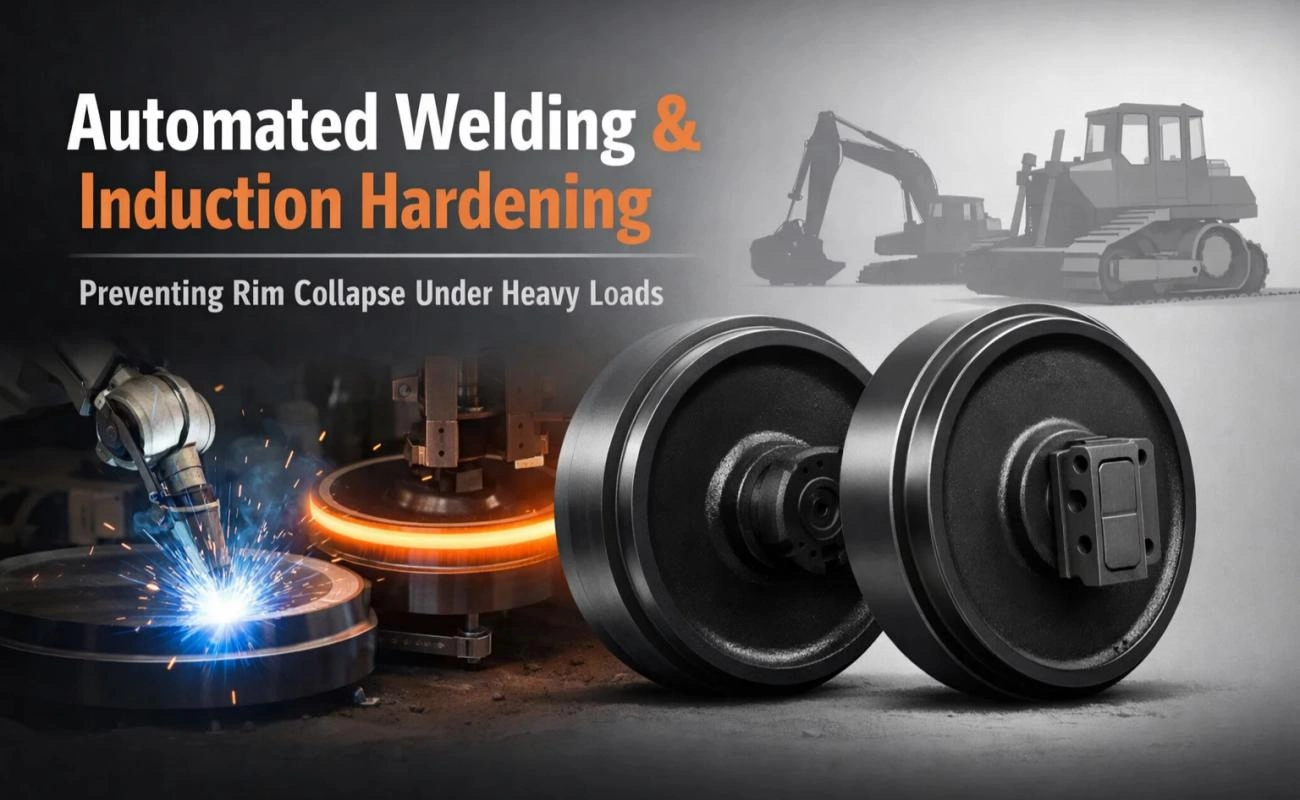
The wear resistance and impact resistance of the track roller essentially depend on its material properties and heat treatment process. Track surfaces typically need to operate at high hardness to resist abrasive wear, but must simultaneously possess sufficient toughness to withstand cyclic impact loads.

Insufficient hardening depth or uneven hardness distribution can lead to premature surface wear or localized fatigue spalling; conversely, insufficient material toughness can cause cracks or even fracture under impact loads. Therefore, properly controlling the hardness gradient and microstructure is crucial for ensuring the long-term stable operation of track rollers.

Regarding material selection, KINTON PARTS typically uses high-strength wear-resistant steel, such as 50Mn or 40Mn series steels (e.g., 50Mn-45, 50Mn-40), for wheel manufacturing. After standardized tempering and surface hardening treatment, these materials achieve a good balance between hardness and toughness, giving the track surface excellent wear resistance while maintaining sufficient impact resistance, thus better adapting to the long-term operational needs of heavy-load conditions such as earthmoving and mining.

IV. Assembly and Dimensional Errors

Besides the material itself, the assembly accuracy and geometric dimensions of the track roller also have a long-term impact on its lifespan. The fit clearance, coaxiality, and seal installation position between the shaft and the roller all affect load distribution and sealing performance.

Small deviations are often difficult to detect initially, but under long-term cyclic loading, they gradually evolve into localized overload, leading to uneven wear or seal failure. This type of problem is characterized by "delayed failure"; once it manifests, it is often irreversible.

V. Operating Conditions and Methods

The way the dozer is used directly affects the stress state of the bottom roller. Under conditions of unilateral load, frequent turning, or high-impact operation, the load on the lower roller will deviate significantly from the design conditions.

This non-uniform load leads to localized stress concentration, accelerating wear on one side or at a specific location, causing the overall wear pattern to become unbalanced. In the long run, improper operating habits amplify potential defects in materials and structures, thereby shortening service life.

VI. How to Extend Track Roller Life from a System Perspective

Based on practical application experience, improvements can be made in the following aspects:

  • Regularly check for oil leaks or abnormal wear.
  • Keep the chassis clean and reduce mud and sand accumulation.
  • Select track rollers with appropriate materials and structures according to working conditions.
  • Avoid prolonged extreme loads and poor operating habits.

When replacing track rollers, prioritize products with stable quality and reliable manufacturing processes.

Conclusion

Tractor roller failure is not an accidental event, but the result of multiple factors, including the lubrication system, working environment, material properties, and usage methods. Understanding these influencing mechanisms from a system perspective helps users develop more reasonable maintenance and selection plans in practical applications.

At KINTON PARTS, we continuously improve the stability and durability of track rollers under high-load conditions by optimizing material selection, heat treatment processes, and manufacturing precision control. If you are looking for more reliable bulldozer chassis solutions, please contact us. We will provide more suitable product recommendations and support based on different models and application environments.