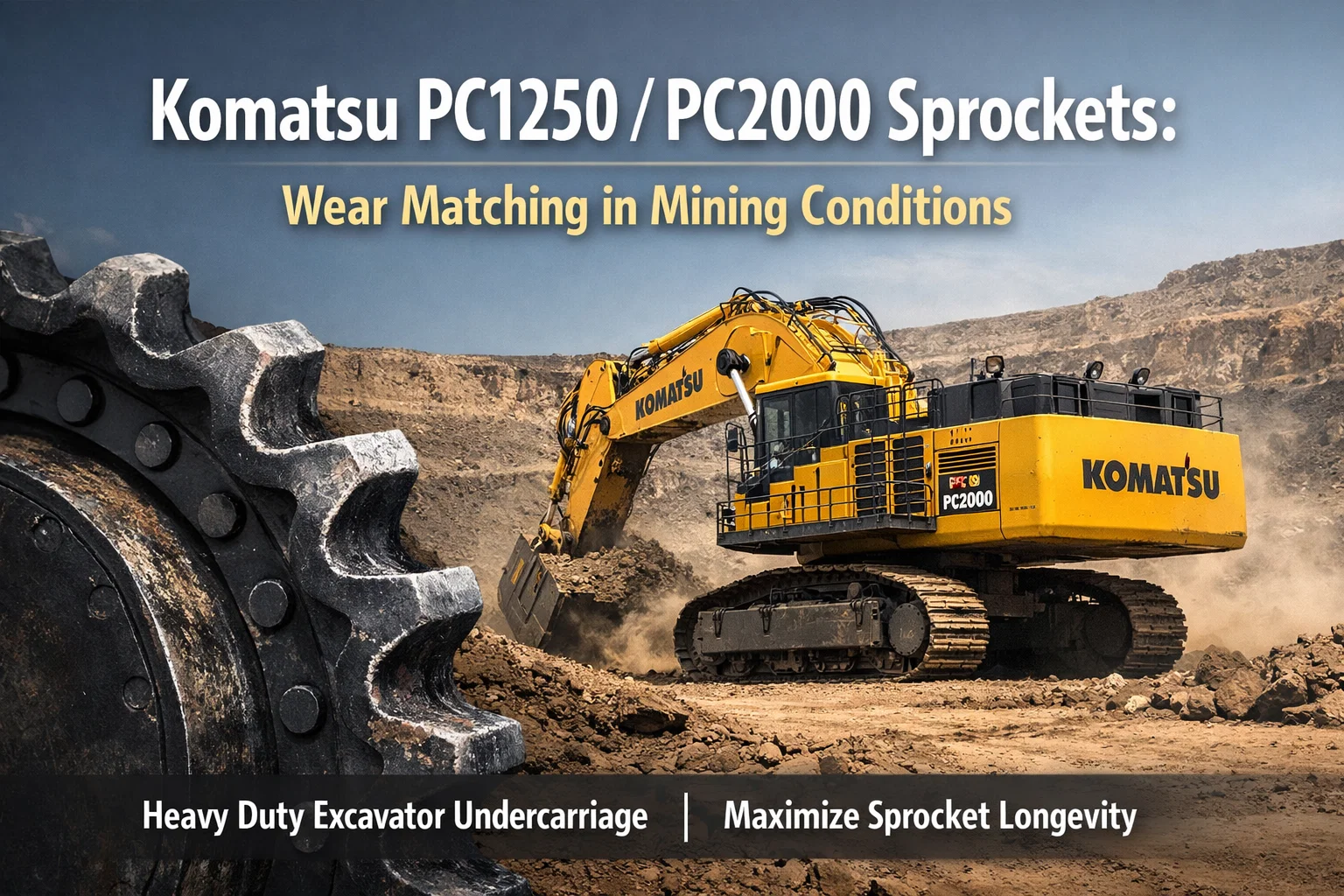
Komatsu PC1250 / PC2000 Sprockets: Wear Matching in Mining Conditions
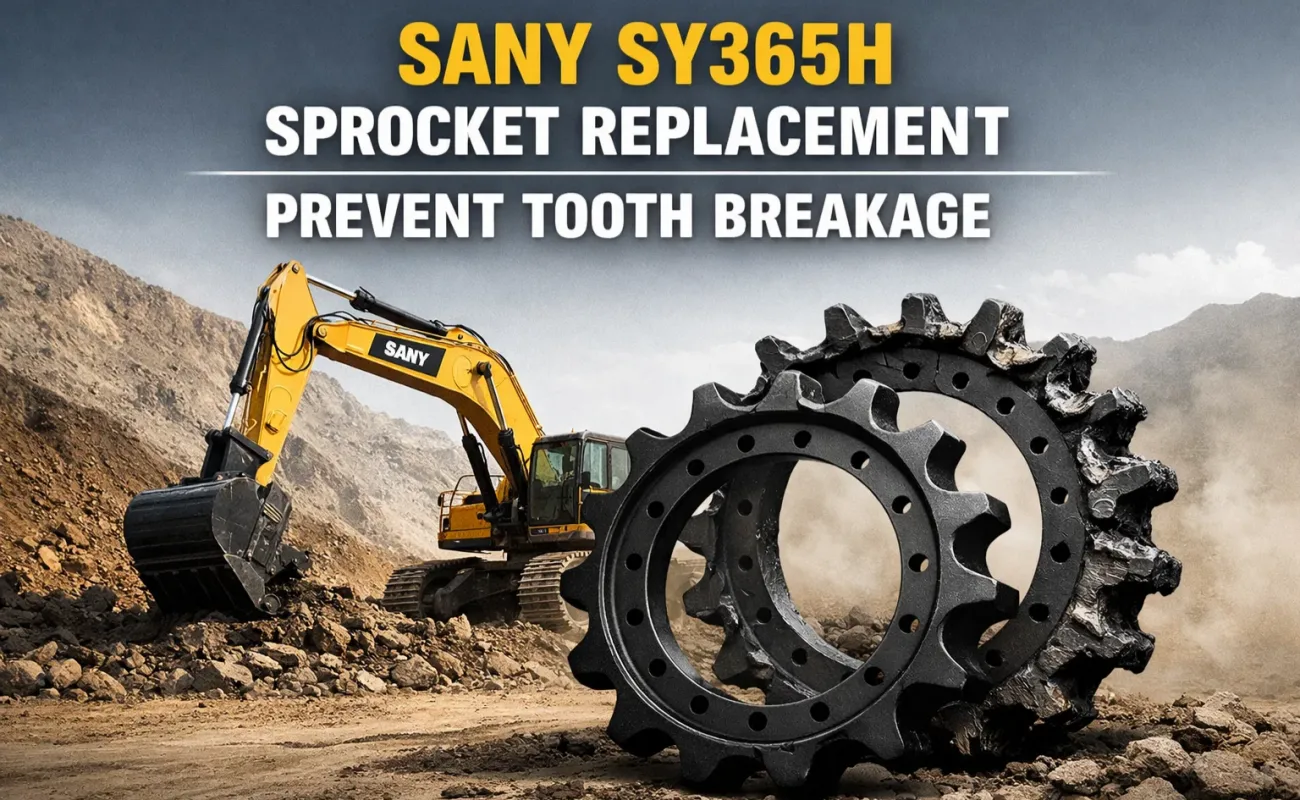
In large-scale mining operations, the performance of a sprocket directly impacts machine efficiency and overall undercarriage lifespan. For operators using Komatsu PC1250 and PC2000 excavators, selecting the right heavy duty mining excavator sprocket, ensuring proper sprocket for large excavator undercarriage, and planning a reliable Komatsu undercarriage sprocket replacement are critical decisions.
When replacing sprockets such as OEM part numbers 21N-27-31191 or 21T-27-71175, experienced buyers look beyond basic compatibility. They focus on wear resistance under extreme loads, stable engagement with the track chain, and the ability to maintain balanced wear across the entire undercarriage system. These factors ultimately determine how long the machine can operate efficiently before major maintenance is required.
Function and Load Characteristics in Large Excavators
In ultra-large excavators like the PC1250 and PC2000, the sprocket is not only responsible for transmitting power but also plays a key role in distributing load throughout the track system.
During travel, turning, and positioning, the sprocket teeth continuously engage with the track chain under high stress. Ideally, the tooth profile must match the chain pitch precisely to ensure even load distribution.
A well-matched system reduces localized stress and slows down wear across the entire undercarriage. However, even minor mismatches can lead to accelerated wear starting from a single point and spreading quickly.
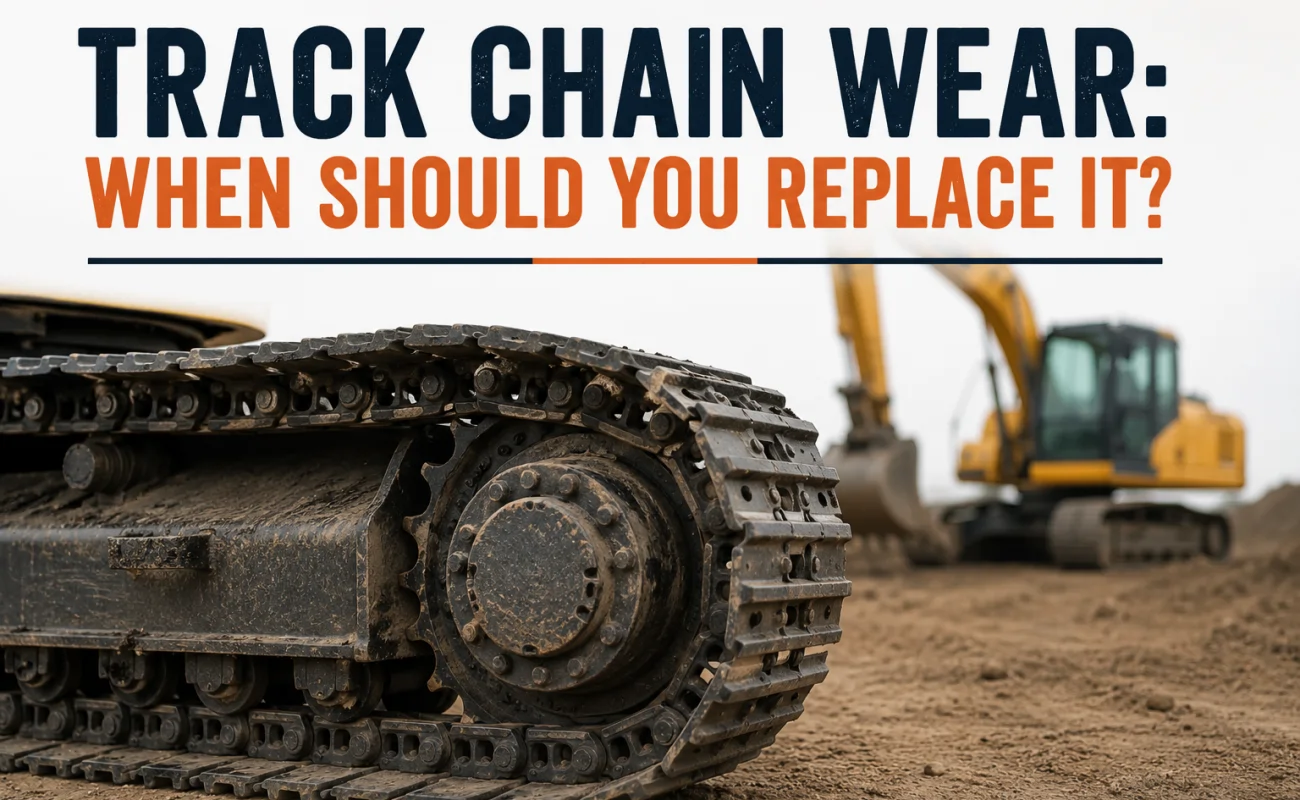
In real-world applications, the sprocket must work in close coordination with the excavator track chain assembly, making compatibility a critical factor.
Impact of Heavy-Duty Mining Conditions on Wear
Mining environments are far more demanding than standard construction sites. Machines like the PC1250 and PC2000 operate under continuous heavy loads, strong impact forces, and abrasive conditions such as rock fragments and dust.
Common wear patterns include:
- Tooth tip thinning
- Root cracking or deformation
- Increased impact during engagement
If these issues are not addressed early, they can compromise the stability of the entire track system.
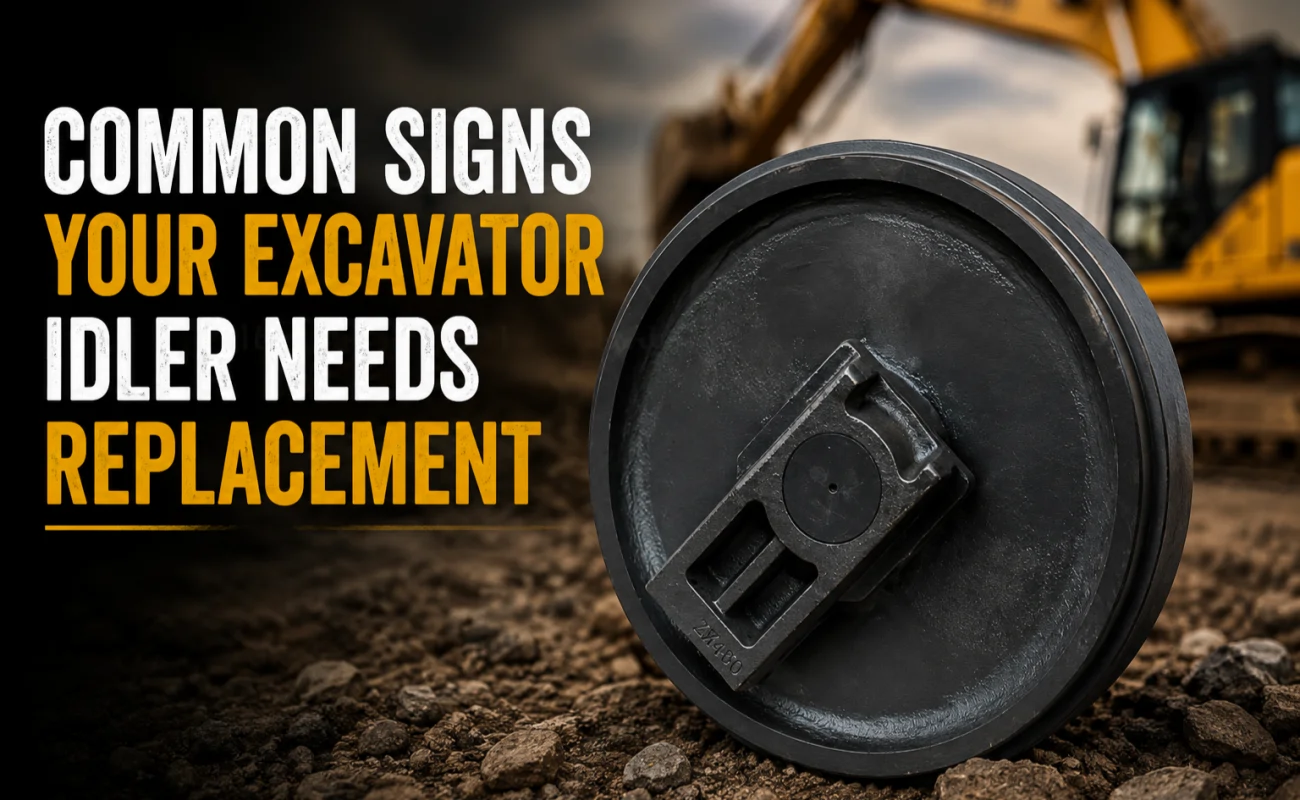
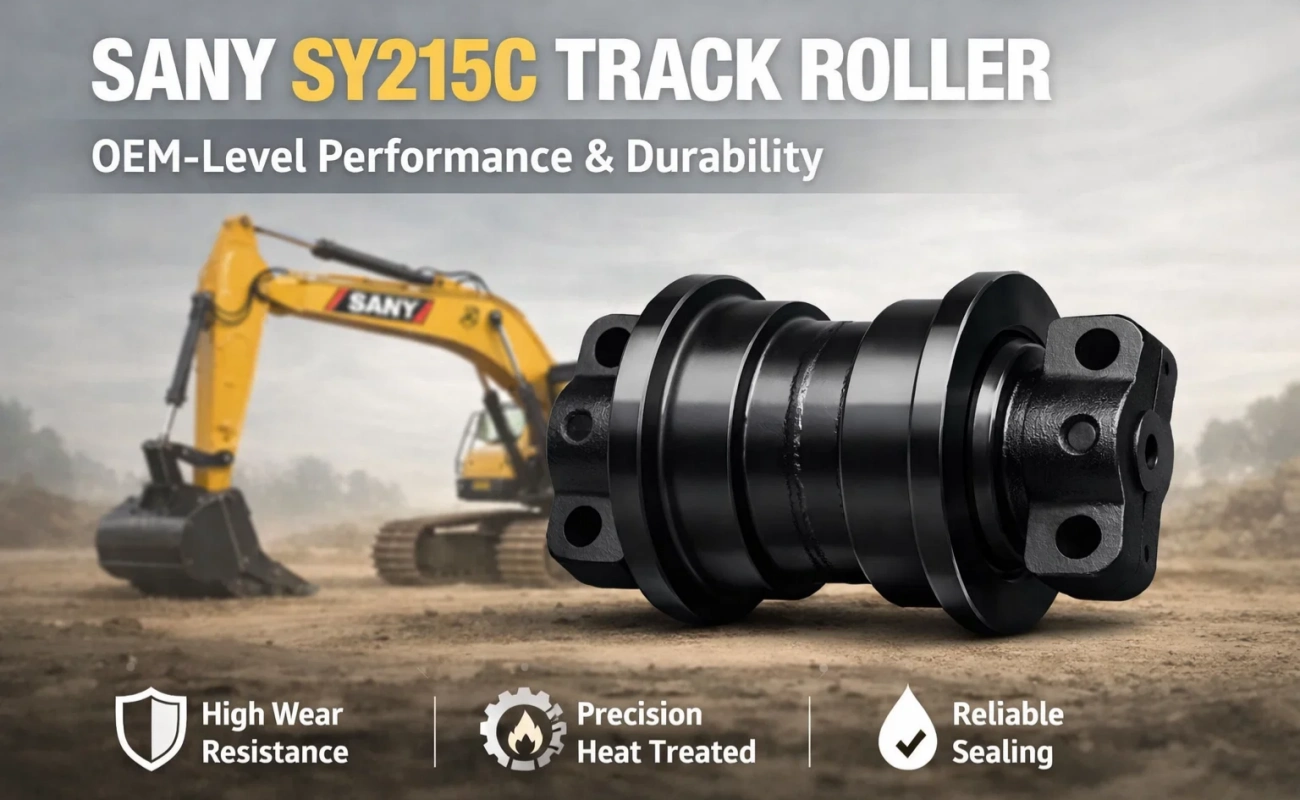
Moreover, wear is not isolated. Load variations from the sprocket can transfer to other components, such as the track roller for excavator undercarriage, creating a chain reaction of wear.
Why Sprocket and Track Chain Matching Matters
For large excavators, durability is not determined by the sprocket alone—but by how well it matches the track chain.
- If the sprocket is too hard → it may accelerate bushing wear
- If it is too soft → the sprocket itself wears out quickly
The ideal scenario is synchronized wear, where both components degrade at a similar rate over time.
This is why experienced operators often evaluate the entire undercarriage system rather than replacing individual parts in isolation.
Material and Heat Treatment: The Foundation of Durability
Under extreme working conditions, the wear resistance of a sprocket largely depends on material quality and heat treatment processes.
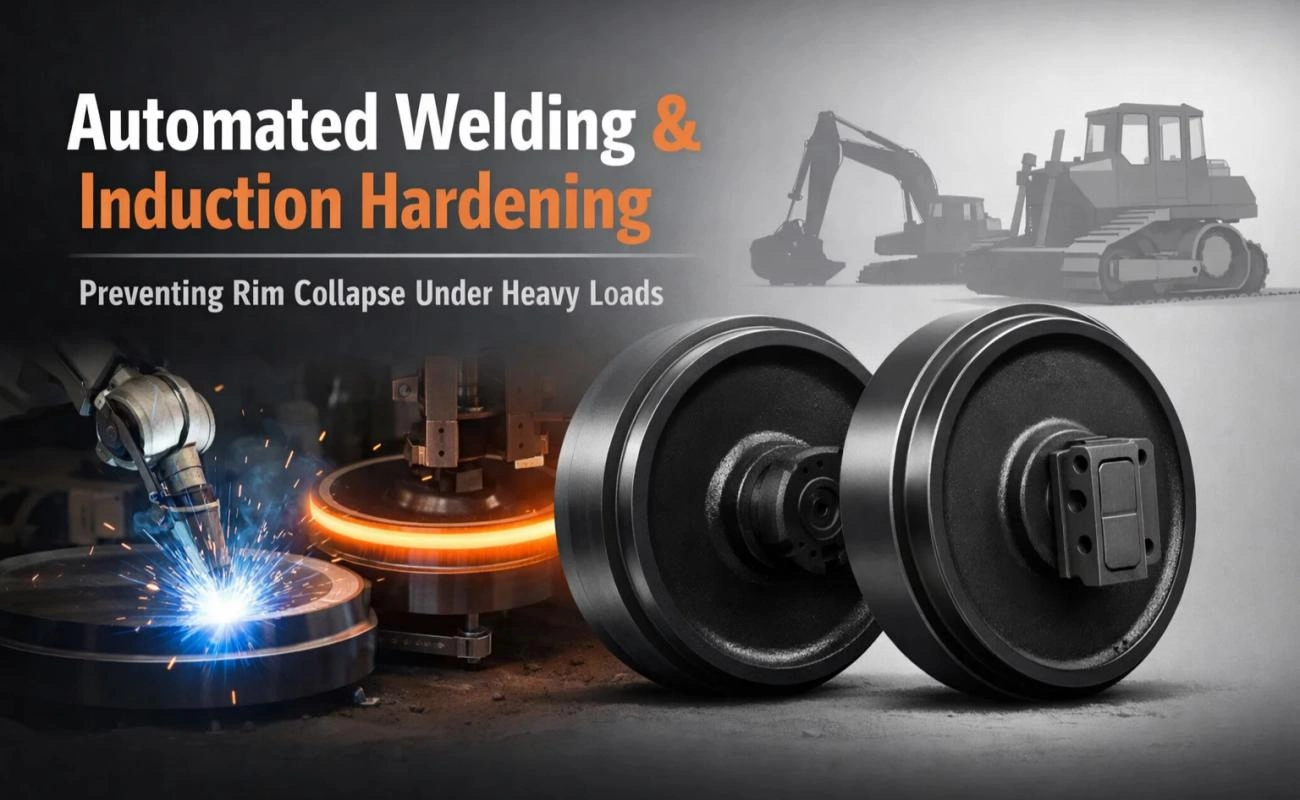
High-quality sprockets are typically made from alloy steel and undergo induction hardening to form a durable surface layer.
The key is achieving a proper balance between hardness and toughness:
- Uneven hardness → leads to localized wear
- Insufficient hardening depth → reduces service life
Consistent heat treatment ensures not only durability but also batch-to-batch reliability—especially important for large fleet operations.
The Role of Machining Accuracy in Undercarriage Performance
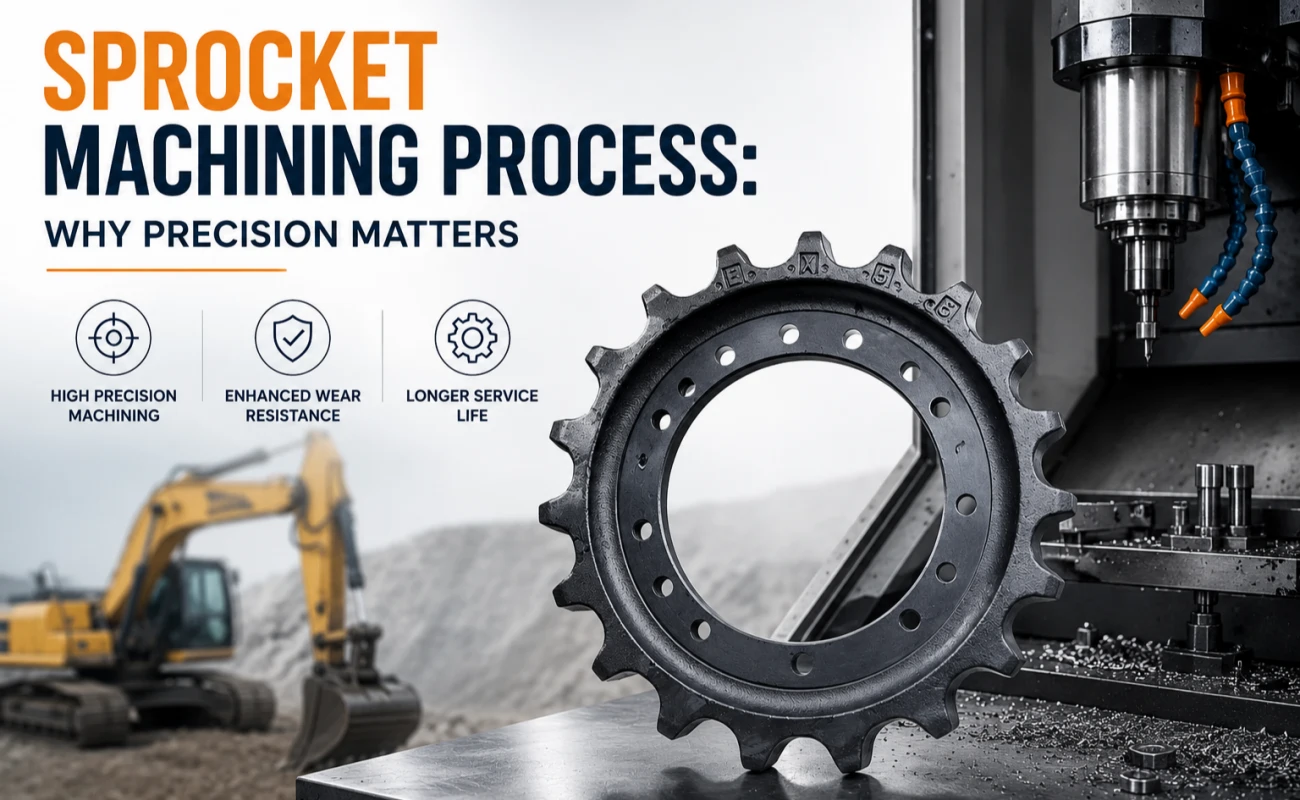
Beyond materials and heat treatment, machining precision plays a crucial role in real-world performance.
Errors in tooth profile or pitch can cause repeated impact during engagement. These micro-impacts accumulate over time, leading to:
- Faster sprocket wear
- Increased stress on the track chain
- Reduced lifespan of the entire undercarriage
High-precision machining is therefore essential—not only for durability but also for smooth and stable machine operation.
Conclusion
For heavy-duty machines like the Komatsu PC1250 and PC2000, the sprocket is more than just a wear part—it is a critical component that affects the lifespan of the entire undercarriage system.
Rather than simply pursuing higher hardness, achieving proper matching with the track chain is the key to extending service life and reducing long-term operating costs.
If you are looking for reliable sprockets compatible with PC1250 or PC2000 (21N-27-31191 / 21T-27-71175), or aiming to optimize your undercarriage setup, KINTON PARTS can provide stable solutions and professional support tailored for demanding mining conditions.