Sany SY215C Track Roller: OEM-Level Performance Through Material and Heat Treatment
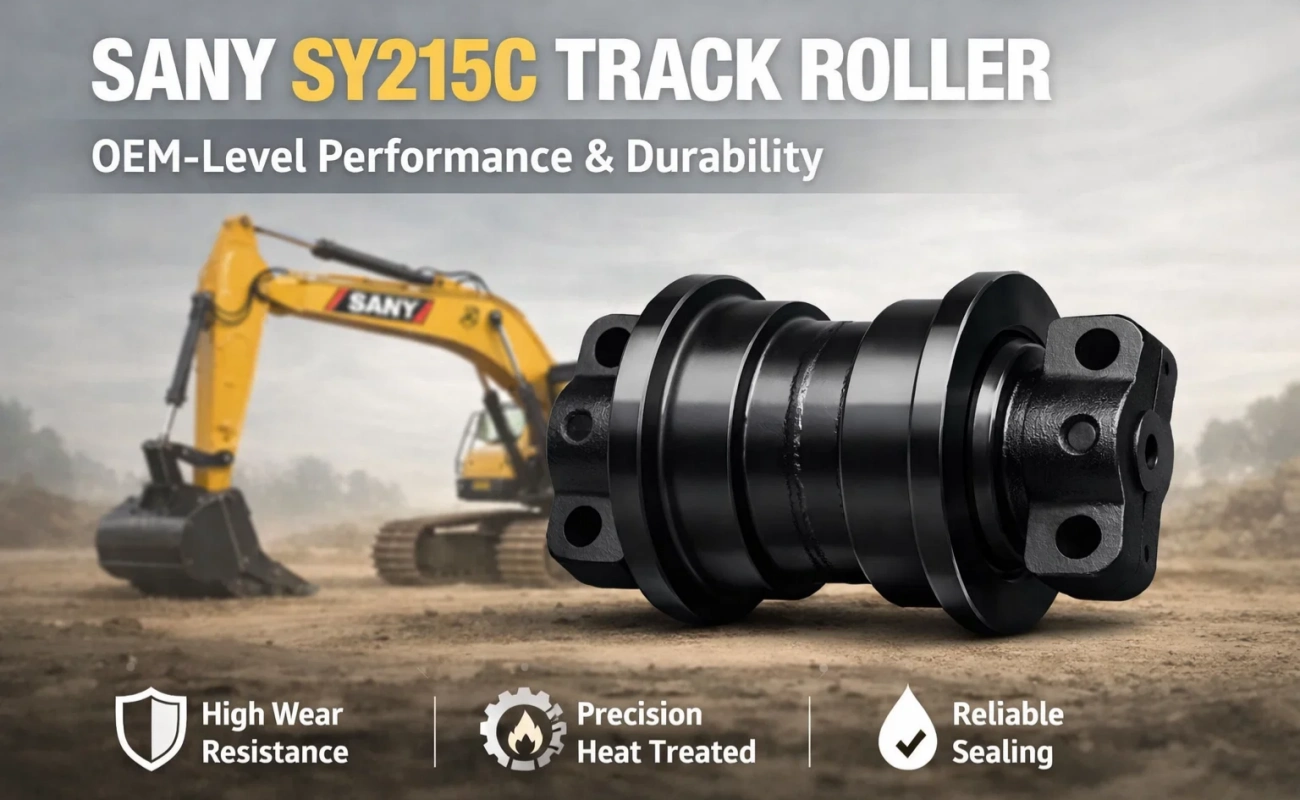
In the maintenance of mid-sized excavators, choosing the right track roller has a direct impact on machine stability, operating efficiency, and long-term cost control. For operators working with the Sany SY215C, selecting a reliable Sany excavator track roller replacement, ensuring compatibility with the track roller for Sany SY215C undercarriage, and sourcing a dependable excavator track roller OEM equivalent are all critical considerations.
While part number 10999958P ensures basic fitment, experienced users pay closer attention to wear resistance under demanding conditions, sealing reliability, and whether the replacement can maintain a service life similar to original components. In essence, the real question is not just compatibility—but whether the replacement track roller can truly replicate OEM-level performance in real working environments.
The Role of Track Rollers in the SY215C Undercarriage System
In a 20-ton class excavator like the SY215C, the track roller continuously supports the full weight of the machine while ensuring smooth movement of the track chain.
Its performance directly affects:
- Machine travel stability
- Load distribution across the track chain and sprocket
- Overall undercarriage efficiency
If the track roller performs inconsistently, it can trigger a chain reaction—such as uneven chain stress, increased resistance, and abnormal wear patterns. This makes the track roller not just a load-bearing component, but a foundational element for undercarriage system stability.
Why Similar-Looking Track Rollers Perform Differently
In practice, many users notice that track rollers from different suppliers appear identical at the beginning but show significant differences in wear rate and lifespan over time.
These differences rarely come from dimensions or external design. Instead, they are largely determined by:
- Material quality
- Heat treatment consistency
- Internal structural integrity
If the material properties fluctuate or the hardness distribution is uneven, localized wear or surface spalling can occur prematurely.
Ultimately, performance differences reflect the internal metallurgical structure and process control behind the product.
Material Selection: The First Step Toward OEM-Level Performance
Achieving performance comparable to OEM products in Sany's excavator chassis parts hinges on selecting stable and reliable materials.
Common materials include:
- 50Mn / 45Mn, suitable for standard operating conditions
- 50Mn2, suitable for high-impact or mining environments
These materials allow the SY215C to possess both strength and toughness under heavy loads. However, material stability is just as important as composition. Even with proper processing control, batch variations in raw materials can lead to inconsistent product performance. Therefore, for large-scale production like ours, a stable source of raw materials and strict material control are crucial to ensuring consistent product performance.
Heat Treatment: Balancing Wear Resistance and Impact Strength
For track rollers, the outer surface must be hard enough to resist wear, while the internal structure must remain tough enough to absorb impact.
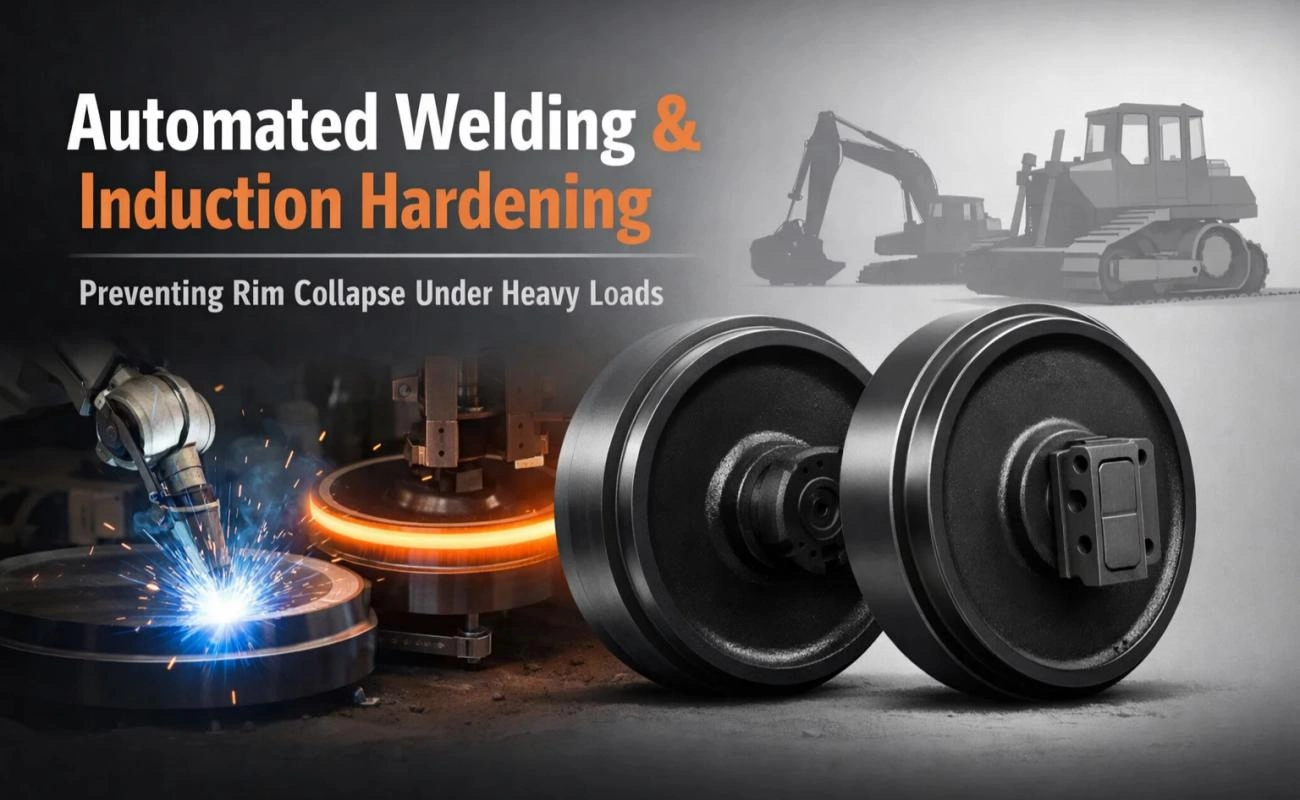
Through controlled quenching processes (medium-frequency or high-frequency induction hardening), a stable hardness gradient is formed:
- Hard outer layer → improves wear resistance
- Tough inner core → absorbs shock and prevents cracking
This “hard outside, tough inside” structure is critical for reliable performance in harsh working conditions. Equally important is maintaining this structure consistently across production batches to avoid lifespan variations.
Sealing System and Internal Structure Matter Too
Besides materials and heat treatment, sealing design plays a crucial role in determining service life.
Excavator track rollers feature effective sealing systems that not only prevent the ingress of dust, water, and debris, but also maintain stable internal lubrication. Because once the seal fails, even if the external structure appears intact, internal wear will accelerate rapidly, thus affecting the lifespan of the excavator's bottom system.
Therefore, a reliable sealing system is essential for long-term durability, especially in muddy or abrasive environments.
From Single Performance to Batch Consistency
For fleet operators, the real concern is not the durability of a single track roller—but the consistency across an entire batch.
If product lifespan varies significantly:
- Maintenance schedules become unpredictable
- Operational costs increase
- Equipment management becomes more complex
By optimizing material selection, heat treatment, and quality control, manufacturers can ensure that each unit delivers similar performance.
This predictability is one of the most valuable aspects when replacing OEM components.
Conclusion
For the Sany SY215C track roller (10999958P), achieving OEM-level performance is not simply about matching dimensions—it is the result of coordinated control over materials, heat treatment, and manufacturing consistency.
In demanding working conditions, stable performance and predictable wear behavior are often more valuable than any single specification.
Kinton Parts continuously optimizes its core production processes, ensuring that replacement parts maintain a long-term, close performance match with original equipment manufacturer (OEM) parts. This provides a more reliable and cost-effective solution for chassis maintenance. For any questions regarding excavator and bulldozer parts, please feel free to contact us.