


Modern Idler Technology: Welding & Hardening for Heavy-Load Rim Collapse Prevention

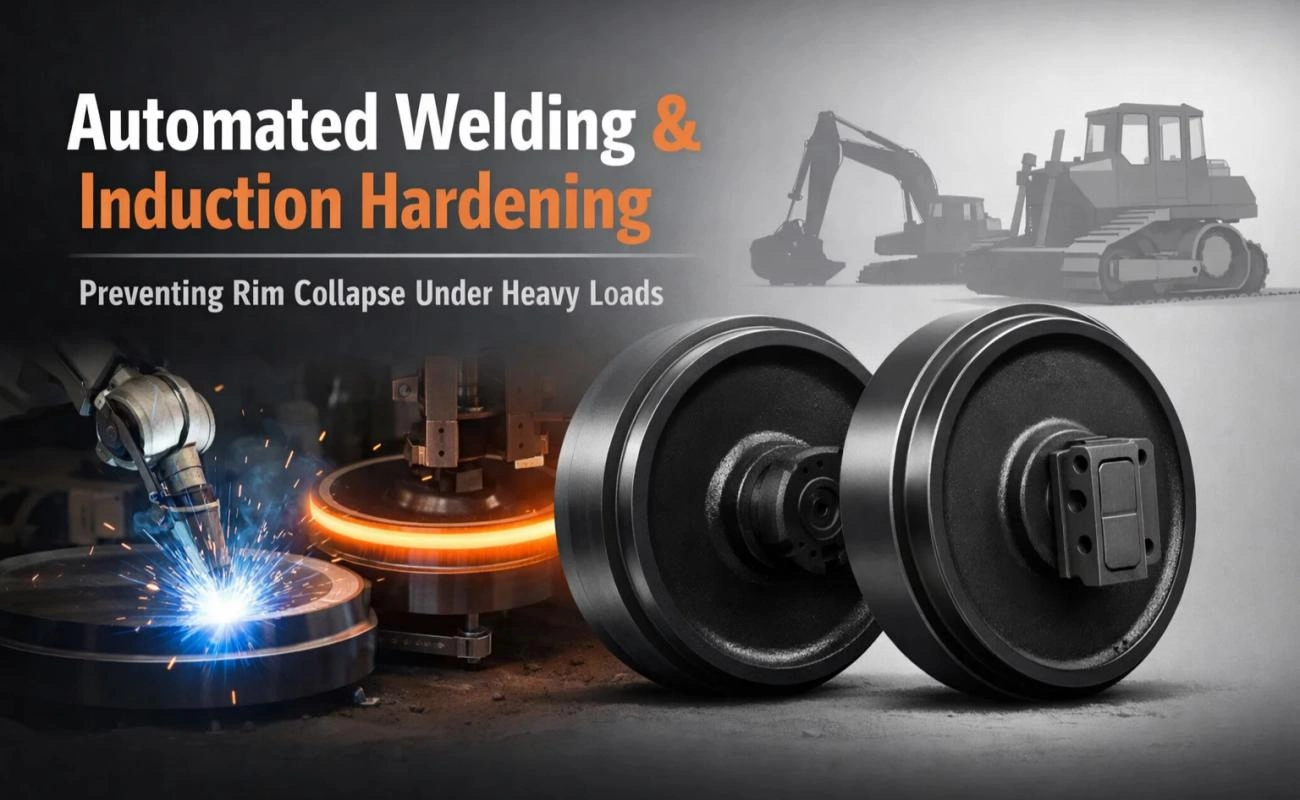
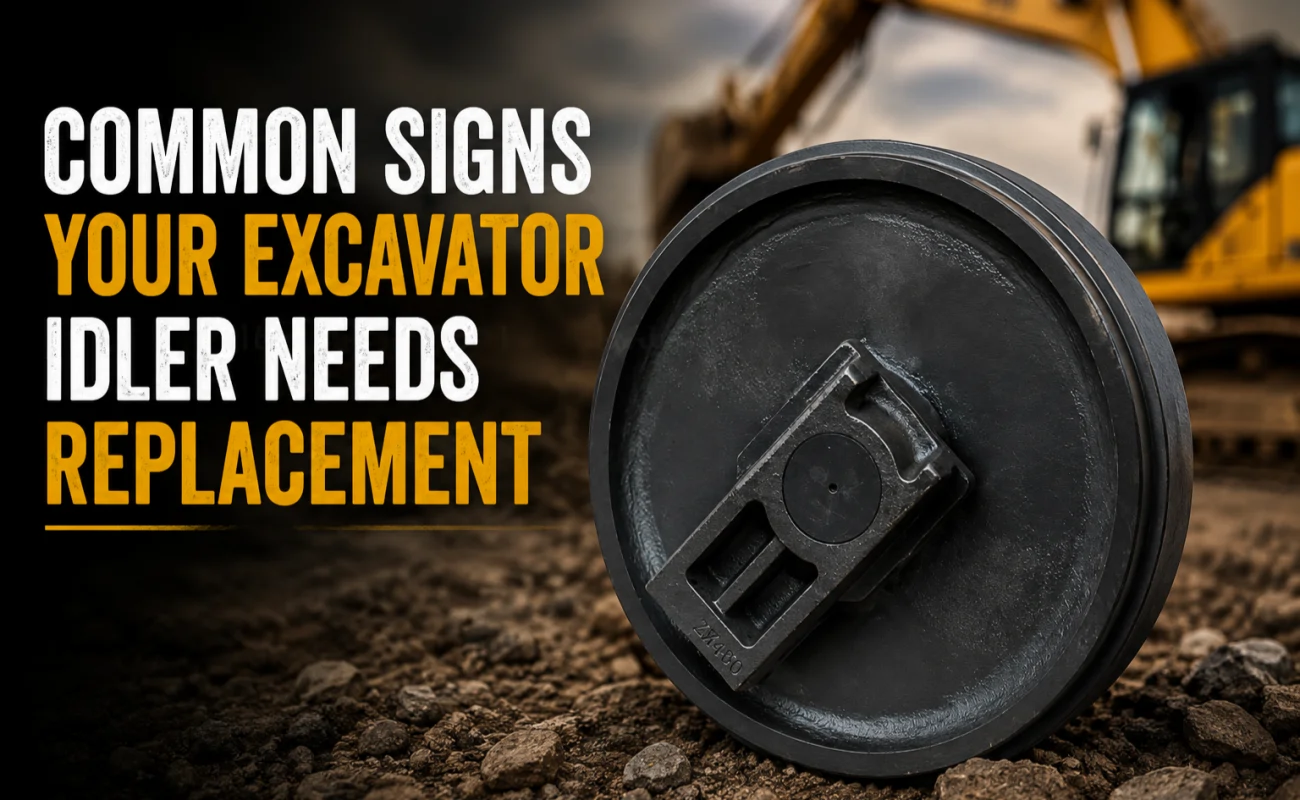
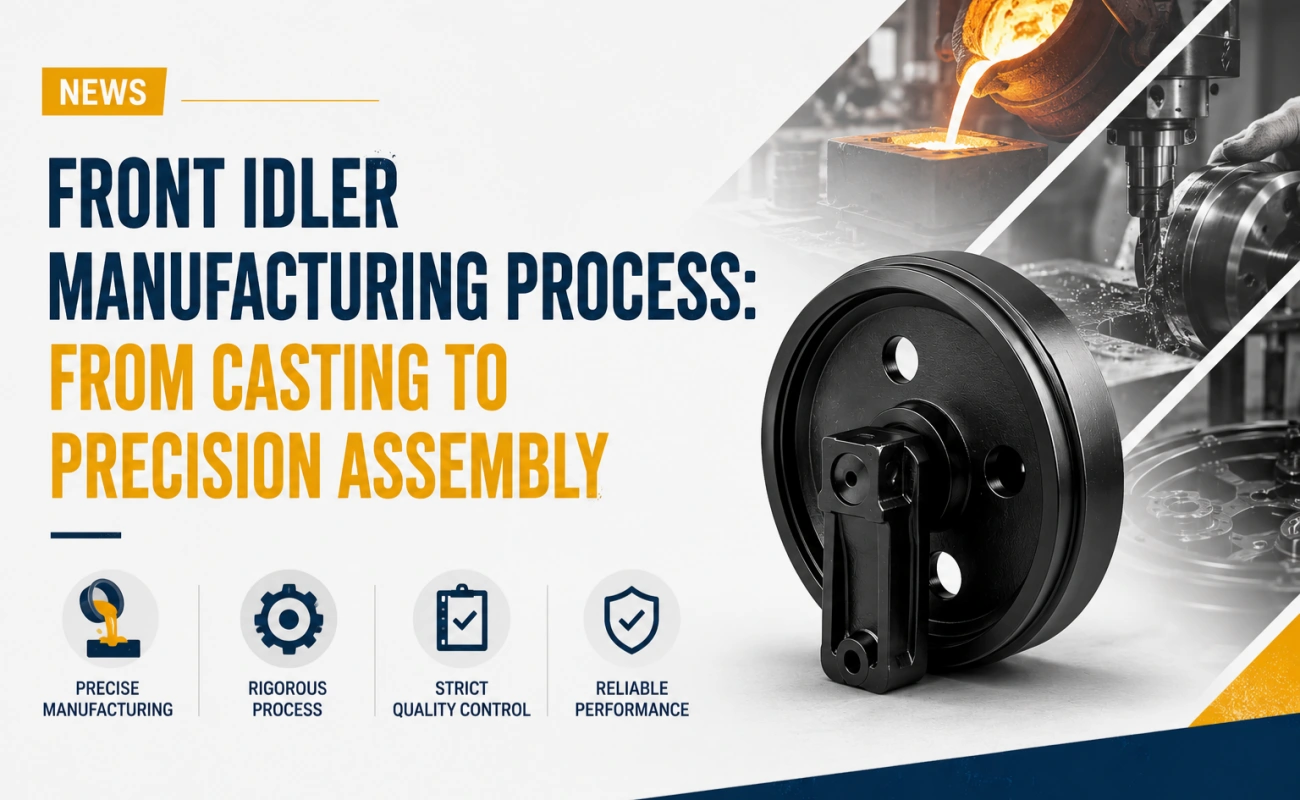
In crawler excavators and bulldozers, the idler plays a far more important role than many operators realize. Beyond simply guiding the track, the idler must continuously withstand track tension, impact loads from the ground, and repetitive rolling forces from the track links.
If the idler rim deforms or collapses under load, the track no longer runs in a straight line. This causes chain misalignment, accelerated wear of track links and bushings, and in severe cases even premature sprocket damage. This is why many customers worry that aftermarket idlers might be “too soft” or structurally weak.
The real answer, however, is not found in the steel grade alone — it lies in how the idler is manufactured.
Rim Strength Depends on the Hardened Layer, Not Just the Steel
Many people assume idler durability depends only on what type of steel is used. In reality, the most critical factor is the induction hardening process applied to the rim surface.
Through medium- or high-frequency induction heating followed by rapid quenching, the rim surface transforms into a high-hardness martensitic layer, while the inner core remains tough and ductile.
This hard shell + tough core structure provides two essential benefits:
- The hardened surface resists continuous rolling and impact from the track links
- The ductile core absorbs shock without cracking or brittle failure
Just as important is the depth of the hardened layer.
If it is too shallow, wear will quickly penetrate into the soft base material.
If it is too deep, internal stresses increase and may weaken the wheel structure.
Proper control of hardening depth is therefore one of the most important quality factors in idler manufacturing.
Automated Hardfacing Welding: Giving the Rim Real Structural Support
Under heavy-duty working conditions, heat treatment alone is often not enough. This is where automated hardfacing welding plays a decisive role.
KINTON PARTS applies automated welding in the high-stress zones of the idler rim and body. By precisely controlling weld thickness and alloy composition, an additional reinforcement layer is formed in the areas that carry the highest loads.
Compared with manual welding, automated welding offers:
- Uniform weld bead thickness
- Stable metallurgical bonding
- No local “soft spots” or weak fusion areas
This ensures that the rim does not gradually deform or flatten after long-term compression and rolling, even in high-load environments.
Hardness Distribution Determines Track Link Life
A good idler is not simply “as hard as possible.” What really matters is how hardness is distributed across the rim and wheel body.
- The rim surface must be hard enough to resist abrasive wear from track links
- The root of the rim and the wheel body must remain tough to absorb impact energy
If the rim is too soft, track links will bite into the surface, accelerating wear on both components.
If the rim is extremely hard but lacks internal toughness, it may crack or chip under impact.
By combining induction hardening and automated hardfacing, KINTON PARTS creates a controlled hardness gradient that protects both the idler and the entire undercarriage system.
Concentricity and Balance: The Invisible Strength Factor
Beyond material and heat treatment, idler alignment and balance are equally critical.
After welding and heat treatment, each idler must undergo precision machining and inspection to ensure that the rim is perfectly concentric with the shaft axis.
If an idler runs off-center, even the strongest steel will be subjected to uneven loading. This leads to localized stress, accelerated wear, and eventually rim collapse.
High-quality idlers are therefore the result of a fully integrated manufacturing and inspection system, not just strong materials.
Breaking the Myth That Aftermarket Idlers Are Weak
On many job sites, there is still a belief that “only OEM idlers are strong enough.” In reality, modern manufacturing technologies — including automated welding, induction hardening, and precision machining — allow high-quality aftermarket idlers to match or even approach OEM performance in strength and service life.
By controlling hardened layer depth, weld reinforcement, and concentricity, KINTON PARTS ensures that every idler maintains its shape and alignment even under heavy loads and harsh operating conditions.
For customers who care about equipment uptime and total operating cost, manufacturing quality matters far more than the price tag.