Product Applications

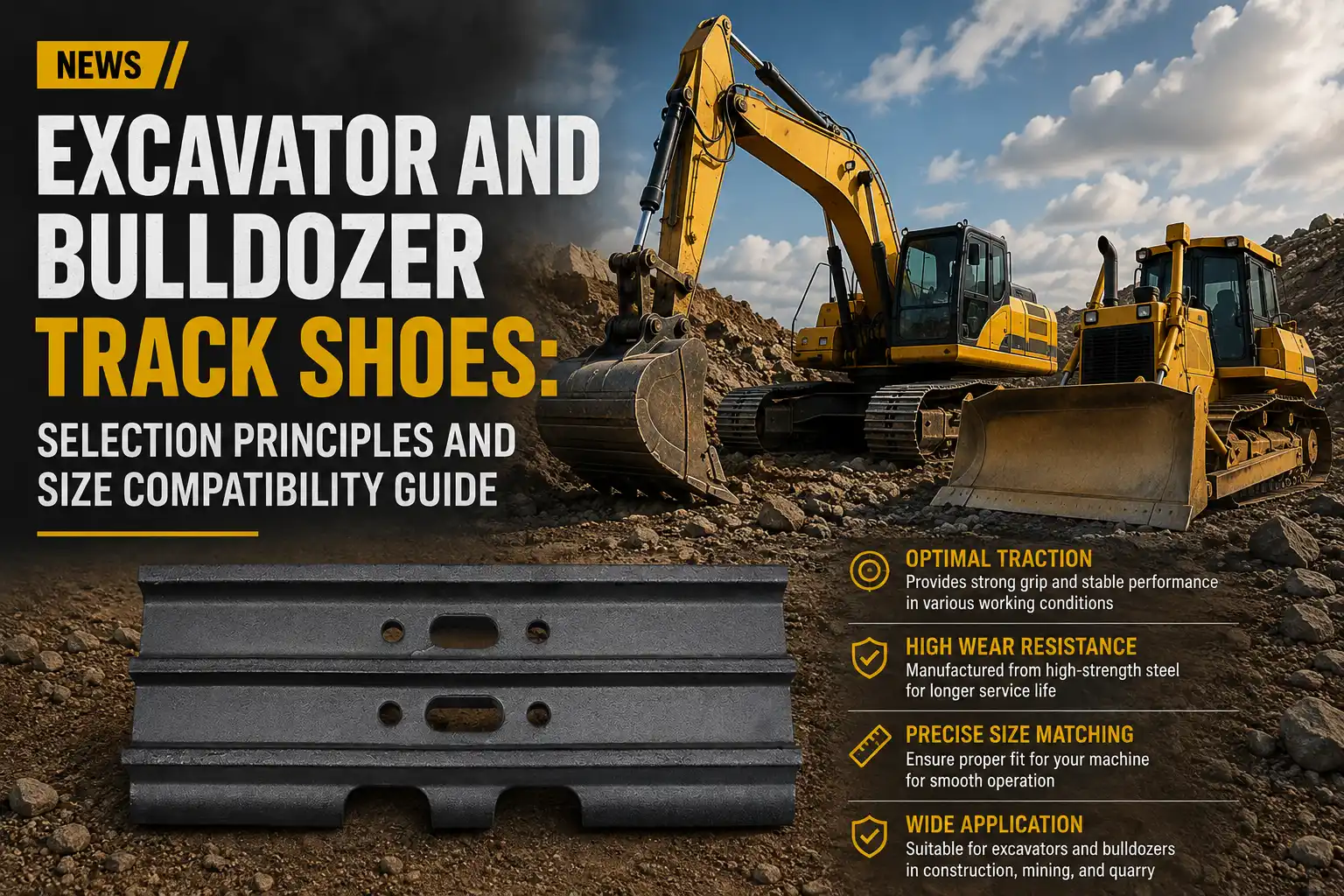
Excavator and Bulldozer Track Shoes: Selection Principles and Size Compatibility Guide

Excavator and Bulldozer Track Shoes Selection Principles

In the undercarriage system of tracked construction machinery, track shoes(track pads )are the core load-bearing components that directly contact the ground. Whether it's an excavator or a bulldozer, their working logic is essentially similar, but due to differences in the stress patterns and operating scenarios, there are significant differences in the structural design, width selection, and wear resistance requirements of the track shoes. For mining, earthmoving, construction, and rock conditions, track shoes not only determine the equipment's traction performance but also directly affect the wear rate of the entire undercarriage system (track tracks, drive sprockets, track rollers, carrier rollers).

The Core Functions of Track Shoes

The main functions of track shoes can be summarized in three points:

First, they provide sufficient ground contact area to distribute the weight of the entire machine, reducing unit pressure and thus improving traverseability on soft or muddy ground.

Second, they ensure traction and grip on complex terrain, preventing slippage or power loss.

Third, they protect the track chains and related chassis components, reducing direct impact to a certain extent.

Structural Types and Application Differences

Track shoes are typically classified into single-ribbed, double-ribbed, triple-ribbed, or thickened types depending on the working conditions. This classification not only affects the ground contact area but also directly determines their applicable scenarios.

Excavators usually use medium-width triple-ribbed track shoes to ensure flexible steering capabilities in complex terrain. Bulldozers, on the other hand, tend to use thickened or single-ribbed structural designs to improve impact resistance and propulsion efficiency.

In mining or rocky environments, both excavators and bulldozers tend to choose track shoes with reinforced tread surfaces to slow down wear by increasing surface hardness.

The Importance of Materials and Manufacturing Processes

High-quality track shoes are typically made of medium-to-high carbon alloy steel or optimized proportions of wear-resistant steel, and are strengthened by heat treatment after forging or rolling.

Key processes include:

  • Integral forging/rolling: Ensures consistent structural density
  • Local heat treatment: Improves tread surface hardness and wear resistance
  • Precision drilling: Ensures assembly accuracy with track links

Surface rust prevention treatment: Reduces the risk of corrosion during long-term storage or in humid environments.

If the material strength is insufficient or the heat treatment is unstable, track shoes often exhibit problems such as rapid edge wear or bolt hole scoring.

Wear Modes and Failure Logic

Track shoe wear does not develop in a single direction but is influenced by working conditions, operation, and chassis compatibility.

In actual use, common failure modes include uniform tread wear, edge chipping, and bolt hole enlargement. Tread wear is usually directly related to ground conditions; for example, gravel environments significantly accelerate wear, while clay or wetlands are more likely to cause mud and sand embedding, leading to secondary wear.

On the other hand, operating habits also significantly affect lifespan. For example, frequent stationary turns or high-load sharp turns will subject one side of the track shoe to additional shear forces, thus accelerating local fatigue.

Improper chassis system matching (such as abnormal tension or uneven wear of track rollers) can also lead to unbalanced stress distribution on the track shoes, a hidden cause of many early failures.

Size Matching and Selection Logic

Track shoe selection is essentially a system matching issue, not just a single size confirmation.

Core reference parameters include track pitch, bolt hole center distance, shoe width, shoe thickness, and overall machine tonnage. Based on these, adjustments need to be made according to actual working conditions. For example, wear resistance is usually prioritized in mining conditions, while ground pressure is more important in wet environments.

The difference is particularly pronounced between bulldozers and excavators. Bulldozers emphasize "thrust efficiency and stability," so their track shoes are often wider and thicker; while excavators emphasize "mobility and adaptability," allowing for more flexible size selection.

In KINTON PARTS' supply chain, we typically perform double verification using customer-provided size tables or OEM numbers to avoid assembly errors caused by standard differences.

KINTON PARTS Track Shoe Supply Advantages

As a manufacturer specializing in undercarriage components, KINTON PARTS prioritizes consistency and durability control in track shoe production:

  • Unified steel batch management to reduce performance fluctuations
  • Multi-condition product coverage (standard/reinforced/rock type)
  • CNC precision machining to ensure hole accuracy
  • Strict heat treatment control to extend service life
  • OEM customization and bulk supply support

We also support rapid matching and selection based on customer-provided track shoe size tables, adapting to various brands of excavator chassis systems.

Conclusion

As a core component in the undercarriage system that directly contacts the ground, the importance of track shoes is often underestimated. From excavators to bulldozers, different equipment has different requirements for track shoes, but the core logic remains the same: achieving a balance between wear control and system life through reasonable structural design, material selection, and size matching.

For the purchasing side, size data, operating conditions, and overall machine matching logic are all important references during the subsequent selection process.