





How New-Generation Hydraulic Pumps and Motors Improve Excavator Efficiency and Precision


With the rapid evolution of modern excavator technology, the combination of hydraulic pumps and hydraulic motors has become a decisive factor affecting overall machine performance. Whether in earthmoving, demolition, or mining operations, an excavator’s fuel efficiency and response speed largely depend on how well this “golden duo” performs.
In recent years, driven by stricter energy regulations, increasingly complex work environments, and the demand for more refined machine control, manufacturers have raised the requirements for pump–motor systems: higher volumetric efficiency, lower energy consumption, more stable flow delivery, and smarter control logic.
These requirements have accelerated significant upgrades in new-generation hydraulic pumps and motors.
Hydraulic Pump
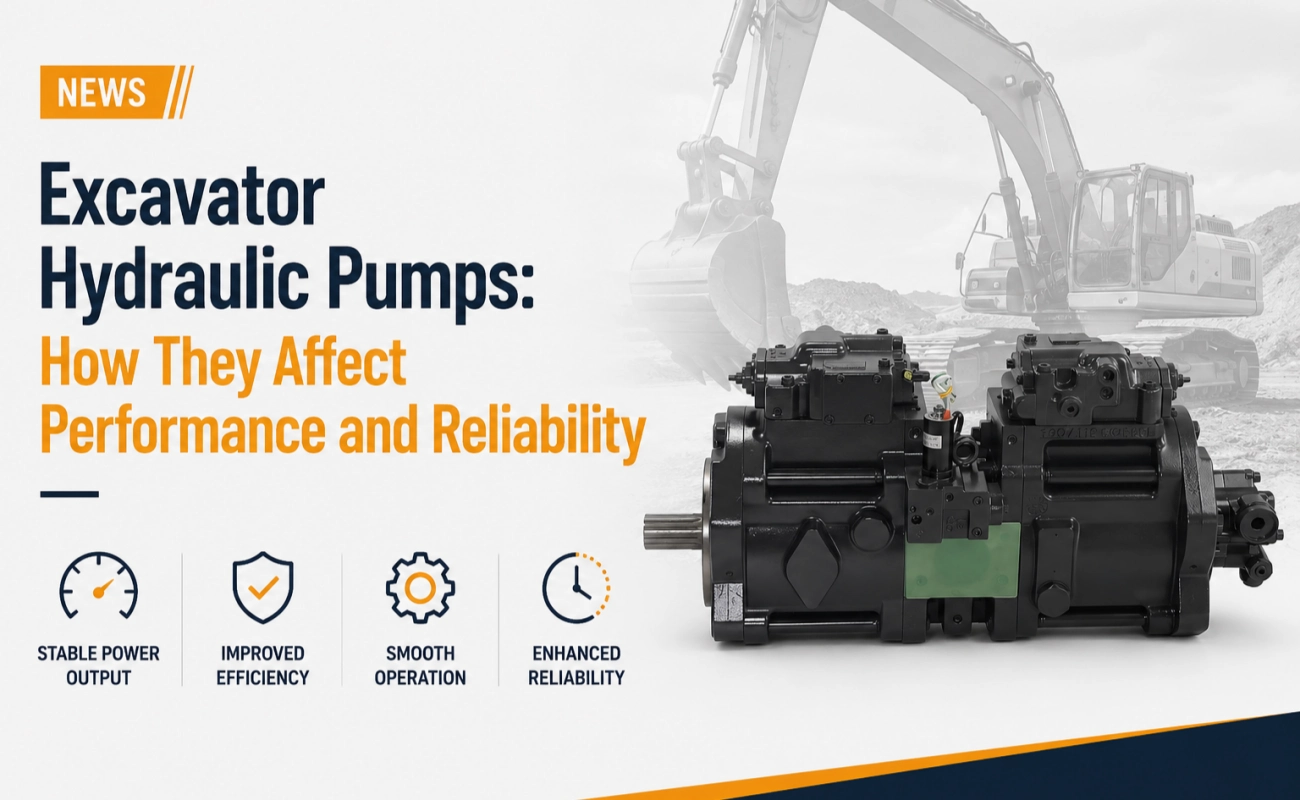
The hydraulic pump is the “heart” of the system. Traditional pumps emphasized stable pressure and flow output, but new-generation excavator pumps have evolved into active, intelligent power units capable of adjusting output to match real-time working conditions.
1. More Precise Electronic Proportional Control (EPC)
EPC systems continuously read load signals, control commands, oil temperature, and engine conditions, allowing the pump to:
- Dynamically regulate flow
- Automatically match load
- Prevent excess output and energy waste
This results in smoother boom lifting, swinging, and travel operations, with significantly improved fine-control performance.
2. Higher Volumetric Efficiency
Advanced swashplate designs, optimized variable mechanisms, upgraded cylinder block materials, and precision machining allow pumps to maintain high volumetric efficiency even under 35 MPa high-pressure conditions, reducing internal leakage and energy loss.
3. More Mature Energy-Saving Logic
Modern pumps incorporate strategies such as:
- Positive flow control
- Negative flow control
- Automatic idle-down
- ECO mode flow limiting
These functions reduce fuel consumption significantly during light-load or waiting conditions.
4. Better High-Temperature Stability
New pump materials and coated valve plates withstand higher oil temperatures, minimizing wear and maintaining efficiency even in harsh thermal environments.
Hydraulic Motor
If the pump determines “how much power is available,” the hydraulic motor determines “how well the machine moves.” Travel motors, swing motors, and winch motors all rely on precise hydraulic motor performance.
1. Higher Torque Output & Improved Low-Speed Control
Fine operations—such as trimming near walls or performing support work—depend on excellent low-speed motor stability.
Through improved valve plate geometry and optimized swash mechanisms, new motors offer:
- Smoother low-speed crawling
- Higher starting torque
- Reduced operational lag
2. Stronger Dual-Speed Travel and Auto Shift Performance
Modern travel motors now feature:
- Dual-speed structure
- Automatic downshift (hill-hold logic)
- High/low speed hydraulic switching
This enables fast travel on flat ground and greater stability on slopes or under heavy load.
3. Higher Swing Motor Efficiency & Improved Relief Balance
New-generation swing motors achieve better energy conversion, smoother swing motion, and more controlled inertia.
Enhanced relief balancing protects against high-pressure impacts and internal component damage.
4. Higher Pressure Resistance & Contamination Tolerance
Upgraded materials and improved sealing systems significantly increase durability in dusty or contaminated environments, reducing maintenance frequency.
Pump + Motor
Real performance comes not from a single component—but from pump–valve–motor coordination.
In particular, the pump–motor pairing determines:
1. Energy Efficiency
Via load sensing, return-oil regeneration, and optimized flow control, fuel consumption can be reduced by 10–20%.
2. Precision Control
With faster pump response and more stable motor output:
- Arm and boom movement becomes consistent
- Travel and steering feel smoother
- Combined motions (travel + swing, push + rotate) are easier and more predictable
This is crucial for mining, tunneling, and fine finishing work.
3. Stronger Multi-Function Compound Performance
When pump output is stable and motor response is fast, multi-action operations achieve significantly higher productivity.
04. The Future Trend: Intelligent Hydraulics
Manufacturers are integrating more electronics, sensors, and algorithms into hydraulic systems. Future developments include:
- Digital flow control
- Cloud-based working-condition analysis and efficiency optimization
- Real-time fault diagnosis and self-adjustment
- Advanced control coordination with electric powertrains
This signals a shift from traditional “mechanical hydraulics” toward intelligent, electro-hydraulic fusion systems.
Conclusion
Hydraulic pumps and motors are the two most important power units within an excavator’s hydraulic system. Their performance directly determines efficiency, fuel consumption, and operational reliability.
With advancements in materials, control electronics, and energy management strategies, the new generation of pump–motor systems will continue delivering breakthroughs in efficiency, stability, and motion precision—resulting in lower fuel costs, more responsive actions, and longer machine lifespan.