Maintenance Tips

How a Stuck Carrier Roller Can Damage Your Excavator Travel Motor

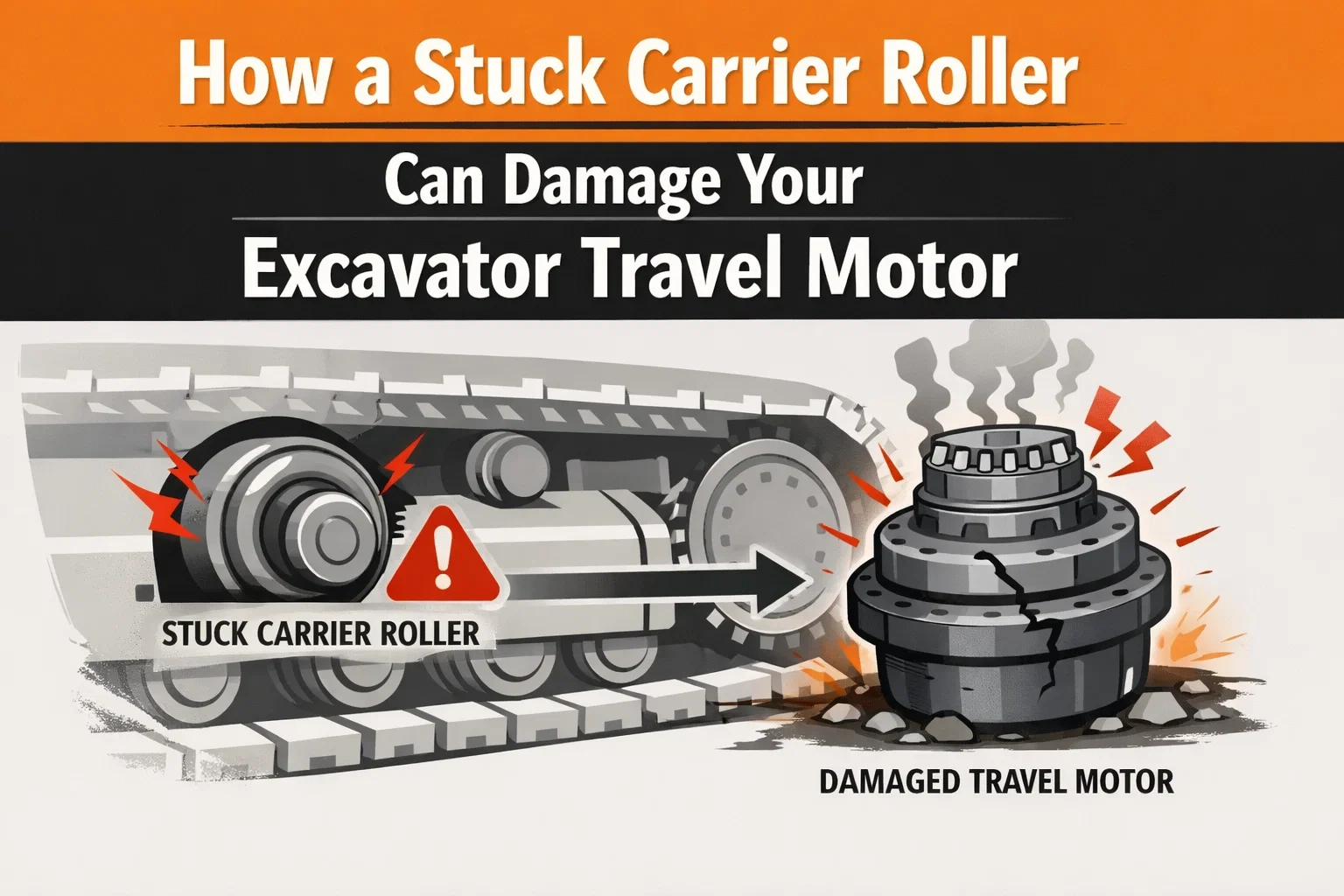
Stuck Carrier Roller Can Damage Your Excavator Travel Motor

In the undercarriage system of crawler excavators and bulldozers, operators often focus on larger and more visible components such as track chains, sprockets, or idlers. Smaller components like the carrier roller are frequently overlooked.

However, despite its relatively small size, the carrier roller plays a crucial role in supporting and guiding the track during operation. When a carrier roller becomes seized or stops rotating properly, the resulting chain reaction can be far more serious than expected — in some cases even leading to excessive load on the travel motor.

Understanding how this seemingly minor component affects the entire undercarriage system can help operators avoid unnecessary wear, power loss, and costly repairs.

The Role of the Carrier Roller in the Undercarriage System

Supporting the Return Track Path

In normal working conditions, the carrier roller is located on the upper part of the undercarriage frame. Its primary function is to support the returning track chain and maintain the correct track path and height as the track circulates.

As the track continuously moves around the undercarriage system, the carrier roller must rotate smoothly to minimize friction between the track links and the roller surface.

Maintaining Smooth Track Movement

A properly functioning carrier roller ensures that the track moves with rolling contact instead of sliding contact. This helps reduce mechanical resistance, improves travel efficiency, and allows the hydraulic drive system to operate under normal load conditions.

However, when internal components begin to wear, this balance can quickly change.

Where the Problem Begins

If the bearing inside the carrier roller becomes worn, the internal lubrication fails, or the sealing system allows oil leakage, the roller may gradually lose its ability to rotate freely.

Once the roller stops rotating, the track no longer rolls over it. Instead, it slides directly across the roller surface, creating sliding friction.

While this change might seem minor at first, it significantly increases the running resistance of the entire undercarriage system.

To maintain the same travel speed, the machine must generate more driving force.

For hydraulic crawler equipment, this means the travel motor must output higher torque, placing additional stress on the hydraulic system.

Over time, the increased load can cause:

  • Higher hydraulic pressure
  • Rising oil temperatures
  • Increased energy consumption
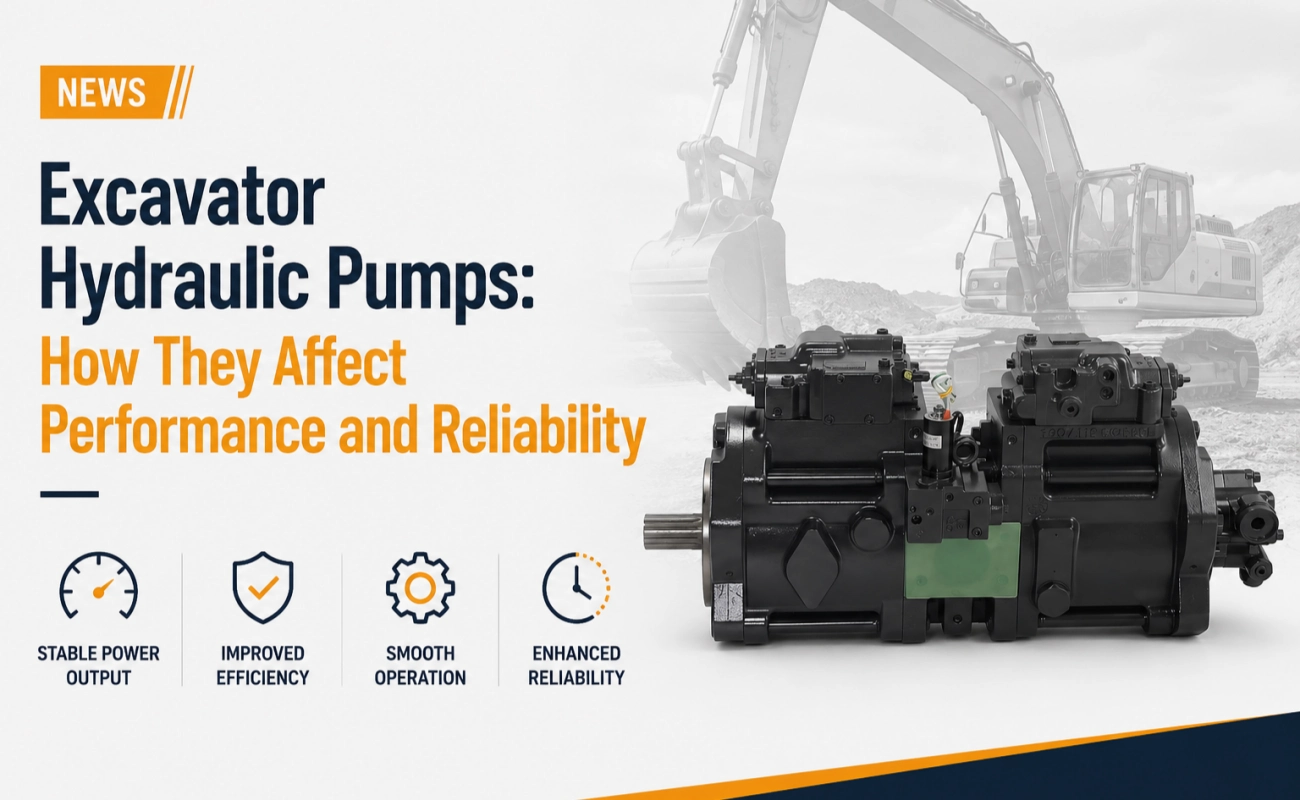
  • Accelerated wear of travel motor components

When a Small Fault Leads to Major Repairs

In many real-world maintenance cases, travel motor overheating or reduced efficiency is not caused by the motor itself. Instead, the underlying issue often comes from increased resistance within the undercarriage system.

A seized carrier roller can trigger several negative effects simultaneously:

  • Increased Travel Resistance
    The track must overcome additional friction as it passes over the seized roller, forcing the travel motor to operate under constant high load.
  • Accelerated Track Wear
    Sliding friction between the track links and roller surface can quickly wear down both components and generate excess heat.
  • Higher Hydraulic System Stress
    The hydraulic travel circuit may experience pressure fluctuations and higher operating temperatures, which gradually reduce the service life of the travel motor.

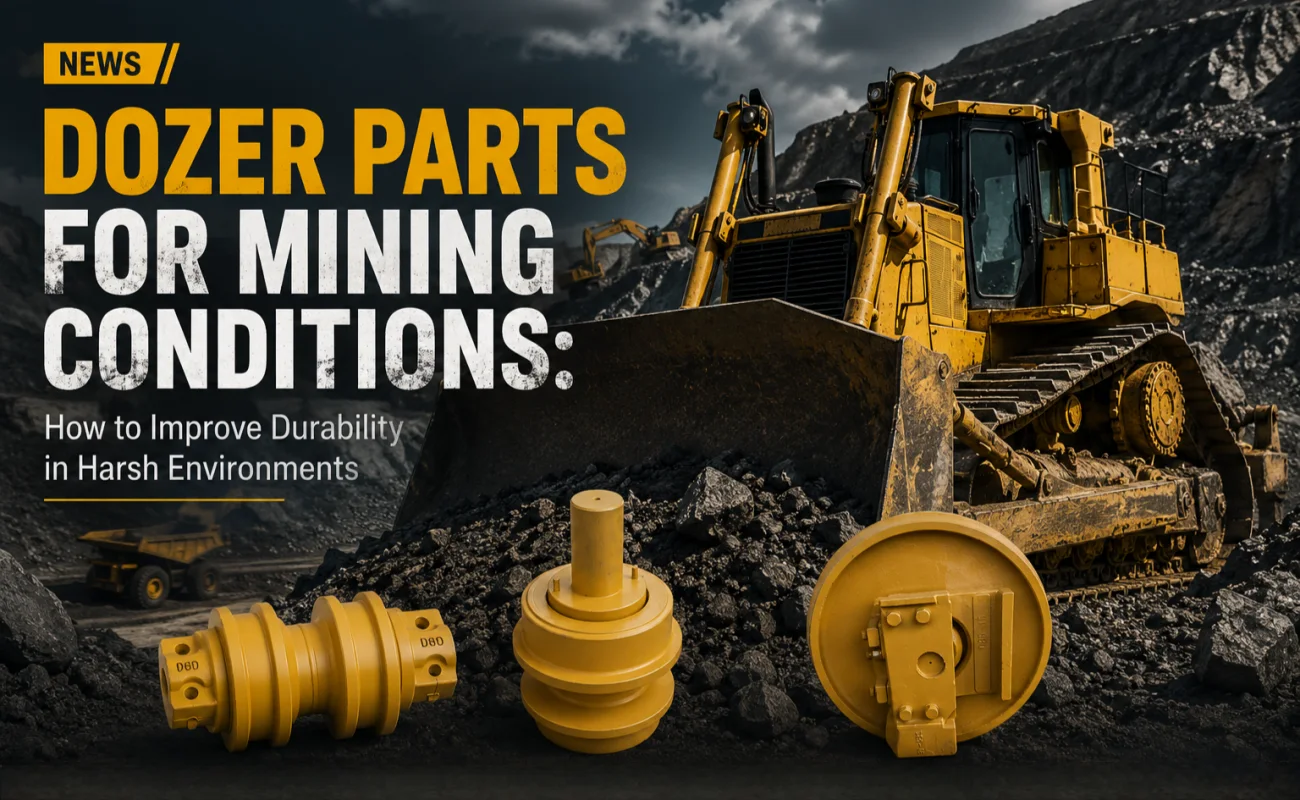
In demanding environments such as mining sites, quarries, or heavy earthmoving operations, these effects become even more severe. What initially appears to be a minor roller issue can eventually result in expensive travel motor repairs.

How to Identify a Seized Carrier Roller

Carrier roller problems are not always easy to detect because the component is mounted on the upper side of the undercarriage frame and does not directly transmit drive power like the sprocket.

However, several inspection methods can help identify early signs of failure.

Visual Inspection of the Roller Surface

During routine maintenance, check the roller surface for unusual wear marks. If the roller shows polished, flattened, or shiny areas, it may indicate that the track has been sliding across the surface instead of rolling.

Listen for Abnormal Undercarriage Noise

While operating the machine at low travel speed, pay attention to unusual sounds from the undercarriage. Continuous scraping noises or localized vibration may signal that a carrier roller is not rotating properly.

Manual Rotation Check

Whenever possible during inspection, verify whether the carrier roller can rotate freely. A roller that feels stiff or completely locked is a clear warning sign.

Regular inspection of these components is one of the most effective ways to prevent increasing undercarriage resistance.

Small Component, Big Impact on Undercarriage Efficiency

The performance of crawler equipment depends on the coordinated operation of multiple undercarriage components. Carrier rollers, track rollers, idlers, and sprockets together form the complete track movement path.

If even one of these components fails, the load distribution across the system changes, leading to higher wear and energy loss.

A high-quality carrier roller should feature:

  • Durable bearing structure
  • Reliable sealing system
  • Strong materials resistant to heavy loads
  • Stable rotation performance in harsh environments

Properly functioning carrier rollers ensure the return track runs smoothly, minimizing unnecessary resistance and helping maintain overall machine efficiency.

Prevent Costly Repairs by Checking the Small Parts

Undercarriage failures rarely happen suddenly. In most cases, they develop gradually from small issues that go unnoticed for too long. Carrier roller seizure is a classic example of this type of problem.

Regular inspection of smaller components can often prevent much more serious mechanical damage.

When the track system runs smoothly, it helps protect:

  • the travel motor
  • the hydraulic system
  • the overall power efficiency of the machine.

If your equipment begins to show signs such as reduced travel power, increased resistance, or unusual undercarriage noise, inspecting the carrier rollers is a good place to start.

KINTON PARTS supplies a wide range of excavator and bulldozer carrier rollers, designed with high-strength materials and reliable sealing systems to ensure stable rotation even in demanding working conditions.

For matching carrier rollers, track rollers, or other undercarriage parts for different machine models, feel free to send your equipment model or part number.
KINTON PARTS can provide professional recommendations and support global delivery.