Protecting Excavator Undercarriage in Demolition Work
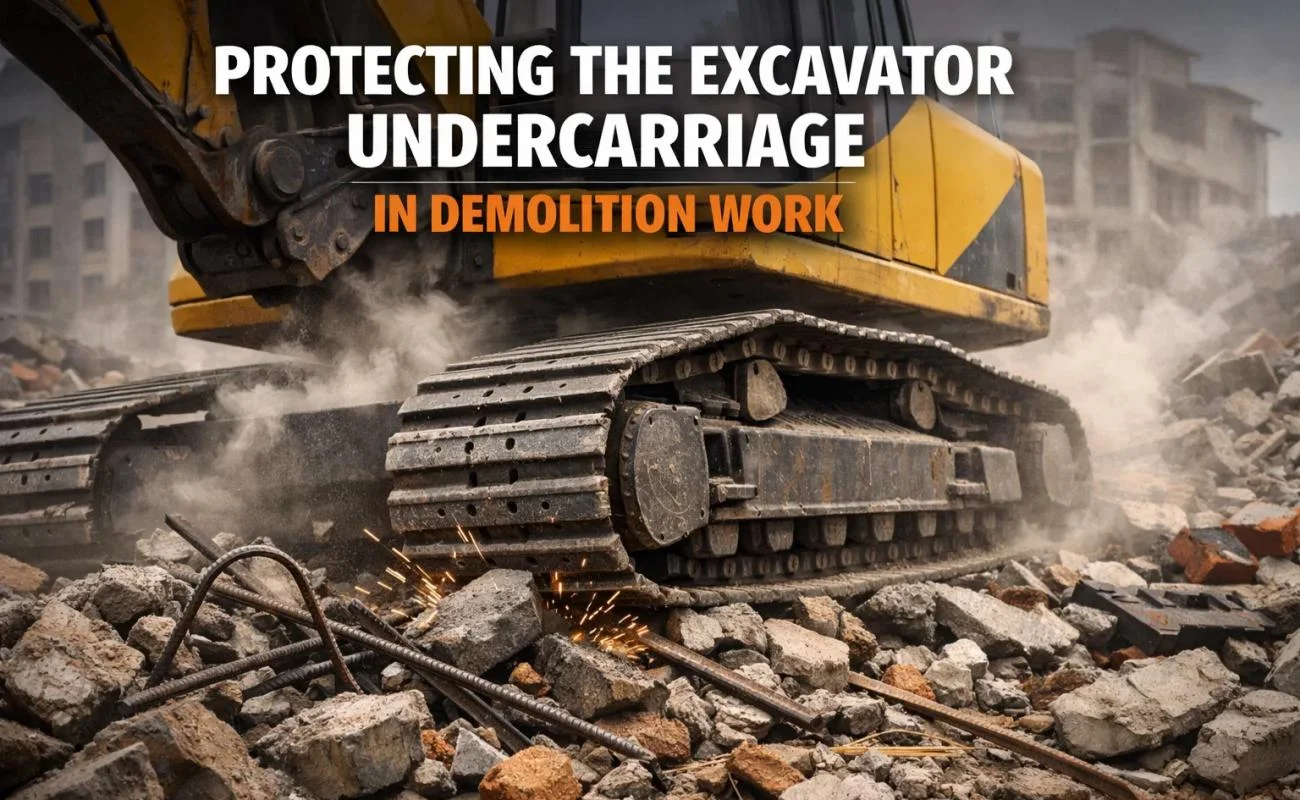
In urban redevelopment and industrial demolition projects, excavators often operate in environments far more aggressive than typical earthmoving sites. Instead of soft soil, machines travel across fields of broken concrete, exposed rebar, twisted steel, and sharp debris.
These materials behave like hidden blades beneath the machine. Over time, they become one of the most serious threats to the excavator undercarriage system.
Many demolition contractors have experienced similar problems: track edges scratched by rebar, foreign objects jammed between track links, abnormal chain tension, cracked track shoes, or even deformed track guards. Compared with wear on upper structure components, undercarriage damage is often less visible but can directly affect machine stability and operational safety.
Why Rebar Debris Creates a “Cutting Effect”
Continuous Contact with Sharp Materials
During demolition and crushing operations, the excavator track is not simply supporting weight—it is constantly interacting with irregular and sharp materials.
When the machine moves across exposed rebar or jagged concrete blocks, the metal bars can become trapped between the track chain and the track shoe. Under the machine’s weight, this creates a concentrated shear force similar to a cutting lever.
Once a piece of rebar enters the gap between track links, the pressure of the excavator can turn that point into a stress concentration area.
Areas Most Vulnerable to Damage
This stress is typically concentrated on several parts of the undercarriage:
- Track shoe edges
- Side surfaces of track links
- Contact areas between track guard and track chain
Repeated impacts may lead to chipped link edges, cracked track shoes, or even track jamming. In severe cases, embedded debris can alter track tension distribution, accelerating uneven wear on the sprocket and idler.
The Often Overlooked Role of Track Guards
In demolition environments, track guards serve more than just a guiding function—they are the first line of defense against foreign objects entering the track system.
Standard track guards perform well in normal earthmoving applications. However, when operating on reinforced concrete debris, structures with insufficient rigidity or narrow protection areas can easily deform after repeated impacts.
Once deformation creates a gap between the guard and the track chain, rebar pieces can more easily enter the link assembly.
Advantages of Reinforced Track Guards
Reinforced designs usually include:
- Thicker structural steel plates
- Reinforcing ribs for higher rigidity
- Improved lateral impact resistance
By strengthening the guard structure and reducing deformation, the chance of rebar entering the track chain can be significantly reduced, lowering the risk of track jamming.
High-Rib Track Shoes for Impact Distribution
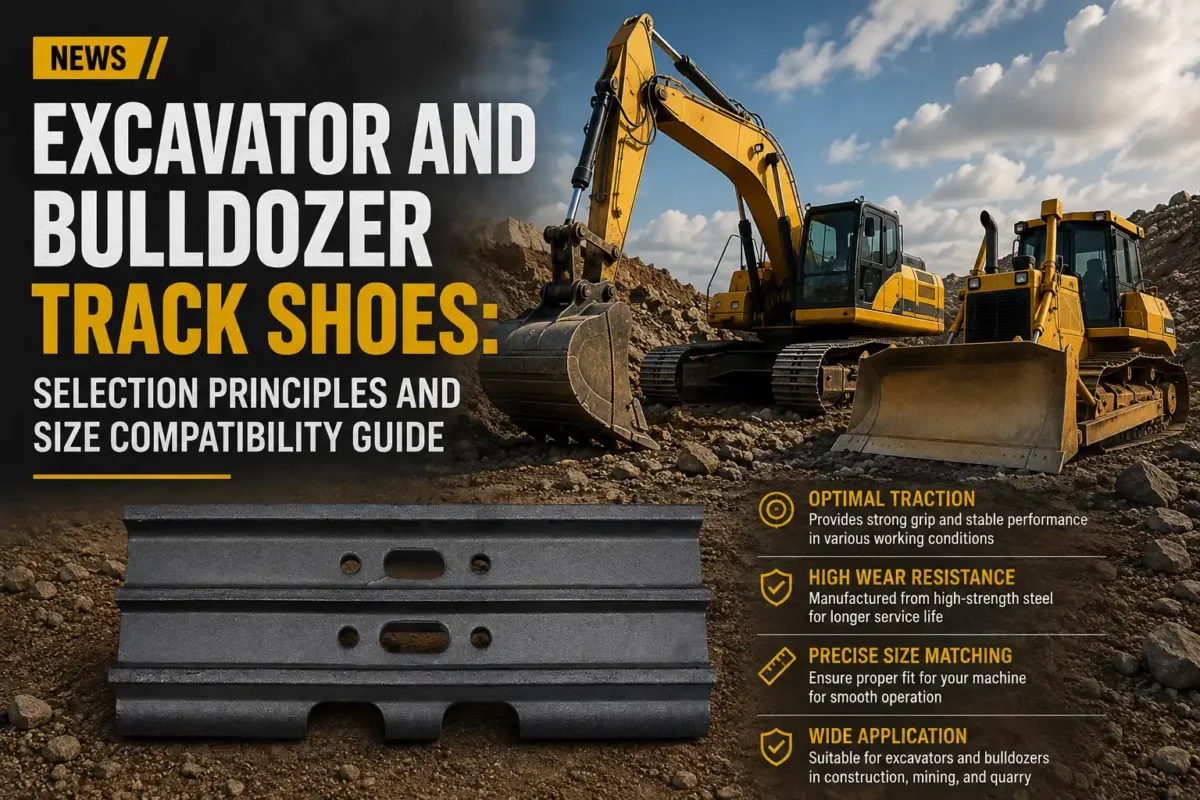
Track shoes are the components that make direct contact with the ground. In demolition environments, flat or low-profile shoes can easily suffer from concentrated impact forces when encountering steel reinforcement grids.
Structural Advantages
High-rib track shoes provide two key benefits:
- Improved structural rigidity, helping distribute single-point impact forces.
- Better traction, reducing repeated slippage and secondary crushing over sharp debris.
When moving across complex rubble surfaces, the higher rib structure can reduce direct cutting contact between exposed rebar and the bottom of the track shoe. This helps minimize the structural risk of tracks being “sliced” by debris.
Undercarriage Protection Is Not Only About Wear Resistance
Damage in demolition applications is not caused solely by abrasion. In many cases, the primary sources are impact forces and shear stress.
Even high-hardness materials may develop cracks under extreme impact if the structural design does not properly distribute stress.
Therefore, the key principles of effective undercarriage protection include:
- Increasing impact resistance
- Reducing the chance of foreign object intrusion
- Distributing stress concentration points
KINTON PARTS provides reinforced track guards and high-rib track shoe solutions designed specifically for demolition environments. Instead of focusing only on hardness, these components emphasize structural reinforcement and impact resistance to ensure better durability in harsh working conditions.
Reducing Downtime Risks for Demolition Contractors
On demolition sites, any track jamming or undercarriage damage can lead to costly downtime and unexpected repairs.
For machines that regularly operate on reinforced concrete debris, selecting undercarriage components designed for extreme working conditions is an effective way to protect the overall equipment investment.
Reinforced track guards and high-rib track shoes not only improve durability but also provide an additional level of operational safety in high-risk environments.
If you need assistance confirming undercarriage specifications, feel free to provide your excavator model, track size, and working environment. The KINTON PARTS team can recommend more impact-resistant undercarriage solutions tailored for demolition applications.