


Rock vs. Earth: How Bucket Tooth Geometry Determines Digging Efficiency, Wear, and Fuel Cost


In real-world excavation, the wear rate of bucket teeth is rarely determined by brand — it is determined by whether the tooth geometry matches the ground conditions.
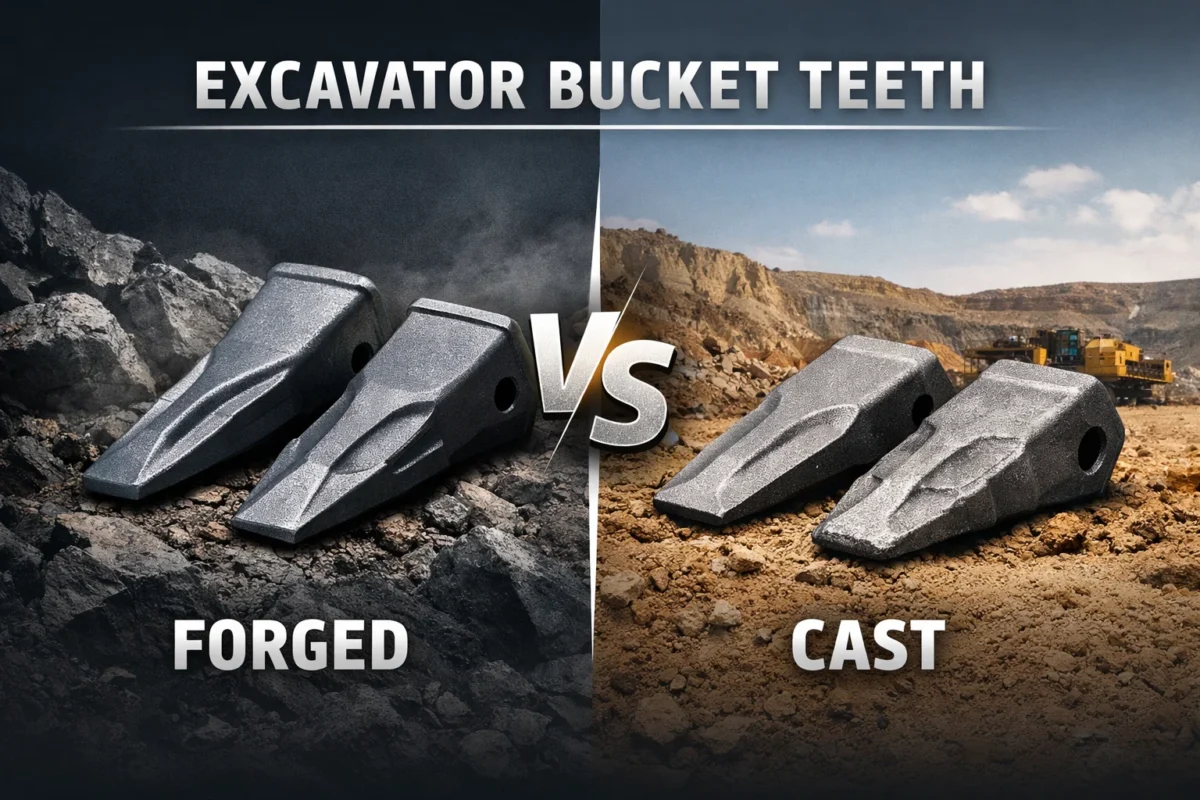
The same excavator may struggle in hard rock with one tooth design but perform smoothly in soil with that same set installed. Likewise, using earthmoving teeth in hard rock or rock teeth in soft ground quickly leads to excessive wear, high fuel consumption, and inefficient digging.
Bucket teeth are not simply about being “sharper” or “thicker.” They represent a balance between penetration, wear resistance, and self-sharpening behavior — and every ground condition demands a different compromise.
Tiger Teeth & Extra-Sharp Teeth — Built for Extreme Digging Resistance
Tiger Teeth & Extra-Sharp Teeth — Built for Extreme Digging Resistance
Tiger-style bucket teeth are defined by a narrow, sharply pointed tip that creates a very small contact area with the ground.
In hard rock, frozen soil, and heavily weathered strata, this geometry provides powerful advantages:
- Extremely high initial penetration force
- Lower cutting resistance, reducing hydraulic load
- Less sensitivity to digging angle changes
- Ideal for breaking compacted or fractured rock
However, this performance comes at a cost. Because the force is concentrated at the tip, tiger teeth wear faster in high-abrasion sandstone and continuous hard-rock conditions. If alloy quality or forging is poor, the tip will blunt rapidly.
Earthmoving Teeth — The Balanced Choice for Mixed Conditions
Chisel-type earthmoving teeth feature a flatter nose and uniform thickness, making them one of the most widely used geometries.
In clay, sand, gravel, and mixed soil conditions, they offer:
- Stable penetration without sudden resistance spikes
- Even load distribution across the tooth
- Good self-sharpening behavior as the tooth wears
- Consistent fuel efficiency and service life
For contractors and rental fleets, earthmoving teeth provide the best overall stability, minimizing unpredictable failures while keeping fuel and wear costs under control.
Rock Teeth — Designed for Strength and Structural Endurance
Rock teeth use a thicker, wider working profile. Their purpose is not extreme penetration but load-bearing strength and durability.
They excel in:
- Continuous hard-rock operations
- High-impact quarry and blasting environments
- Long duty cycles with minimal tooth breakage
Their thicker alloy volume allows for longer wear life under heavy stress. However, using rock teeth in soft soil increases unnecessary resistance and fuel consumption, reducing overall efficiency.
Penetration, Fuel Consumption, and Wear Are Directly Connected
Bucket teeth geometry directly influences machine efficiency.
When the tooth shape does not match the ground:
- Cutting resistance rises
- Hydraulic pressure increases
- Digging cycles slow down
- Fuel consumption climbs
- Wear accelerates
- Downtime becomes more frequent
By contrast, a tooth that enters the ground smoothly reduces resistance, keeps digging cycles fast, and lowers operating costs — often without operators even realizing the difference.
Recommended Tooth Types by Ground Condition
| Working Condition | Digging Resistance | Recommended Tooth | Key Advantage | Risk if Misused |
|---|---|---|---|---|
| Soft soil, backfill, organic soil | Low, sticky | Earthmoving | Smooth entry, good self-sharpening | Thick teeth waste fuel |
| Clay, sand, gravel | Medium abrasion | Earthmoving | Balanced wear and efficiency | Poor alloy causes uneven wear |
| Abrasive sandstone | High wear | Rock | Thick alloy extends life | Low penetration hurts output |
| Hard rock, weathered rock | High resistance | Tiger | Maximum penetration | Tip blunts quickly |
| Frozen ground | High impact | Tiger | Breaks ice layers easily | Requires tough alloy |
| Blasted rock | Heavy impact | Rock | Resists breakage | Light teeth fail |
| Urban trenching | Repetitive cycles | Earthmoving | Stable and predictable | Over-strength not needed |
| Quarry production | Continuous load | Tiger + Rock | Penetration + durability | Needs balanced layout |
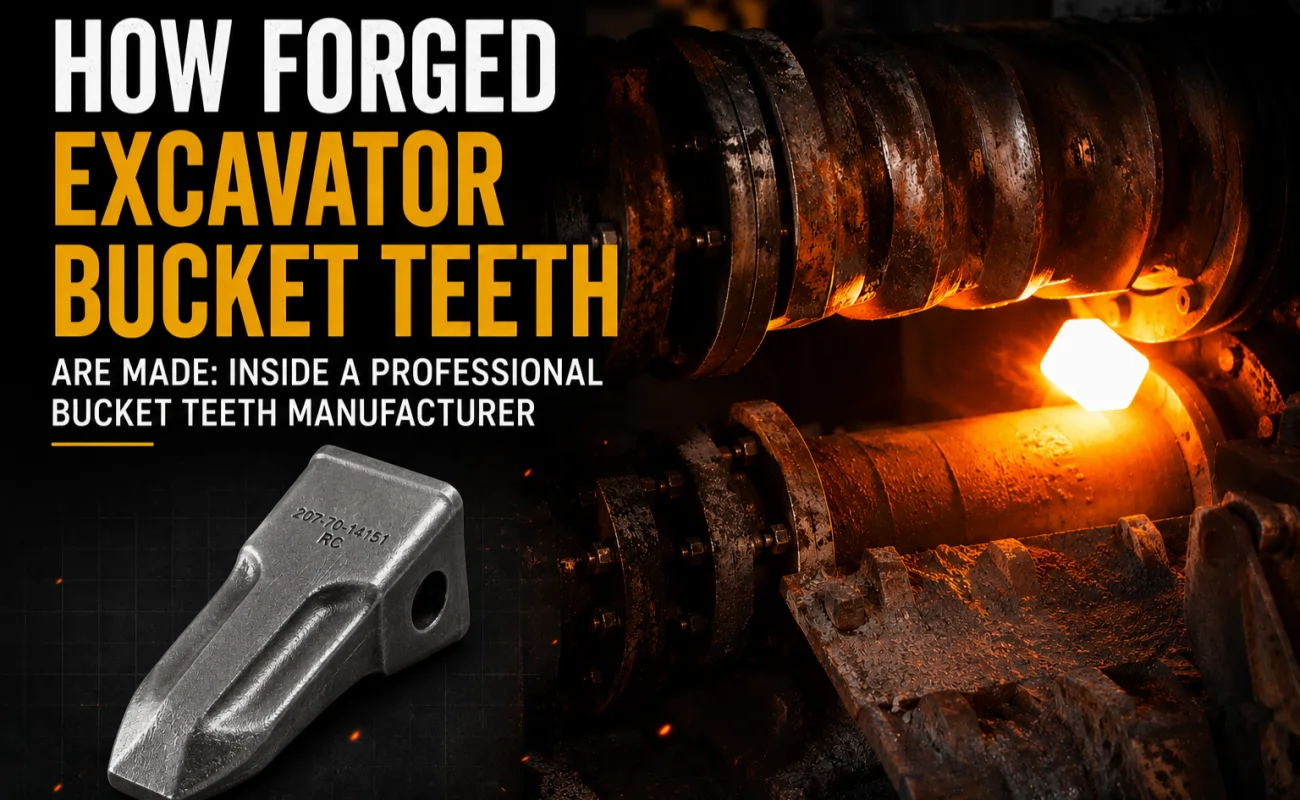
Why Alloy and Forging Matter as Much as Geometry
Even the best geometry fails if material quality is weak.
High-performance bucket teeth require:
- Alloy formulations tuned for specific working conditions
- Controlled forging for dense internal grain structure
- Hard surface + tough core design to resist both wear and impact
That is why two teeth with the same shape can have dramatically different service lives.
Conclusion
Selecting bucket teeth is not a simple purchasing decision — it is a combination of ground condition, geometry, and material science.
Choosing the right geometry does more than protect the teeth. It reduces fuel use, improves digging speed, and protects the entire excavator from unnecessary stress.
For professional fleets, bucket teeth are not consumables — they are productivity tools that can be optimized.