



John Deere 850L / 950K Dozer Undercarriage Noise: How Idler Misalignment Causes Track Wear

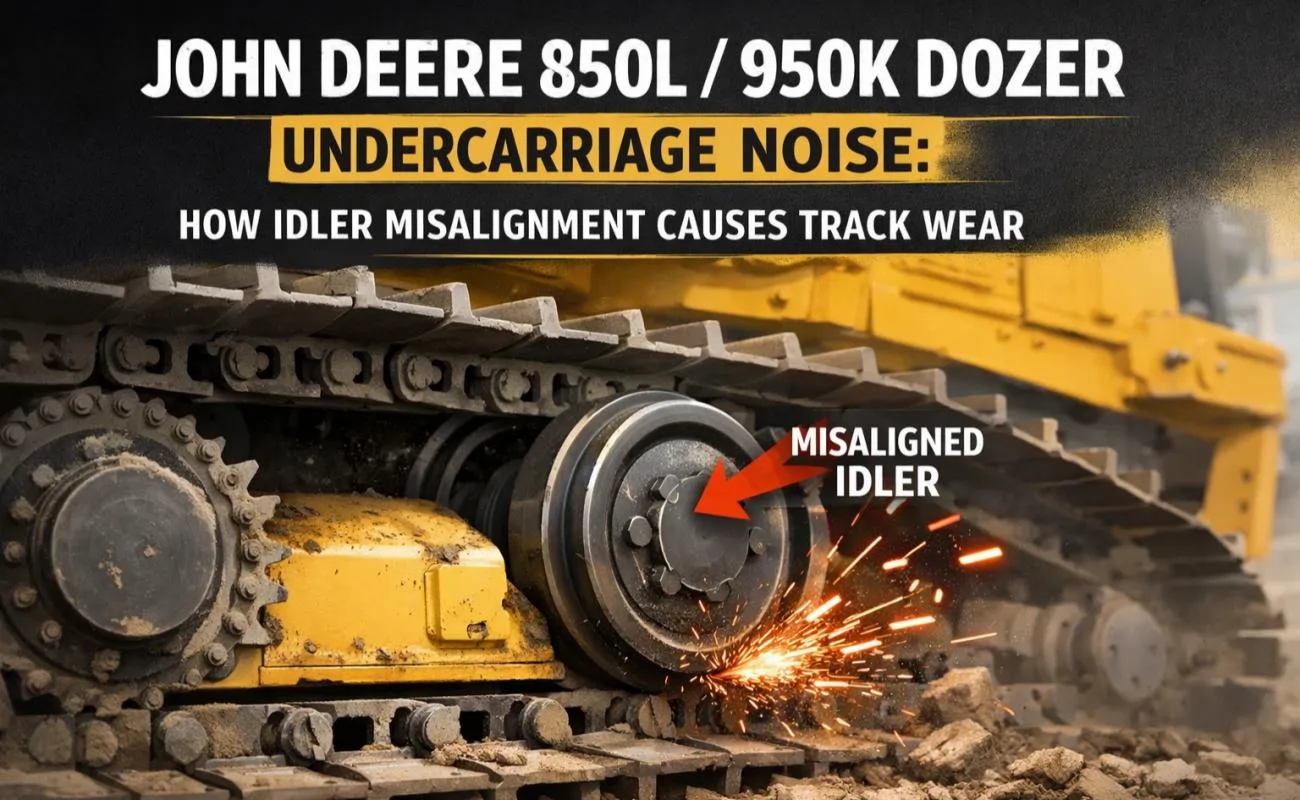
Undercarriage noise in John Deere 850L and 950K dozers is a common issue that many operators encounter after extended use. Symptoms such as intermittent grinding sounds, uneven track movement, or vibration during travel are often mistakenly attributed to worn sprockets or track chains. However, in many cases, the root cause lies in a less obvious component—the idler.
When the idler becomes slightly misaligned, it can cause the track chain to deviate from its intended path, leading to abnormal contact, increased friction, and what is commonly referred to as “track biting.” Understanding this issue early is essential to preventing accelerated wear and maintaining undercarriage performance.
What Is “Track Biting” in Undercarriage Systems?
Definition and Typical Symptoms
“Track biting” refers to a condition where the track chain deviates from its intended path and makes abnormal contact with undercarriage components.
Common signs include:
- Uneven wear on one side of the track chain
- Scratching or scoring marks along track shoe edges
- Periodic friction noise during machine travel
How Misalignment Leads to Progressive Damage
Under normal conditions, the track chain should follow a straight and stable path guided by the carrier rollers, track rollers, and idler.
When one of these components becomes misaligned—especially the idler—the track gradually shifts sideways. Over time, this deviation increases, generating excessive lateral force between the chain links and rolling components.
If left uncorrected, this can accelerate wear and compromise machine stability.
Why Idler Alignment Is Critical
The Role of the Idler in Track Guidance
In John Deere dozers, the idler is positioned at the front of the undercarriage and works together with the track tensioning system. Its function goes beyond maintaining track tension—it also ensures the track follows the correct path.
Impact of Misalignment on Heavy Equipment
When the idler is even slightly out of alignment, the track begins deviating before entering the roller zone. As the track cycles continuously, this misalignment compounds, resulting in abnormal friction and wear.
For heavy machines like the 850L and 950K, the track system is subjected to high traction forces. Any deviation significantly increases lateral stress, leading to:
- Uneven wear on track links and shoes
- Edge wear on rollers
- Reduced overall undercarriage lifespan
This is why many undercarriage noise issues can ultimately be traced back to idler alignment problems.
The Role of Shimming in Idler Adjustment
What Is Shimming?
In John Deere undercarriage systems, idler alignment is typically adjusted using shims. By adding or removing shim thickness, technicians can fine-tune the lateral position of the idler.
Why Precision Matters
Although shimming appears simple, it is a highly precise process. Even minor misalignment during installation can gradually worsen over time, leading to significant track deviation.
During maintenance, technicians usually:
- Inspect wear patterns on the track chain
- Measure track centerline alignment
- Check idler positioning
Correct shimming ensures the track maintains a stable and centered path, reducing abnormal wear and noise.
The Role of Shimming in Idler Adjustment
Misdiagnosis Is Common
When operators hear abnormal noise, they often suspect the sprocket or track chain first. However, undercarriage noise is frequently an early indicator of guiding system misalignment.
Act Early to Prevent Major Damage
At the early stage of misalignment:
- Friction between track links and components may occur intermittently
- Noise often appears in a rhythmic pattern during travel
If addressed promptly through idler inspection and adjustment, more severe wear can be avoided.
Ignoring these warning signs can result in:
- Accelerated track chain wear
- Shortened lifespan of rollers and sprockets
- Increased maintenance costs
Maintaining Proper Alignment for Longer Service Life
For John Deere 750, 850, and 950 series dozers, undercarriage reliability depends on the coordinated function of all guiding components.
Although the idler has a relatively simple structure, its position is critical to maintaining correct track alignment.
Best Practices for Operators
- Regularly inspect track wear patterns
- Monitor changes in undercarriage noise
- Perform shim adjustments when necessary
Maintaining proper alignment helps prevent track deviation, reduces abnormal wear, and significantly extends undercarriage service life.
Reliable Undercarriage Solutions from KINTON PARTS
KINTON PARTS supplies a wide range of dozer undercarriage components, including:
These components are compatible with John Deere 750 / 850 / 950 series machines and are designed to perform reliably in demanding working conditions.
Stable and well-aligned undercarriage parts are essential for ensuring smooth machine operation and long-term durability.