



Heat Treatment in Excavator Undercarriage Parts: Why Hardness Equals Longevity


In the world of heavy machinery, undercarriage components constantly battle friction, pressure, and abrasive environments. Every carrier roller, sprocket, and track shoe operates under immense load and repeated impact.
To survive in such harsh conditions, material hardness is critical—and achieving that hardness depends on proper heat treatment.
The Role of Heat Treatment in Undercarriage Components
Heat treatment is more than just a step in manufacturing; it is a science that transforms steel at the molecular level.
Through controlled heating and cooling cycles—primarily quenching and tempering—metal achieves a precise balance between hardness and toughness.
For excavator undercarriage components, this balance determines how long a part can endure before fatigue or deformation occurs.
Take the carrier roller as an example.
When rolling over uneven terrain, the roller surface experiences compressive and shear stress.
If the surface is too soft, it wears quickly; if too hard and brittle, it cracks.
Heat treatment solves this dilemma by creating a hard outer shell with a tough, resilient core, ensuring the roller can resist both wear and impact.
Quenching: Building Surface Hardness
The quenching process is where steel’s real strength begins.
The component is heated to a critical temperature (typically around 850–900°C), where its crystalline structure transforms into austenite.
It is then rapidly cooled—usually by immersion in water or oil.
This sudden temperature drop locks carbon atoms in place, forming a very hard but brittle microstructure known as martensite.
This is how the hard, wear-resistant surface essential for undercarriage components is created.
Tempering: Adding Toughness and Reducing Brittleness
While quenching provides hardness, it also introduces brittleness.
Tempering is the crucial follow-up step that relieves internal stresses and restores ductility.
The component is reheated to a lower, controlled temperature (typically between 150–500°C) and held for a specific period before slow cooling.
This process slightly reduces extreme hardness but significantly improves toughness, impact resistance, and flexibility.
The result is an ideal combination—a hardened, wear-resistant surface and a strong, flexible core—perfect for undercarriage parts that must withstand dynamic loads and shocks.
Quality Control and Consistency
Effective heat treatment demands strict quality control.
Manufacturers must continuously monitor temperature uniformity, soaking time, cooling rate, and metallographic structure to ensure the process meets performance requirements.
Ignoring these parameters—or relying on inconsistent heat treatment—can drastically shorten component lifespan.
Even minor temperature deviations during quenching or tempering can lead to uneven hardness, causing premature wear, cracking, or dimensional instability.
Why Hardness Equals Longevity
When excavator operators talk about “durable parts,” what they’re really referring to is effective heat treatment.
- A properly hardened roller maintains its shape and resists metal-to-metal wear.
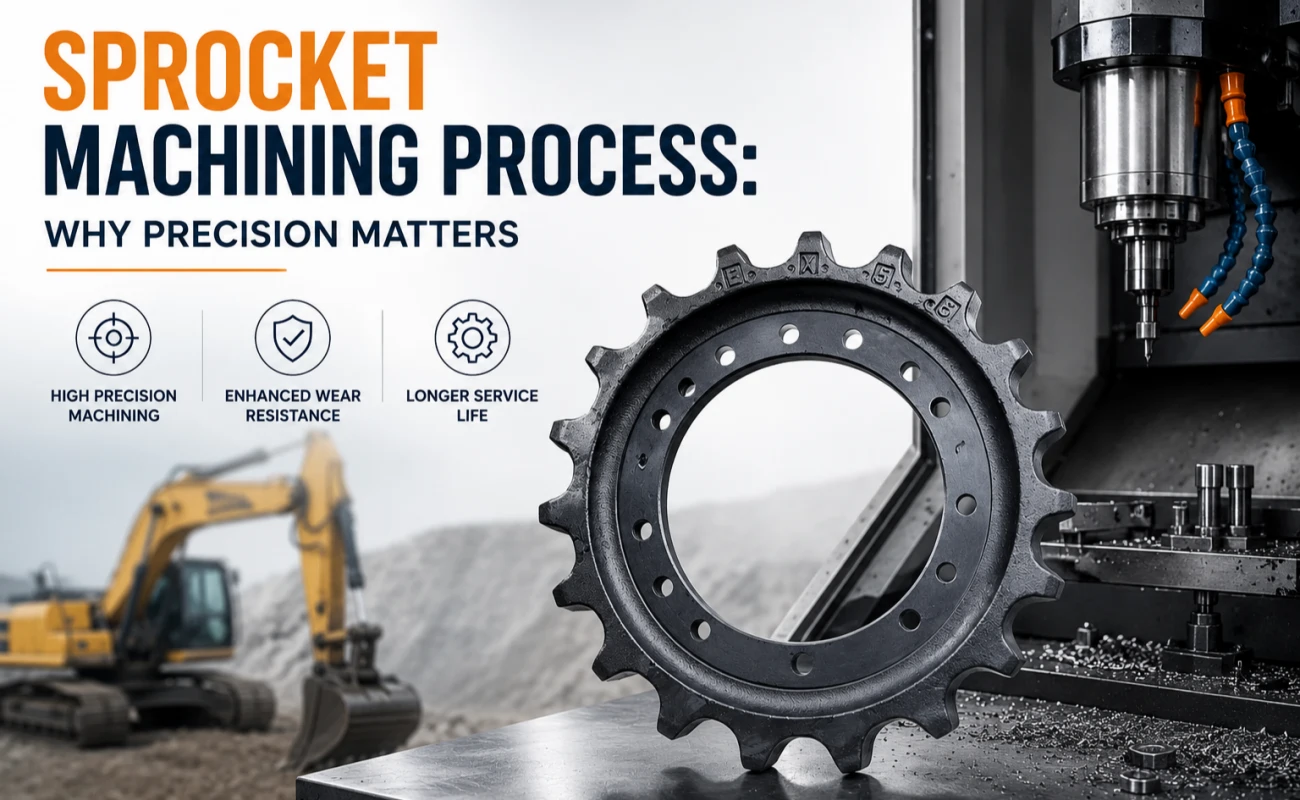
- A well-treated sprocket retains its tooth profile longer, ensuring smoother chain movement.
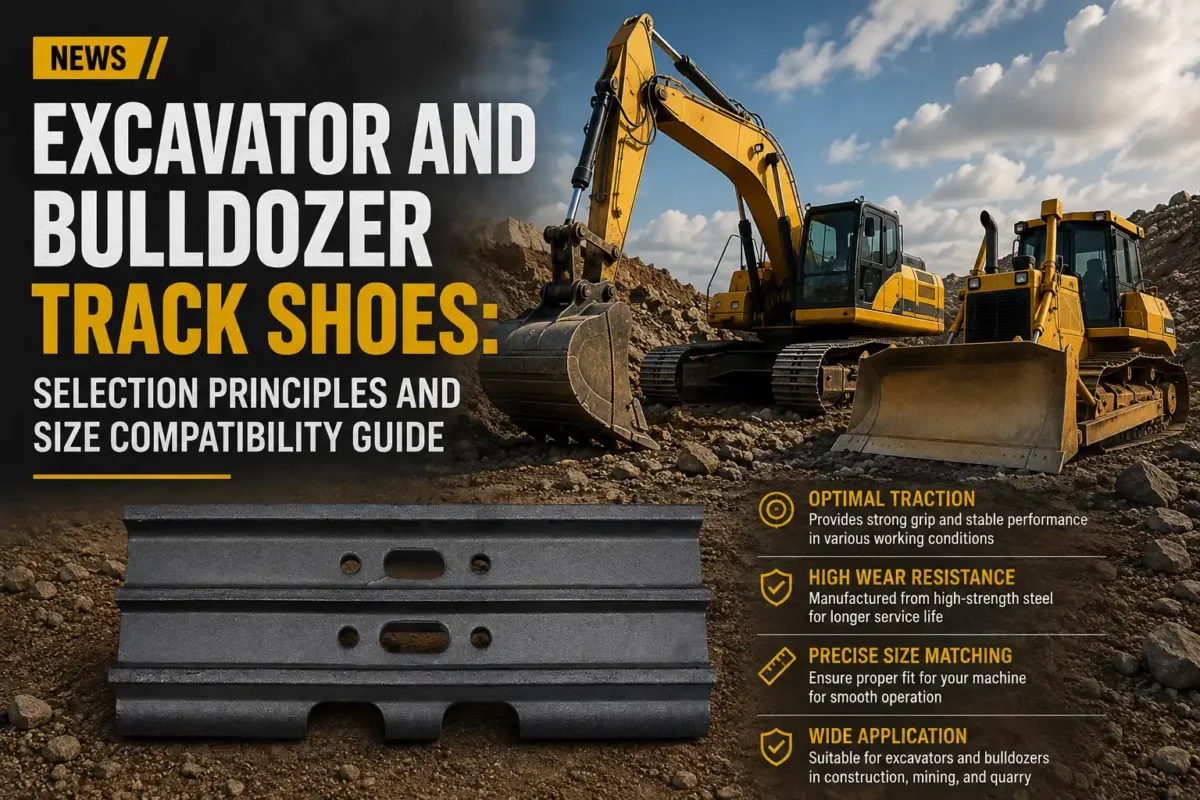
- A correctly hardened track shoe resists elongation and fatigue, keeping the entire undercarriage aligned and efficient.
In other words, the hardness achieved through heat treatment directly translates into uptime, reliability, and lower maintenance costs.
It’s one of the most critical—but often overlooked—factors that separate premium components from inferior ones.
Final Thoughts
In the competitive world of heavy equipment maintenance, longevity isn’t a matter of luck—it’s a result of metallurgical engineering.
The next time you evaluate an undercarriage component, remember: its real strength lies not only in the steel it’s made from, but in the invisible science of heat treatment.
For excavator owners and fleet managers, investing in properly heat-treated components isn’t just about performance—it’s about protecting every productive hour on the job.