


Maintenance Guide for Slewing Bearings: Key Inspection Points to Extend Service Life

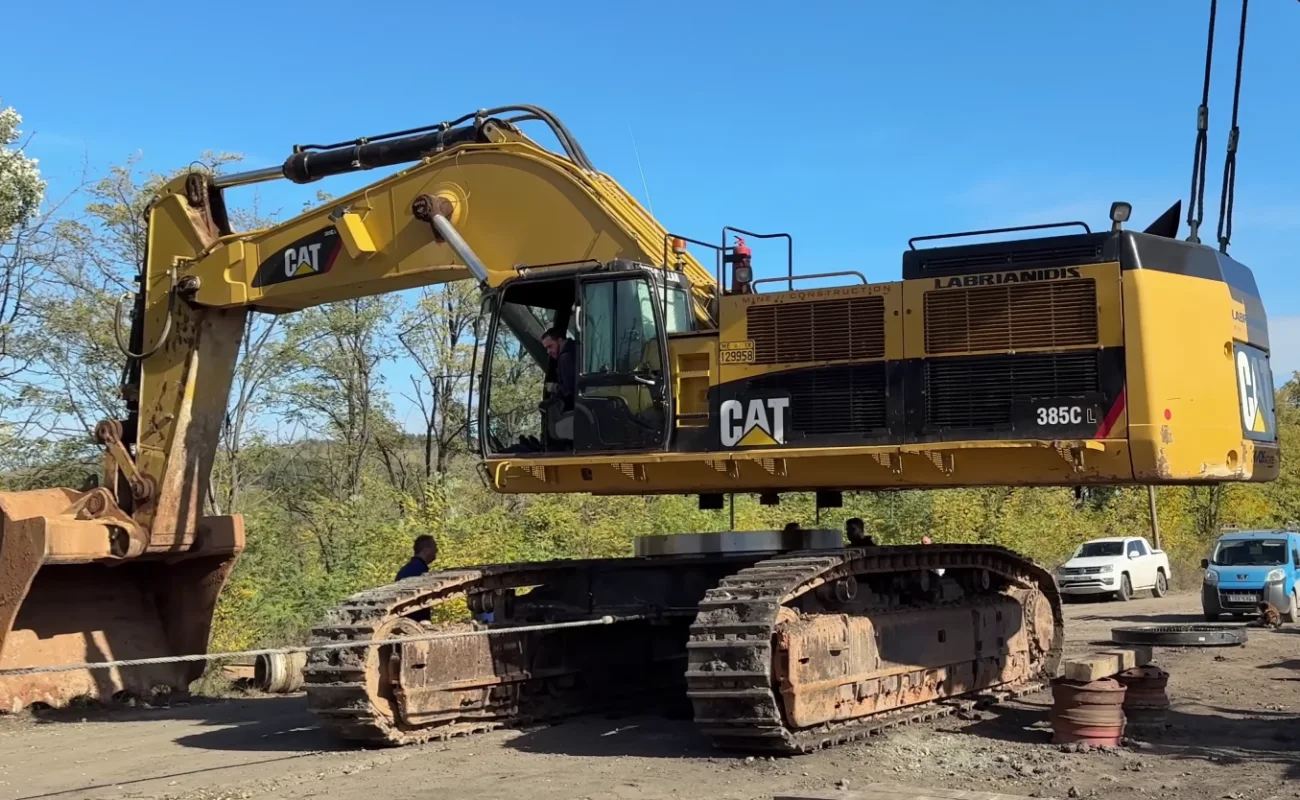
Slewing bearings are among the most heavily loaded components on an excavator’s upper and lower structure. They support vertical loads during digging, horizontal forces during rotation, and complex combinations of tilting, vibration, and shock loads during real-world operation.
When a slewing bearing begins to produce abnormal noise, increased vibration, or uneven rotation, these symptoms rarely point to a single cause. Instead, they signal gradual deterioration in lubrication quality, bolt preload, raceway condition, or the health of rolling elements.
Understanding these factors—and taking action before the damage spreads—is essential to maintaining safe and efficient excavator operation.
Understanding the Structure
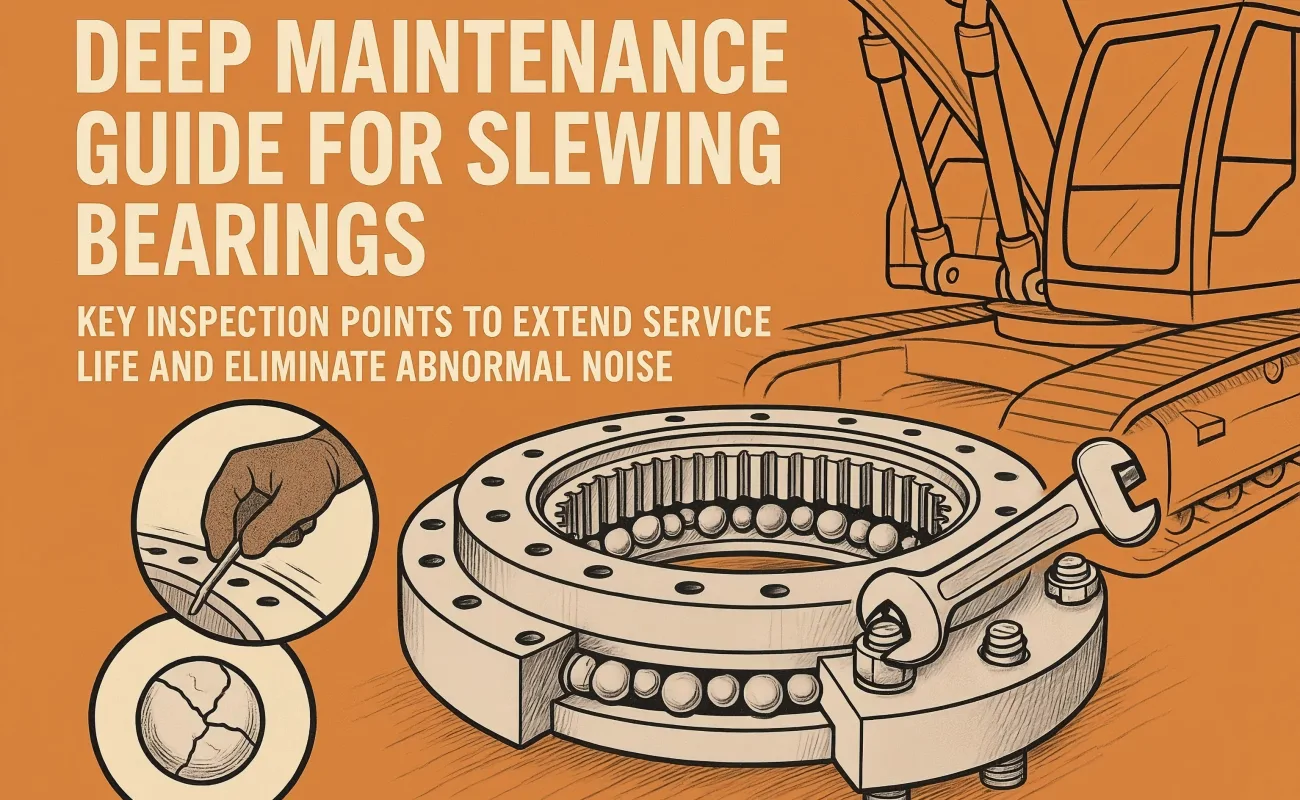
A slewing bearing typically consists of an inner ring, an outer ring, and a set of rolling elements (steel balls or cylindrical rollers) arranged between precisely machined raceways. The difference between ball-type and roller-type designs directly affects load distribution:
- Ball-type slewing bearings provide smoother rotation and lower friction, suitable for machines with moderate axial and radial loads.
- Roller-type slewing bearings can withstand much higher overturning moment loads due to the larger contact surface of cylindrical rollers.
Regardless of the type, the integrity of the raceway surface is critical. Corrosion, poor lubrication, or excessive debris intrusion can cause pitting or spalling (micro-cracks), which leads to early abnormal noise and eventually seizing.
Key Maintenance Point 1: The Critical Role of Lubrication
Lubrication is the lifeline of a slewing bearing. Grease forms a protective film between rolling elements and the raceway, reducing friction and preventing metal-to-metal contact.
- Grease Type:
Always use the manufacturer-recommended, high-quality extreme pressure (EP) lithium-based grease. Incorrect grease may break down under heavy load, providing inadequate protection. - Frequency:
Greasing should be done daily or every 8–10 operating hours. Do not wait for regular maintenance intervals. During greasing, the operator should rotate the excavator multiple times to ensure the grease is evenly distributed across the entire raceway. - Visual Inspection:
Observe the “old” grease pushed out from the seal gaps—usually darker, dirtier, or containing metallic particles. This indicates that new, clean grease is effectively flushing out contaminants.
Key Maintenance Point 2: Ensuring Proper Bolt Preload
Slewing bearings are typically mounted using dozens of high-strength bolts. The preload applied to these bolts is essential for maintaining internal clearance and ensuring proper alignment.
- The Danger of Loose Bolts:
Loose bolts allow the bearing rings to flex and shift under load, creating uneven stress on the raceway and rolling elements. This can cause rapid fatigue failure and is one of the leading causes of structural noise and vibration. - Inspection:
Bolts must be tightened following the manufacturer’s specified torque sequence and values. This inspection is typically performed within the first 100–200 hours after installation and then at regular intervals (e.g., every 500 hours). - Marking:
After proper tightening, mark bolts with a paint marker to enable quick visual checks for unexpected loosening.
Key Maintenance Point 3: Contamination Control and Seal Integrity
Contaminants—especially water, mud, and fine abrasive dust—are the primary killers of slewing bearings.
- Seal Inspection:
Regularly inspect the main seals around the bearing. Cracks, tears, or excessive hardening allow contaminants to enter the raceway and rapidly degrade the grease. - Cleaning:
Keep the area around the bearing clean. Dirt and debris should never be allowed to accumulate near the seals or gear teeth. - Flushing:
Daily greasing helps flush out contaminants. A good maintenance plan includes frequent greasing to clear the seal area, while replacing damaged or aged seals to maintain a clean internal environment.
Machines working in abrasive environments such as quarrying or mining require even more frequent inspections.
Diagnosing Abnormal Noise: What the Sounds Mean
Not all noises are the same:
- Clicking sounds often indicate indentations caused by contaminants.
- Grinding or rumbling noises suggest severe raceway spalling.
- High-pitched squealing usually points to lubrication failure.
- Intermittent knocking may indicate loose bolts or structural deformation.
Systematic diagnostics—listening at different rotational speeds, observing load effects, and checking temperature rise—helps determine whether the issue stems from lubrication, alignment, or serious mechanical wear.
Preventive Maintenance Saves Major Repair Costs
Slewing bearings rarely fail suddenly. Most failures originate from minor early issues—dry raceways, uneven bolt preload, seal degradation—that accumulate over hundreds or thousands of operating hours.
By following a structured maintenance approach focused on raceways, rolling elements, lubrication quality, bolt tension, and contamination control, operators can dramatically extend bearing life and reduce unexpected downtime.
A quiet, smooth-rotating slewing bearing is more than a sign of good maintenance—it is essential to the excavator’s overall safety, operational precision, and long-term reliability.