



Surface Finishing Techniques That Extend Undercarriage Life

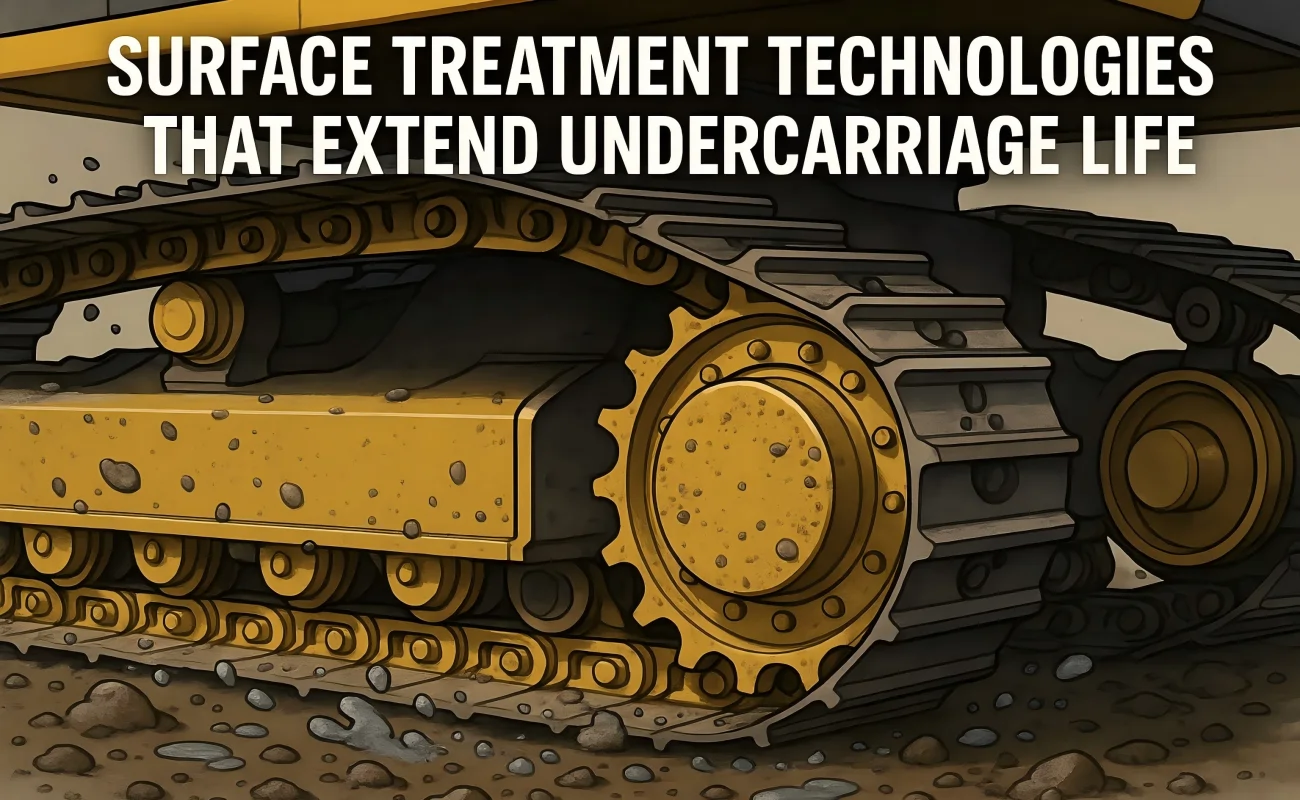
In the construction machinery industry, the undercarriage is one of the most heavily stressed systems.
Constant exposure to dirt, moisture, gravel, and corrosive environments means that every component—from track links and carrier rollers to sprockets and idlers—faces continuous wear. While material quality and heat treatment form the foundation of durability, surface treatment technologies play an equally critical role in extending the lifespan of undercarriage components.
These processes not only enhance wear and corrosion resistance but also improve fatigue strength, ensuring longer and more stable performance in the field.
The Importance of Surface Treatment
Undercarriage components are designed to withstand extreme loads under harsh conditions, and even minor surface imperfections can accelerate fatigue or crack propagation.
Surface finishing refines the outer metal layer, increases hardness, reduces friction, and creates a protective barrier against oxidation and chemical corrosion—minimizing potential defects.
In modern manufacturing, surface treatment is not decorative; it is a functional process that directly affects product lifespan, performance, and cost-effectiveness.
Common Surface Treatment Technologies
1. Shot Blasting and Shot Peening
Shot blasting is commonly used to clean cast or forged parts, removing scale and impurities in preparation for machining or coating.
Shot peening, a more controlled process, applies compressive stress to the metal surface using high-speed steel or ceramic shots. This strengthens resistance to cracking and surface fatigue—especially important for track shoes, rollers, and idler shells.
Properly peened components can have fatigue life more than double that of untreated parts.
2. Electroplating and Galvanizing
Electroplating—typically with zinc or nickel—forms a thin, uniform coating that prevents corrosion.
Zinc plating provides sacrificial protection, corroding before the base metal does, while nickel plating offers both corrosion resistance and aesthetic appeal.
Hot-dip galvanizing produces a thicker, stronger protective layer, ideal for components exposed to moisture or muddy environments.
These methods are especially effective for hardware components such as bolts, pins, and fasteners.
3. Surface Hardening Heat Treatments
Processes like induction hardening or carburizing alter only the surface layer of the metal, increasing hardness while preserving core toughness.
For example, sprocket teeth or track bushings are often surface-hardened to achieve HRC 52–58, ensuring excellent wear and impact resistance.
The tougher core material absorbs shock and prevents cracking under stress.
4. Thermal Spraying and Coating
Thermal spray coatings—such as tungsten carbide or chromium oxide—are applied at high velocity to create dense, adherent, and wear-resistant surfaces.
For less demanding applications, industrial-grade coatings provide sufficient protection against environmental corrosion.
Modern coatings often include UV and chemical resistance, extending the lifespan and reliability of undercarriage components stored or operated in harsh outdoor conditions.
5. Polishing and Grinding
Precision polishing reduces surface roughness, minimizing friction and wear between metal contacts.
Components such as bushing ends and pins greatly benefit from fine grinding and polishing, as smoother surfaces retain lubrication better and reduce heat generation during operation.
How Surface Treatment Impacts Performance and Maintenance
Well-treated undercarriage components not only last longer but also perform more efficiently.
Reduced surface roughness minimizes energy loss caused by friction, while corrosion-resistant coatings prevent premature failure due to rust expansion.
This results in fewer maintenance cycles, less downtime, and lower total ownership costs, benefiting both contractors and fleet operators.
For equipment dealers, promoting surface-treated components highlights their long-term value and justifies premium pricing.
Integrating Surface Treatment into Quality Control
Manufacturers increasingly combine surface treatment with digital quality control systems.
Technologies such as 3D surface scanning and microhardness testing ensure coatings and treatments meet precise specifications.
This integration guarantees consistency between production batches, providing OEMs and aftermarket distributors with full confidence in every shipment.
Partnering with Undercarriage Manufacturing Experts
At KINTON PARTS, every undercarriage component undergoes a comprehensive surface treatment process tailored to its function—whether it’s a shot-peened roller, induction-hardened sprocket, or precision-polished pin.
With advanced equipment and rigorous quality inspection, we ensure every part meets the required hardness, coating thickness, and surface uniformity.
By combining metallurgical expertise with decades of manufacturing experience, we help dealers and end users extend equipment life and reduce maintenance costs.
Conclusion
Surface treatment may seem like a small step in manufacturing, but it is a critical factor in determining equipment longevity.
From improving wear resistance to preventing corrosion, each process significantly enhances undercarriage durability.
Investing in high-quality, surface-treated components is not only about durability—it’s about consistent performance, reduced downtime, and long-term profitability.